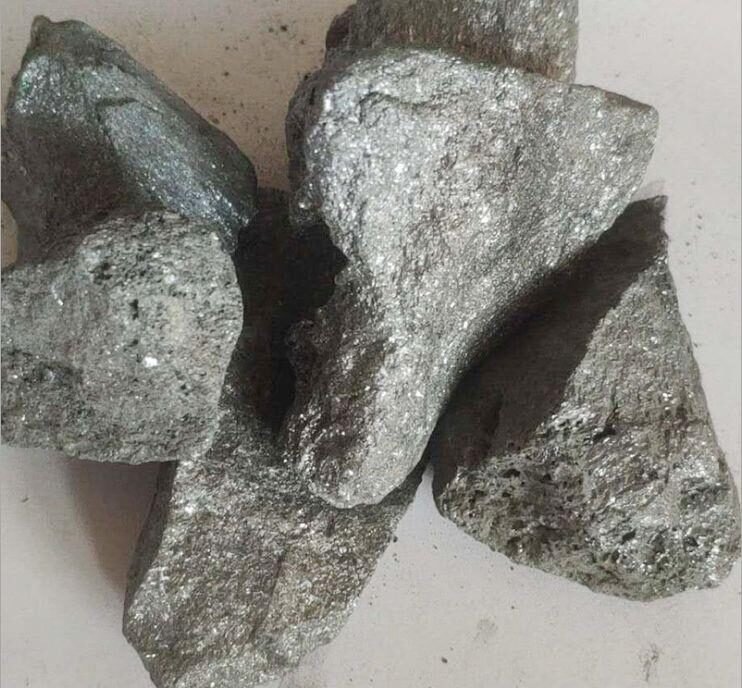
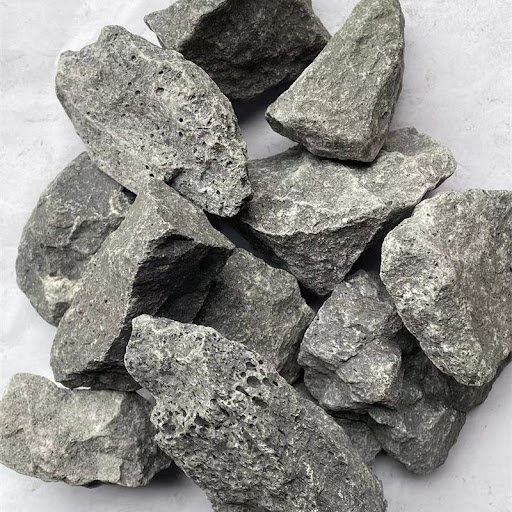
In high-temperature industrial processes—steel smelting, cement kilns, glass melting—the choice of furnace lining material directly affects equipment life and production safety. Procurement professionals often face a fundamental question during inquiry: should we choose refractory bricks or monolithic refractories? Although both fall under the category of “refractory materials,” they differ significantly in composition, installation method, performance, and economics. Understanding these differences is the first step toward making the right procurement decision.
Refractory bricks are shaped refractory products—materials with a defined shape and size, typically manufactured through batching, forming, drying, and high-temperature firing. Common refractory bricks include clay bricks, high-alumina bricks, silica bricks, and magnesia bricks, classified by chemical nature into acidic, basic, and neutral categories.
Monolithic refractories, by contrast, are mixtures of aggregates, fines, and binders supplied in bulk form. They are formed and hardened on-site through casting, ramming, or gunning. Common types include castables, ramming mixes, and gunning mixes. Monolithic materials have no fixed shape of their own—their final form is determined by the construction mold or on-site structure.
The most fundamental difference lies in where the forming takes place: refractory bricks are formed and fired at the factory, requiring only bricklaying on site; monolithic materials achieve their final form at the construction site, remaining “unshaped” when they leave the factory.
For buyers, choosing between refractory bricks and monolithic materials requires weighing five dimensions:
First, construction conditions and schedule. Refractory bricks require individual bricklaying, and the joints between bricks are weak points for slag penetration. Monolithic materials use integral casting, eliminating the joint as a penetration pathway entirely. Construction speed is faster, and furnace building schedules can be significantly shortened. A case study of an 18m² fluidized bed furnace showed that after adopting integral casting with monolithic materials, the schedule was notably shorter than the brick-lined alternative, with better overall structural strength and sealing. However, monolithic materials demand higher on-site construction quality control and are relatively more difficult to demolish.
Second, performance and service life. The joints between refractory bricks are an inherent weakness—slag and molten steel easily penetrate and erode along them. The seamless structure of monolithic materials eliminates this vulnerability, often achieving longer service life under high-temperature, highly corrosive conditions. For example, in the slag line area of a mixer furnace, a traditional brick-lined system lasted about 3–6 months, while after adopting Al₂O₃-SiC-C castable, the service life was extended to 2–3 years.
Third, replacement and maintenance convenience. Refractory bricks allow for localized replacement—if a single brick is damaged, it can be removed and replaced individually. With monolithic materials, once localized damage occurs, the entire section usually needs to be re-cast, potentially resulting in higher maintenance costs and downtime.
Fourth, procurement cost and overall economics. Refractory bricks have relatively transparent unit prices, but bricklaying labor and joint treatment costs must be factored in. Monolithic materials may have a higher unit price, but the combined benefits of improved construction efficiency and extended service life often prove more economical.
Fifth, supply stability and lead time. Refractory bricks are standardized products with relatively short lead times for regular specifications. Monolithic materials require customized formulations based on the construction plan and have specific requirements for on-site conditions (temperature, humidity)—winter or rainy-season construction may require additional measures.
Industry data shows that the market share of monolithic refractories is expanding rapidly. In 2026, the global share of monolithic refractories is projected to exceed 46% for the first time. In the Chinese market, monolithic materials already account for over 65% of total refractory output, with projections suggesting further growth to 68% by 2026. Behind this trend are multiple drivers: the steel industry’s shift toward short-process steelmaking, increasingly stringent environmental standards, and rising demands for construction efficiency.
In applications requiring rapid construction and long service life—mixer furnaces, ladles, tundishes—integral casting solutions are gradually replacing traditional brick-lined structures. However, in positions demanding exceptional thermal shock resistance and structural stability—blast furnace hearths, glass furnace crown—high-quality refractory bricks remain irreplaceable.
As a ferroalloy enterprise, Beifang Alloy frequently encounters lining material selection inquiries when serving steel smelting customers. Here are several practical procurement recommendations:
First, assess the operating conditions. If the lining position endures frequent thermal shock and mechanical wear, the structural integrity of monolithic materials offers clear advantages. If the primary challenge is continuous high-temperature chemical attack, the brick type must be matched to the slag system’s acidity or basicity.
Second, evaluate construction capability. The performance of monolithic materials depends heavily on on-site construction quality. If the construction team lacks experience, even the best material cannot deliver its intended performance. Prioritize suppliers who can provide construction guidance.
Third, calculate total cost of ownership. Do not compare price per ton alone. Calculate the “lining cost per ton of hot metal” or “per ton of product.” Factor in material costs, installation labor, downtime losses, and replacement cycles into a unified assessment.
Fourth, assess supplier responsiveness. Quality suppliers provide customized solutions based on furnace type, operating conditions, and campaign life—rather than simply pushing standard products.
When comparing refractory material suppliers, we recommend building an evaluation framework around four dimensions:
| Evaluation Dimension | Key Considerations |
|---|---|
| Product Quality | Raw material sources, process stability, compliance rate of physical and chemical indicators |
| Customization Capability | R&D capability to adjust formulations based on operating conditions |
| Delivery Assurance | Lead time for standard products, responsiveness for urgent orders |
| Technical Service | Construction guidance, after-sales tracking, and problem-solving support |
In the ferroalloy smelting sector, lining material selection requires particular attention to slag erosion resistance and thermal shock stability, as the slag system and temperature regime of ferroalloy furnaces differ from those of conventional steelmaking furnaces. As a ferroalloy producer, Beifang Alloy has accumulated extensive practical experience in lining material support, capable of providing customers with end-to-end support from material selection to usage optimization.
If you are planning a lining material procurement or wish to evaluate optimization opportunities for your existing solution, please contact us through the following channels for tailored recommendations:
Website: www.beifangalloy.com
Email: info@hnxyie.com