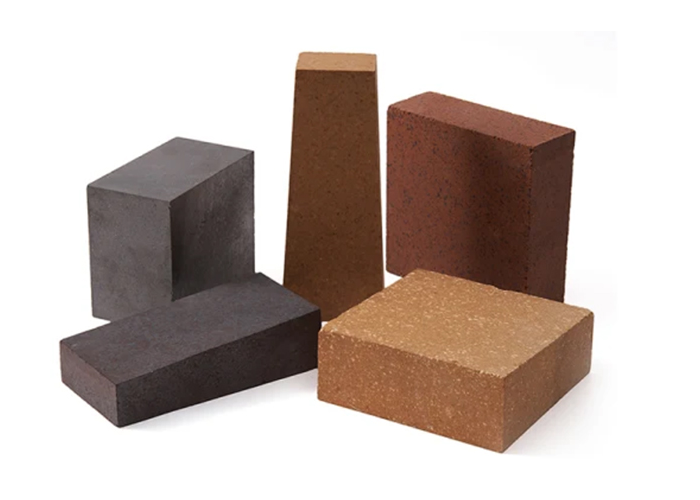
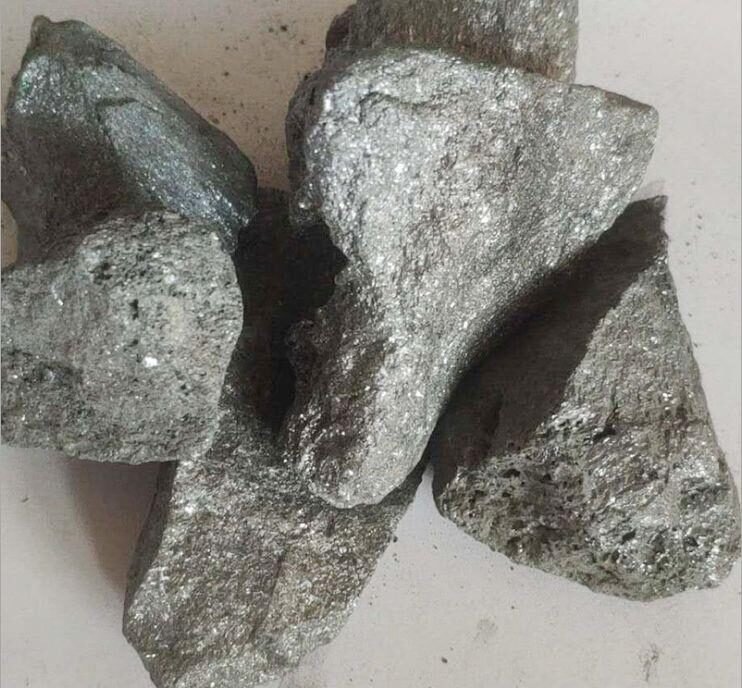
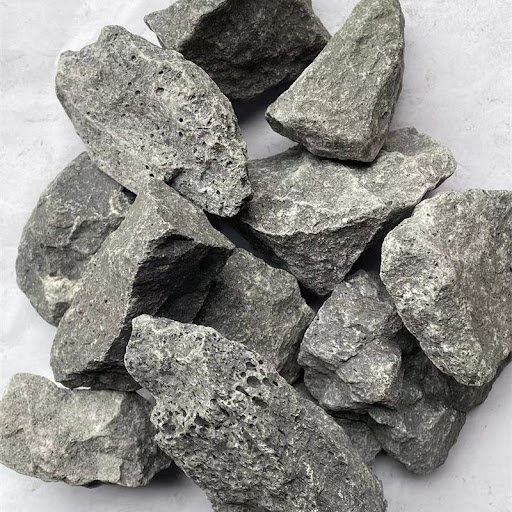
In refractory material procurement and technical discussions, “1580°C refractoriness” is a number that comes up again and again. Many buyers treat it as a pass/fail line for judging brick quality, and many suppliers use it to prove their products are qualified. But where does this number come from? And does it truly represent how a refractory brick will perform in an actual kiln?
As a supplier serving high-temperature industries in alloys and refractory materials, Beifang Alloy explains this metric from the perspectives of industry standards, testing principles, and procurement practice—so you can build an accurate understanding before your next purchase.
“Refractoriness not lower than 1580°C”—this definition has been used in the refractory field for decades.
Its technical meaning is this: a standard triangular cone test specimen is made from the refractory material and heated at a specified rate under no load. When the cone softens and bends until its tip touches the base, the temperature at that moment is the material’s refractoriness.
So how was 1580°C chosen?
In 1986, the ISO Technical Committee for Refractory Materials (ISO/TC33) established a definition: inorganic non-metallic materials or products with refractoriness above 1500°C are classified as refractory materials. The system adopted in China sets this threshold at 1580°C, forming the classification framework of “ordinary refractory materials: 1580°C–1770°C.”
In short, 1580°C is a disciplinary classification threshold—not a quality ceiling or a safe operating temperature limit for any specific product.
This is the costliest misunderstanding in purchasing.
Refractoriness measures the softening temperature of a material under no load. In actual kiln operation, refractory bricks face a combined attack of: high temperature + load + thermal shock + chemical corrosion.
The key fact: when a refractory material reaches its refractoriness temperature, 70%–80% of its internal liquid phase has already formed, and viscosity drops to 10–15 Pa·s. At this point, the material no longer has mechanical strength or corrosion resistance. In other words, the 1580°C on the label marks the moment the material is “barely alive”—never a temperature at which it can be safely used.
The indicator that truly guides procurement is the softening temperature under load (0.2MPa). It reflects the brick’s ability to resist deformation while bearing load. Take clay bricks as an example: ordinary clay bricks may have a refractoriness of 1610–1750°C, but their softening-start temperature under load typically falls in the 1350–1400°C range. That gap of nearly 200°C is the safety margin you must account for in procurement decisions.
Practical advice for buyers: When requesting a supplier’s test report, don’t look only at “refractoriness.” The 0.2MPa load softening start temperature, thermal shock resistance (water-quench cycles), and apparent porosity have far greater predictive value for kiln life than refractoriness itself.
Another way to understand 1580°C is to see how it is determined by a material’s chemical composition.
For silica-alumina refractories (clay bricks, high-alumina bricks), an approximate relationship exists between refractoriness and Al₂O₃ content plus impurity content: t = 1580 + 4.386 (Al₂O₃ − R), where R is impurity content. This means:
Clay bricks (Al₂O₃ 30%–46%): refractoriness typically 1580–1750°C, in the “ordinary refractory” category.
High-alumina bricks (Al₂O₃ > 48%): refractoriness jumps above 1770°C, entering the “advanced refractory” classification.
Magnesia bricks, dolomite bricks: refractoriness generally exceeds 2000°C, belonging to basic refractories.
The procurement implication is clear: if a supplier quotes a “high-alumina brick” with refractoriness of only 1580°C, be alert to whether its Al₂O₃ content actually meets the grade. In Shandong Province’s 2025 refractory quality supervision spot checks, inspection items explicitly covered Al₂O₃ content, load softening temperature, apparent porosity, and other core indicators.
In supplier evaluation, a supplier’s attitude toward the “refractoriness” metric itself reveals its level of professionalism.
Type 1: Suppliers who only talk about refractoriness and avoid other indicators. These suppliers often have a narrow product line and weak technical capability. Suppliers with real technical depth know that refractoriness is an “entry-level indicator”—what truly differentiates product grades are load softening temperature, thermal shock resistance, and corrosion resistance. If a quotation lists only refractoriness and price, move on to the next candidate.
Type 2: Suppliers who provide complete physical and chemical test reports. This is the basic threshold for a qualified supplier. Reports should cover: Al₂O₃ (or MgO, etc.) content, bulk density, apparent porosity, cold crushing strength, 0.2MPa load softening start temperature, and permanent linear change on heating. For example, a ferroalloy company’s published clay brick procurement notice explicitly lists complete parameters including Al₂O₃ ≥ 40%, bulk density ≥ 2.0 g/cm³, apparent porosity ≤ 19%, and load softening start temperature ≥ 1380°C. That is an executable procurement standard.
Type 3: Suppliers who can provide application cases in your industry and working-condition-specific recommendations. These are the partners worth building long-term relationships with. Refractory brick selection depends heavily on operating conditions: ironmaking blast furnaces, ferroalloy submerged arc furnaces, steel ladle linings, and reheating furnaces all demand very different materials. Capable suppliers will proactively ask about your furnace type, working temperature, slag chemistry, and campaign cycle, then recommend a suitable material grade—rather than simply pushing a product that “meets refractoriness.”
Based on the above, we recommend the following verification process in refractory brick procurement:
1. Define your operating parameters first. Before requesting quotes, prepare: furnace/kiln type, normal working temperature, maximum temperature, chemical nature of slag/atmosphere (acidic/basic), whether thermal cycling occurs, and planned maintenance cycle.
2. Request third-party test reports or factory inspection data. Focus on verifying: whether Al₂O₃ content matches the stated grade, whether load softening start temperature leaves sufficient safety margin above your working temperature (100°C or more is recommended), and whether apparent porosity is within a reasonable range.
3. Ask for application cases in your industry. Request user cases with operating conditions similar to yours, and if possible, learn the actual service life data. No set of paper specifications is as convincing as one verified operating campaign.
4. Treat 1580°C as a “classification label.” Use it as a basic criterion for whether a material falls into the “refractory” category—not as a core selection parameter. The core selection parameters are always the three directly tied to kiln life: load softening temperature, thermal shock resistance, and corrosion resistance.
About Beifang Alloy
Beifang Alloy is rooted in the ferroalloy and high-temperature materials sector, serving customers in steel, ferroalloy, non-ferrous smelting, and other high-temperature industries. We not only supply ferroalloy products but also connect customers with verified refractory material supply chain resources. If you have specific technical questions about refractory brick selection or procurement, we welcome you to reach out:
🌐 www.beifangalloy.com
📧 info@hnxyie.com