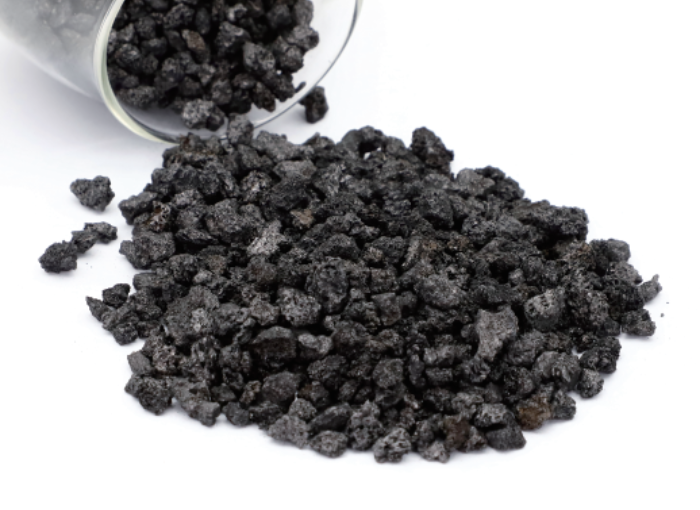
Home > Products > Carburant > Carbon Raiser

Carbon Raiser

In today’s competitive steelmaking landscape, carbon additive—often called carbon raiser—isn’t just another raw material; it’s a precision tool that directly impacts product quality, operational efficiency, and environmental compliance. With over mang years of specialized ferroalloy production experience, Beifang Alloy provides this comprehensive guide to help procurement professionals navigate the complex carbon additive market and make strategic sourcing decisions that deliver measurable ROI.
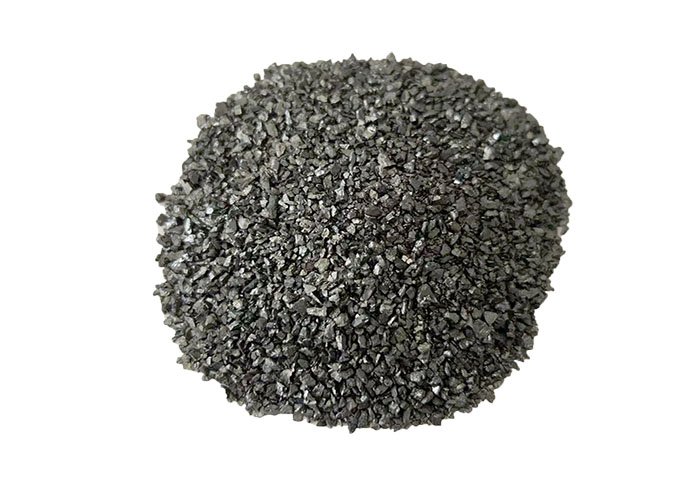
F.C 91%MIN
Ash 7%max
V.M 3.0%max
S 0.4%max
T.M 1.5%max
Introduction
Specification
MORE DETAILS
Related Products
Inquiry
Introduction

Carbon Raiser (also known as Carbon Additive or Recarburizer) is a carbon-rich material added to molten steel or iron during the steelmaking or foundry process to increase the carbon content of the metal. It’s a critical raw material, especially in electric arc furnace (EAF) steelmaking, where scrap steel—which often has insufficient carbon—is melted down.

Why is it needed?

When steel is made from scrap in an EAF, the carbon content is typically lower than required for the final steel grade. Carbon raiser is added to “recarburize” the melt—bringing the carbon level up to the precise specification (e.g., for making high-carbon steel, cast iron, or certain alloy steels).

Common Types of Carbon Raiser:

  • Calcined Petroleum Coke (CPC) – Most widely used; high fixed carbon (98–99.5%), low sulfur and ash.

  • Graphite Petroleum Coke – Higher purity, excellent carbon recovery.

  • Anthracite Coal – Lower cost but higher ash and volatile matter.

  • Gas Calcined Anthracite Coal (GCAC) – Improved quality over raw anthracite.

  • Synthetic Graphite – Highest purity, used for premium steel grades.

Specification
F.C Ash V.M S T.M
91%MIN 7%max 3.0%max 0.4%max 1.5%max
MORE DETAILS

The  Advantage of Carbon Raiser

Our Production Excellence Framework

  • Advanced Quality Control System:Real-time laser particle size analysis;Automated sampling every 30 minutes;On-site laboratory with ICP-OES for precise elemental analysis;Blockchain-enabled batch traceability
  • Technical Partnership Model:Dedicated metallurgical engineer for key accounts;Monthly performance review with data analytics;Proactive quality alerts and optimization suggestions;Joint R&D for custom formulations
  • Sustainable Operations:Energy-efficient rotary kilns with heat recovery;Water recycling in all processes;Carbon footprint tracking and reporting;Compliance with international environmental standards

Success Story: Automotive Steel Producer

Challenge: A major automotive steel supplier needed to reduce sulfur variation in final product while maintaining profitability.

Beifang Solution: Custom-developed low-sulfur carbon additive (S < 0.07%) with optimized particle size distribution.

Results:23% reduction in desulfurization agent consumption;0.5% improvement in carbon yield;Elimination of sulfur-related quality claims;ROI: 6 months through reduced additive and agent usage

Procurement Guide—A Step-by-Step Framework

Phase 1: Needs Assessment and Specification Development

Critical Questions to Answer:

  • What steel grades are we producing, and what are their exact carbon requirements?
  • What is our current carbon recovery rate, and what improvement target is realistic?
  • How does additive quality impact our downstream processes (slag handling, refining time)?
  • What are our storage and handling limitations?

Beifang Recommendation: “Develop a plant-specific specification document that includes both standard parameters and performance-based metrics like ‘carbon recovery efficiency’ and ‘slag reduction percentage.'”

Phase 2: Supplier Qualification Process

Essential Qualification Checklist:ISO 9001:2015 or equivalent certification;On-site audit capability (virtual or physical);Minimum 3 years of production experience;Reference checks with similar-scale operations;Third-party lab test reports for last 6 batches;Documented quality control procedures;Financial stability verification

Phase 3: Trial Protocol Implementation

Structured 4-Stage Trial Process:

  • Lab Analysis – Full chemical and physical characterization
  • Pilot Melts – Small-scale trials (5-10 tons) with detailed data collection
  • Full Production Trial – 1-month period with predefined success metrics
  • Evaluation & Optimization – Joint analysis and adjustment recommendations

Phase 4: Contract Structuring and Relationship Management

Key Contract Elements for Carbon Additive Procurement:

  • Pricing Mechanism: Base price + premium/discount based on actual quality parameters
  • Quality Guarantees: Penalties for off-spec material covering all related costs
  • Flexibility Clauses: Volume adjustments (+/- 15%) without penalty
  • Joint Improvement Framework: Regular technical meetings and data sharing
  • Exit Strategy: Clear terms for transitioning suppliers if needed

Applications:

  • Electric Arc Furnace (EAF) Steelmaking – Primary use.
  • Induction Furnaces – For cast iron and ductile iron production.
  • Ladle Metallurgy – Fine-tuning carbon content before casting.
  • Ferroalloy Production – Sometimes used in ferrochrome or ferromanganese processes.

Why Quality Matters:

Poor-quality carbon raiser (high sulfur, high ash) can: Increase slag volume;Cause casting defects;Lead to off-spec steel chemistry;Raise refining costs

INQUIRY
You can talk to our online representative at any time. Please use our Live Chat System on our website or Fill up below instant messaging programs.Please be patient, We will get back to you. Our 24/7 Support, General Inquireies Phone: +86 18821346688

    *Name

    *Email

    Subject

    *Phone

    Your Massage

    Whatsapp: +86 17637210171
    Tel: +86 18821346688
    info@hnxyie.com