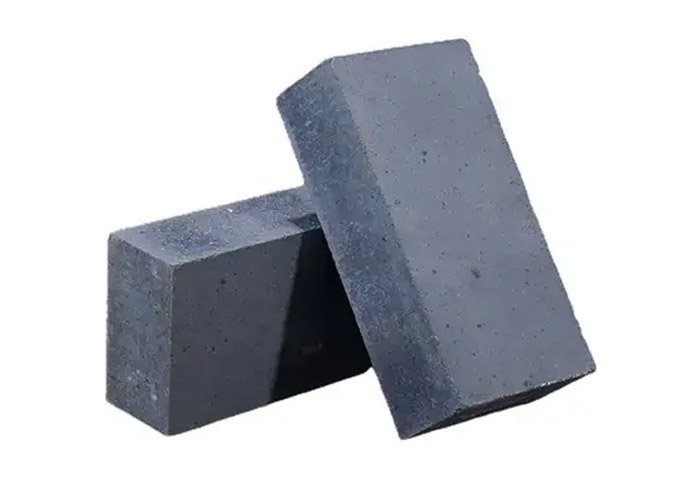
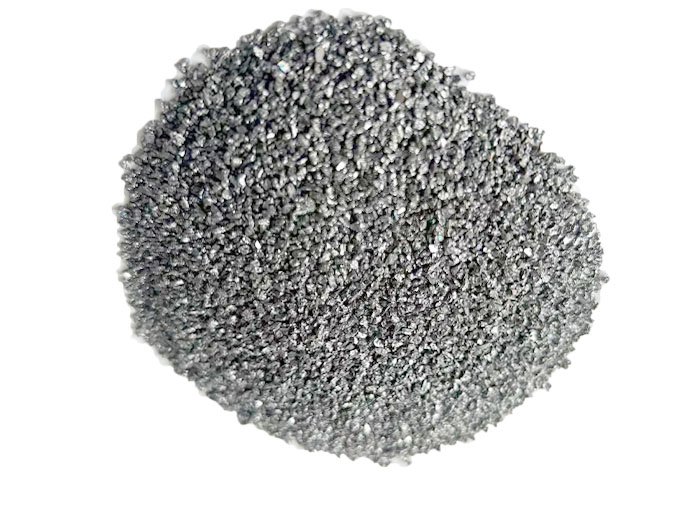
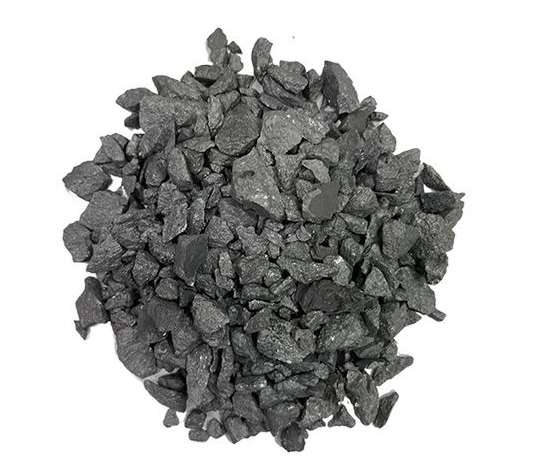
Green silicon carbide is produced by smelting quartz sand, petroleum coke, and wood chips (with salt added during production) in a resistance furnace at high temperature. The main component is α-SiC, with a hexagonal crystal structure and green color. It features high hardness, high purity, good thermal conductivity, and chemical stability.
With a Mohs hardness of 9.4—between corundum and diamond—green silicon carbide has mechanical strength higher than corundum. Our products can be produced to GB/T 2480-2008, W grade, FEPA (Europe), and JIS (Japan) standards, covering the full range from coarse grit to micro powder. They are widely used in abrasives, precision polishing, functional ceramics, photovoltaics and semiconductors, refractories, and surface treatment.
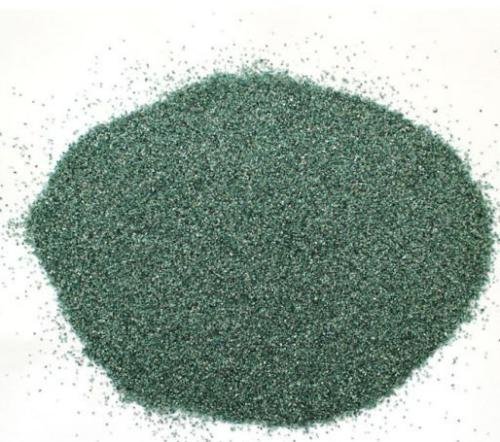
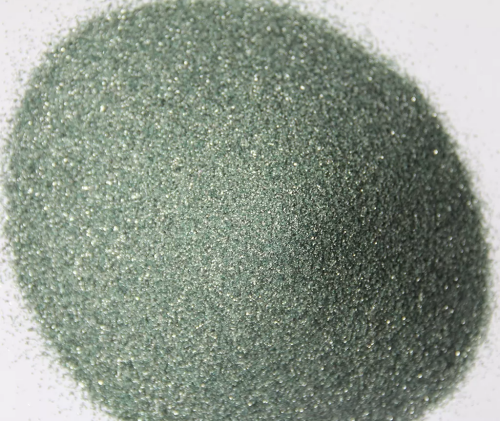
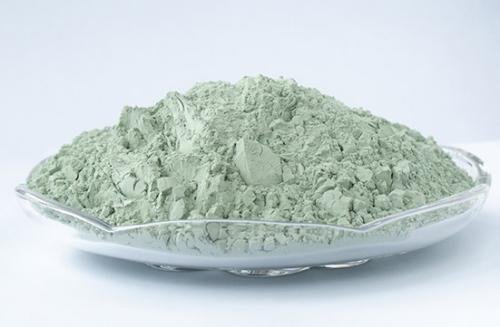
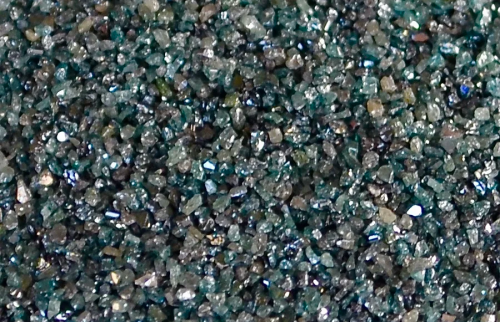
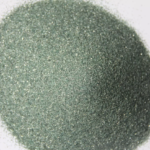
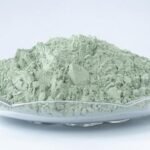
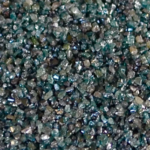
Green silicon carbide is produced by smelting quartz sand, petroleum coke, and wood chips (with salt added during production) in a resistance furnace at high temperature. The main component is α-SiC, with a hexagonal crystal structure and green color. It features high hardness, high purity, good thermal conductivity, and chemical stability.
With a Mohs hardness of 9.4—between corundum and diamond—green silicon carbide has mechanical strength higher than corundum. Our products can be produced to GB/T 2480-2008, W grade, FEPA (Europe), and JIS (Japan) standards, covering the full range from coarse grit to micro powder. They are widely used in abrasives, precision polishing, functional ceramics, photovoltaics and semiconductors, refractories, and surface treatment.
| Item | SiC | Fe₂O₃ | F.C |
| Specification | ≥98.6% | ≤0.40% | ≤0.20% |
High hardness and sharp cutting edges: Mohs hardness 9.4, between corundum and diamond, with mechanical strength higher than corundum. High grinding efficiency, suitable for cemented carbide, ceramics, glass, and other hard materials.
High purity and controllable impurities: SiC ≥98.6%, Fe₂O₃ ≤0.40%, F.C ≤0.20%, magnetic content ≤0.017%, effectively reducing contamination risk in precision processing and semiconductor applications.
Complete particle size system: Covers GB/T 2480-2008, W grade, FEPA, and JIS standards simultaneously. Standard grit sizes from 8# to 20000#, allowing direct ordering to destination-country standards and reducing conversion and acceptance disputes.
High temperature resistance and thermal stability: Maximum service temperature 1900℃, melting point 2250℃. Suitable for refractories, kiln furniture, and heating elements under high-temperature conditions.
Good chemical stability: Resistant to acids, alkalis, and many solvents. Suitable for chemical equipment, coating materials, and wear/corrosion-resistant applications.
Good thermal conductivity and semiconductor properties: Suitable for semiconductor materials, high-temperature SiC heating elements, far-infrared source substrates, and other applications requiring thermal and electrical performance.
Strict particle size control: Particle size composition controlled to GB/T 2480-2008 across coarsest, coarse, basic, mixed, and fine fractions. Stable distribution and good batch-to-batch consistency.
Flexible packaging: Three standard options—bagged, small bags + ton bags, small bags + pallets. Packaging markings and methods can be customized.
| Specifications | 8#, 10#, 12#, 14#, 16#, 20#, 22#, 24#, 30#, 36#, 40#, 46#, 54#, 60#, 70#, 80#, 90#, 100#, 120#, 150#, 180#, 220# | ||
| Particle Size | Chemical Composition(%) | ||
| SiC | F.C | Fe2O3 | |
| 8#-90# | ≥99.24 | ≤0.19 | ≤0.19 |
| 100#-150# | ≥99.21 | ≤0.20 | ≤0.21 |
| 180#-220# | ≥99.16 | ≤0.21 | ≤0.20 |
| Specifications | 240#, 280#, 320#, 360#, 400#, 500#, 600#, 700#, 800#, 1000#, 1200#, 1500#, 2000#, 2500#, 3000#, 4000#, 6000#, 8000#, 10000#, 12500#,20000# | ||
| Particle Size | Chemical Composition(%) | ||
| SiC | F.C | Fe2O3 | |
| 240#-2000# | ≥99 | ≤0.30 | ≤0.20 |
| 2500#-4000# | ≥98.5 | ≤0.5 | ≤0.3 |
| 6000#-20000# | ≥98.1 | ≤0.6 | ≤0.4 |