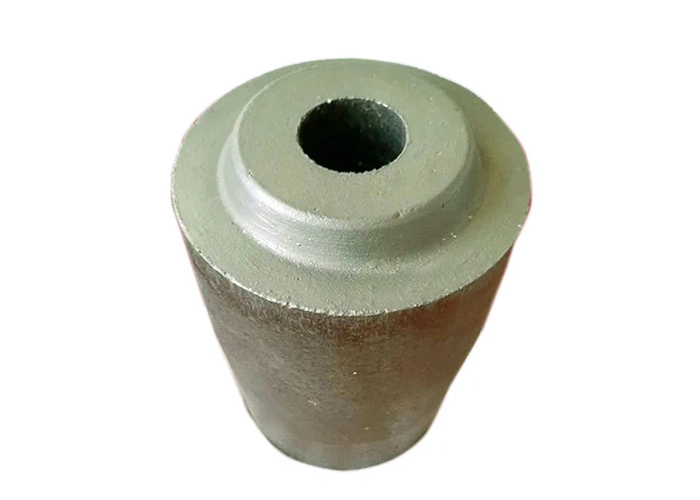
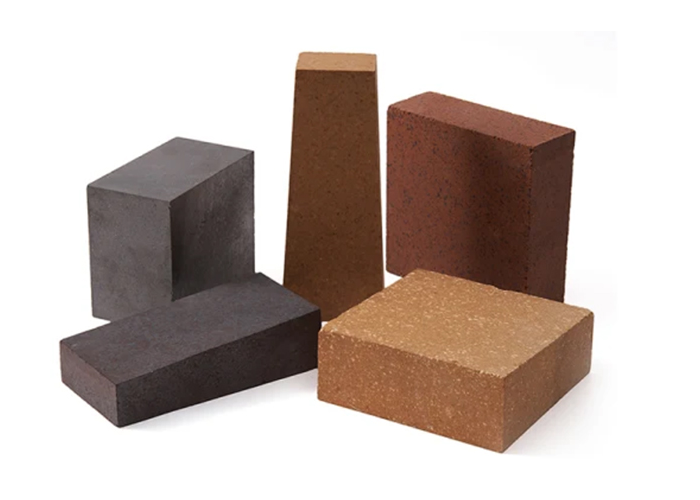
The ladle lower nozzle (also called the collector nozzle) is the terminal refractory component of the ladle slide gate system. It is installed below the sliding mechanism and fixed together with the lower slide plate, moving with the sliding carriage or slider. Its core function is to receive the molten steel from the slide plate bore, guide the steel out of the ladle, control the flow rate and velocity of molten steel flowing out of the ladle, and connect with the ladle shroud to provide protective casting and prevent secondary oxidation of molten steel.
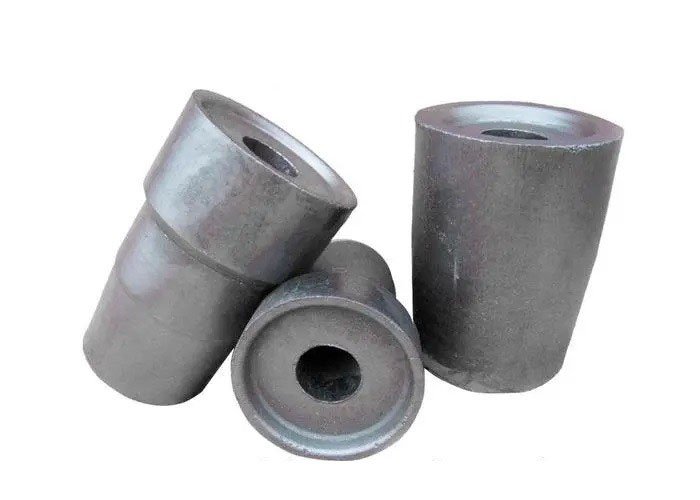
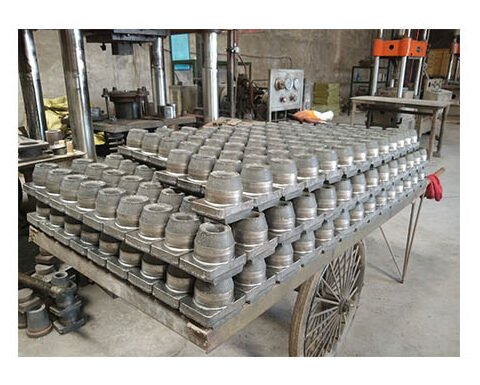
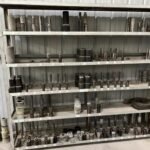
The ladle lower nozzle (also called the collector nozzle) is the terminal refractory component of the ladle slide gate system. It is installed below the sliding mechanism and fixed together with the lower slide plate, moving with the sliding carriage or slider. Its core function is to receive the molten steel from the slide plate bore, guide the steel out of the ladle, control the flow rate and velocity of molten steel flowing out of the ladle, and connect with the ladle shroud to provide protective casting and prevent secondary oxidation of molten steel.
The lower nozzle is typically made from corundum, high-alumina bauxite, flake graphite, antioxidants, phenolic resin, and other raw materials, and is made into an alumina-carbon carbon-containing unburned product through mixing, forming, and drying. At present, most ladle lower nozzles used in steel mills are alumina-carbon press-formed lower nozzles. In recent years, cast-formed lower nozzles have also been developed. The cast body contains no carbon material and has low thermal conductivity; the refractory part and the steel shell are tightly combined to form mutual protection, with uniform bulk density and high fracture resistance. In addition, the two-segment lower nozzle design (the upper fixed segment uses the same material as the slide plate, and the lower variable segment uses wear-prone material) can compensate for the decrease in molten steel pressure in the later stage of casting by gradually increasing the bore diameter of the variable segment, reducing the number of slide plate movements and extending slide plate life.
Lower nozzle models are usually matched with the slide gate mechanism. The Interstop-type slide gate is divided by nozzle diameter into: Type I (<25mm, <20t ladle), Type II (25~50mm, 20~100t), Type III (40~70mm, 90~200t), and Type IV (60~120mm, 180~300t). The Interstop-type is divided by slide plate bore into 30, 50, and 70 types.
Typical product grades and technical parameters :
| Item | HW-KLTG | HW-KLTM2 | HW-KLTV | HW-KLTA | HW-KLTB | HW-CSK |
| Al₂O₃ (%) ≥ | 80 | 75 | 55 | 68 | 60 | 93 |
| C (%) ≤ | — | — | — | — | — | ≤6 |
| Bulk density (g/cm³) ≥ | 2.90 | 2.80 | 2.60 | 2.70 | 2.60 | 2.95 |
| Apparent porosity (%) ≤ | 15 | — | — | — | — | — |
| Compressive strength (MPa) ≥ | 40 | — | — | — | — | 25 |
The inner diameter and shape of the lower nozzle can be customized according to the slide gate system design. The lower nozzle diameter is usually 5~20mm smaller than the slide plate bore.
The ladle lower nozzle is dedicated to ladle slide gate systems in the iron and steel smelting industry. It is installed below the sliding mechanism and performs the flow-guiding and flow-controlling function for molten steel from the ladle to the tundish (or ingot mold).
Specific application scenarios:
Usage method: The lower nozzle and lower slide plate are pre-pressed into the sliding disc or slider by an oil press and move with the sliding mechanism. Nozzle bore enlargement should be monitored during casting and replaced together with the slide plate.