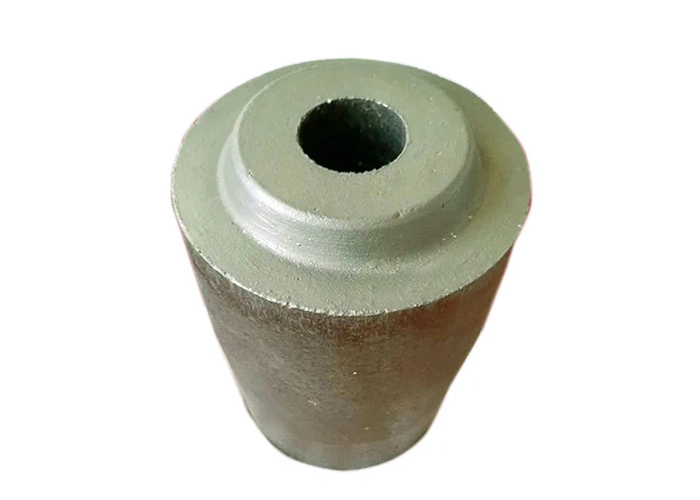
Silica brick is an acidic refractory material with silicon dioxide (SiO₂) as its main component. The SiO₂ content is usually above 93%, and high-quality silica brick can reach above 96%. It uses silica stone (quartzite) as raw material, with mineralizers (such as milk of lime) and binders added, and is fired at 1350~1450℃ after mixing, forming, and drying.
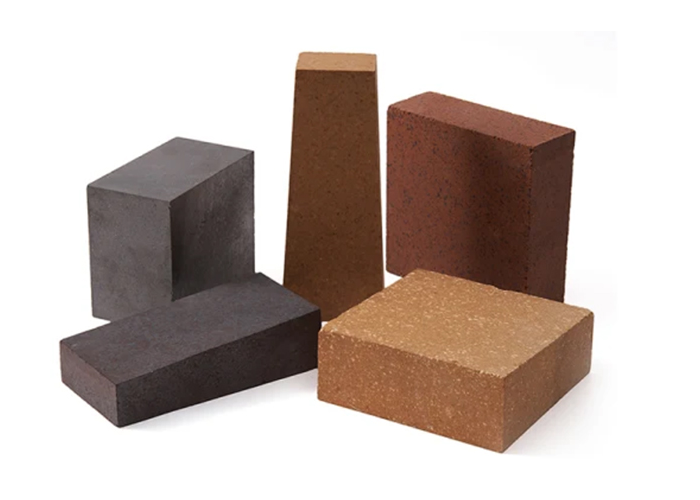
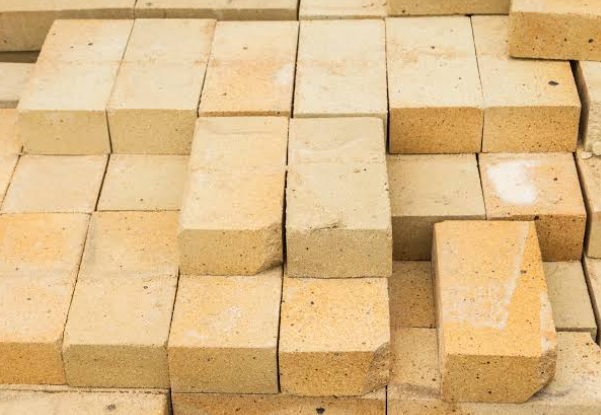
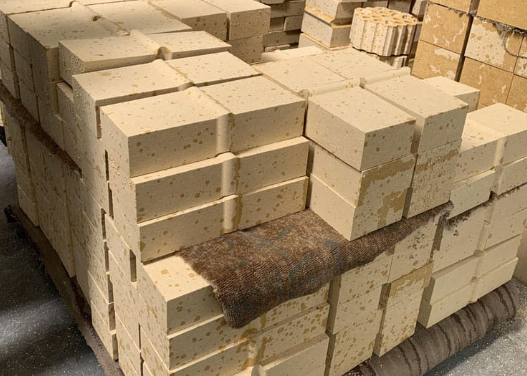
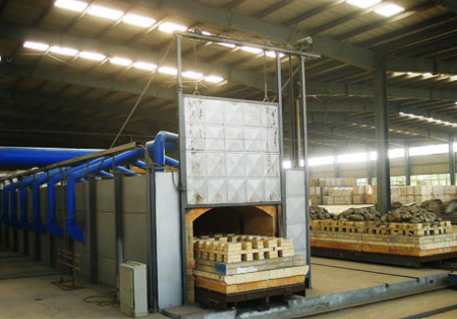
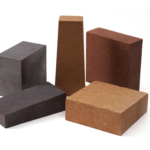
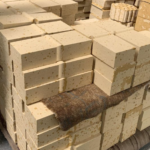
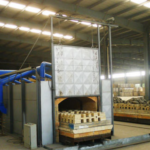
Silica brick is an acidic refractory material with silicon dioxide (SiO₂) as its main component. The SiO₂ content is usually above 93%, and high-quality silica brick can reach above 96%. It uses silica stone (quartzite) as raw material, with mineralizers (such as milk of lime) and binders added, and is fired at 1350~1450℃ after mixing, forming, and drying.
The main mineral composition of silica brick is tridymite, cristobalite, and a small amount of residual quartz and glass phase. During firing, the quartz in the raw material transforms into tridymite and cristobalite. This phase transformation is accompanied by volume expansion, so the firing of silica brick requires strict control of the heating and holding schedule.
Silica brick is a strongly acidic refractory material. It has good resistance to acidic slag and acidic gases, but poor resistance to alkaline slag (especially oxides such as Al₂O₃, K₂O, and Na₂O). Its refractoriness under load is extremely high (1640~1680℃), close to the melting point of tridymite and cristobalite, and it has stable volume and no deformation during long-term high-temperature use.
According to the national standard GB/T 2608—2025, silica bricks are divided by main application into three major categories: glass furnace, coke oven, and hot blast stove, and are divided into six grades according to physical and chemical indicators.
In the grade designation, the letters mean: “G” for silica, “B” for glass furnace, “J” for coke oven, and “R” for hot blast stove; the number represents the mass fraction of SiO₂; “a, b” represent product levels, and “H” represents high thermal conductivity.
Silica Brick for Glass Furnace (BG Series)
| Item | BG-96a | BG-96b | BG-95 |
| SiO₂ (%) ≥ | 96 | 96 | 95 |
| Fe₂O₃ (%) ≤ | 0.5 | 0.8 | 1.0 |
| Apparent porosity (%) ≤ | 21 | 22 | — |
| True density (g/cm³) ≤ | 2.34 | 2.34 | 2.34 |
| Cold compressive strength (MPa) ≥ | 40 | 35 | 30 |
| Refractoriness under load (0.2MPa) start temperature (℃) ≥ | 1680 | 1670 | 1670 |
Silica Brick for Coke Oven (JG Series)
| Item | JG-95H | JG-94 |
| SiO₂ (%) ≥ | 95 | 94 |
| Apparent porosity (%) | ≤22 | ≤24 |
| Cold compressive strength (MPa) ≥ | — | ≥28~40 |
| Refractoriness under load (0.2MPa) start temperature (℃) ≥ | ≥1650 | ≥1650 |
| Item | RG-95 |
| SiO₂ (%) ≥ | 95 |
| Fe₂O₃ (%) ≤ | 1.2 |
| Apparent porosity (%) ≤ | 22 (24) |
| True density (g/cm³) ≤ | 2.33 (2.34) |
| Cold compressive strength (MPa) ≥ | 40 (30) |
| Refractoriness under load (0.2MPa) start temperature (℃) ≥ | 1650 |
Silica Brick for Hot Blast Stove (RG Series)
Note: Values in parentheses are indicators for checker bricks.
Silica brick is mainly used in the following key parts of high-temperature industrial kilns:
The biggest disadvantage of silica brick is its low thermal shock resistance. During heating or cooling below 600℃, due to the severe volume change accompanying quartz crystal transformation (significant expansion in the room temperature to 600℃ range), cracks are very likely to occur. Therefore:
The heating and cooling speed must be strictly controlled during furnace drying and shutdown, especially in the stage before 600℃ where expansion is intense, which must be carried out slowly
The silica brick masonry should reserve expansion joints according to the thermal expansion rate provided by the manufacturer
It should be waterproof and moisture-proof during storage. After being wetted, it needs to be slowly dried below 100℃. Water-containing silica brick may affect strength after freezing and needs to be re-inspected