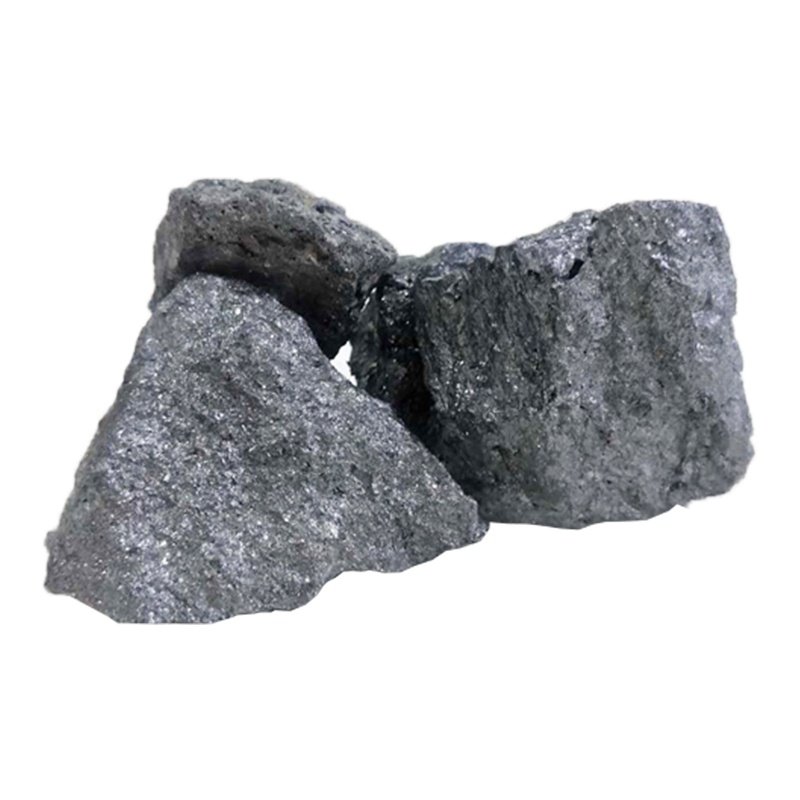
In the fiercely competitive steel industry, optimizing production costs without compromising quality is the key to profitability. Every procurement manager and metallurgist is constantly seeking that strategic advantage. What if you could reduce your deoxidizer and alloying costs significantly while maintaining, or even improving, your melt efficiency?
The answer lies in High Carbon Silicon (HC Si). This versatile, cost-effective ferroalloy is a game-changer for modern steelmaking, and Beifang Alloy is here to guide you through its benefits and procurement.
Steelmakers are under constant pressure to:
Reduce Raw Material Costs: The primary driver. Ferrosilicon (FeSi) is a major expense, and finding a lower-cost alternative is crucial.
Streamline the Process: Simplifying the alloy addition process saves time, energy, and labor.
Maintain Metallurgical Quality: Any cost-saving measure cannot come at the expense of the final steel product’s integrity.
Improve Furnace Efficiency: Optimizing the chemical reactions within the furnace to reduce power consumption and tap-to-tap time.
High Carbon Silicon meets these needs head-on. It acts as a powerful deoxidizer and alloying agent, simultaneously introducing silicon and carbon into the molten steel. This dual action often eliminates the need for separate additions of FeSi and recarburizers, leading to direct savings in material and operational costs.
Extensive research and practical application in mills worldwide have confirmed the economic benefits of High Carbon Silicon. The core advantage stems from its composition.
Typical Composition: Si: 55-70%, C: 12-18%, with low levels of impurities like Al, S, and P.
The Cost Equation: High Carbon Silicon is significantly cheaper per metric ton than standard Ferrosilicon 75. While the silicon content is slightly lower, the inclusion of valuable carbon creates a superior value proposition. When you calculate the cost per unit of effective element added (Si + C), HC Si consistently comes out ahead.
Performance Benefits:
Enhanced Slag Fluidity: Improves the efficiency of the desulfurization process.
Higher Carbon Yield: Compared to other recarburizers, the carbon in HC Si has a high and predictable recovery rate.
Energy Efficiency: The exothermic reaction during dissolution can contribute to slight thermal savings in the furnace.
For steel grades where precise mid-range silicon content and controlled carbon addition are required (e.g., certain structural steels, wire rods, and rebar), HC Si is not just an alternative—it’s the optimal choice.
Switching to or sourcing HC Si requires a strategic approach. Here’s a quick guide:
Define Your Specification: Clearly determine the required Si and C ranges, and crucially, the maximum allowable limits for impurities like Aluminum (Al), Phosphorus (P), and Sulfur (S). This will dictate the grade you need.
Calculate the True Cost: Don’t just compare the price per ton to FeSi 75. Work with your technical team to calculate the “effective cost” based on the combined value of silicon and carbon, factoring in their respective recovery rates in your specific process.
Evaluate Supplier Capabilities: Look for a supplier with:
Modern Production Facilities: Ensures consistent composition and low impurity levels.
Strong Technical Support: Can provide guidance on usage ratios and best practices for your steel grade.
Reliable Logistics: Guarantees a stable and timely supply to keep your production running smoothly.
Not all High Carbon Silicon is created equal. The difference lies in manufacturing control, product consistency, and supplier reliability. Here’s how Beifang Alloy stands out:
| Feature | Average Supplier | Beifang Alloy |
|---|---|---|
| Product Purity | Variable impurity levels; higher Al content possible. | Consistently low levels of Al, P, and S. Our controlled production process ensures a cleaner product for higher-quality steel. |
| Composition Consistency | Can vary between batches, causing operational instability. | Tight control on Si and C ranges. We guarantee batch-to-batch consistency for predictable results in your furnace. |
| Technical Expertise | Primarily a trader or basic producer. | Deep metallurgical knowledge. We provide expert technical support to help you maximize savings and efficiency. |
| Production Capacity | May have limited or unreliable output. | Stable, large-scale production capacity to meet the demands of major steel mills without disruption. |
| Value-Added Service | Basic transactional relationship. | Partnership approach. We offer customized sizing, just-in-time delivery, and comprehensive after-sales service. |
At Beifang Alloy, we are more than just a factory; we are your strategic partner in cost reduction. Our High Carbon Silicon is produced with state-of-the-art technology and rigorous quality control to deliver the performance and savings your business deserves.
Ready to reduce your steelmaking costs without compromise?
Contact Us Today for a Custom Quote and Technical Data Sheet.
Visit our website: www.beifangalloy.com
Email our experts: info@hnxyie.com