Decoding the Secrets of Blast Furnace Longevity and Cost Reduction through a Procurement Mindset
In the delicate balance of pig iron cost control, taphole clay (gun mass) unit consumption is a key indicator of the health of a blast furnace taphole maintenance. Many steel enterprises face the same puzzle: Why is more and more taphole clay being used, while taphole depth fluctuates wildly, sometimes even leading to increased downtime rates?
As a professional supplier deeply rooted in the ferroalloy and refractory sector for years—Beifang Alloy—we understand the decisive impact of non-oxide high-temperature binders such as Silicon Nitride (Si₃N₄) and Silicon Carbide (SiC) on taphole clay performance. Today, we will dissect the root causes of high taphole clay consumption from four critical dimensions: Procurement Needs, Industry Research, Procurement Guide, and Supplier Comparison.
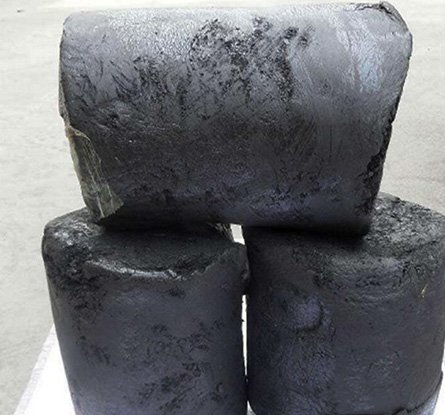
Many purchase orders simply list “anhydrous taphole clay” or “gun mass,” and this is precisely where the problem begins. Taphole clay is not just a material to plug the hole; it is a functional material that participates in the chemical reactions in front of the blast furnace.
1. Ignoring the Personalized Needs of Furnace Volume
The demands for taphole clay vary dramatically between different furnace volumes. Small blast furnaces may prioritize plasticity, while medium to large furnaces must emphasize erosion resistance and slag resistance.
The Trap: To pursue lower costs, some procure a “one-size-fits-all” taphole clay. This results in a medium-sized furnace using clay designed for a smaller one, leading to shorter tapping times and, naturally, higher consumption.
2. Environmental Policies Driving Technological Upgrades
Traditional tar-based binders offer good lubricity but perform poorly in environmental terms and have high benzo(a)pyrene content. With increasingly stringent national regulations on coking processes, if the procured taphole clay still uses inferior tar (high moisture, high ash content), the low coking value will directly lead to shortened tapping times and increased consumption.
According to the latest industry research, the global taphole clay (gun mass) market is steadily growing, projected to reach approximately 8.27 billion yuan by 2031. The driving force behind this growth is not an increase in “volume,” but an enhancement in “performance.”
1. The Shift to Non-Oxide Reinforcement
Current industry research indicates that high-performance taphole clays are evolving from simple “clay-carbon” systems to “non-oxide composite” systems. The addition of materials like Si₃N₄ and SiC (the core strengths of Beifang Alloy) significantly improves the material’s high-temperature strength and slag resistance. If your taphole clay lacks these high-temperature reinforcing phases, it will inevitably erode quickly in high-oxygen potential environments, leading to higher consumption.
2. The Era of Accurate Control of Taphole Depth
Modern blast furnace smelting demands that taphole depth deviation be controlled within a very small range. Research data shows that for every 0.1-meter fluctuation in taphole depth, taphole clay consumption can increase by 5%-10%. The problem of high consumption is often not that the “material is used too much,” but that the “taphole is unstable,” forcing the use of excess material to compensate for depth.
To lower consumption, you must not only look at the “price per ton” but also the “cost per ton of iron.” Here is a procurement guide from Beifang Alloy:
1. Look at the Binding System (The “Glue” of Taphole Clay)
Traditional Composite Resin: Low cost, but prone to carbon precipitation, making the taphole brittle.
High-Tech Binder Systems: Opt for products using environmentally friendly resin or composite binder systems modified with special additives. They ensure plasticity while enhancing the strength of the material after high-temperature carbonization, preventing the “short taphole” phenomenon during tapping.
2. Look at the High-Temperature Reinforcement Phase (The “Bones” of Taphole Clay)
This is where consumption is directly impacted. High-performance taphole clay must contain a certain proportion of Silicon Nitride and Silicon Carbide.
Function: These materials form a protective layer at the taphole, resisting the erosion of molten iron and slag.
Procurement Suggestion: Ask the supplier for the Si₃N₄ and SiC content analysis. Beifang Alloy, leveraging its ferroalloy background, offers taphole clay with a precisely controlled non-oxide addition, ensuring optimal cost-performance.
3. Look at the Granularity and Grading (The “Compactness” of Taphole Clay)
Reasonable particle size distribution is key to reducing porosity. If the material is too porous, molten iron and slag will easily penetrate, accelerating erosion.
When comparing suppliers, stop focusing solely on the quote. Beifang Alloy suggests establishing the following comparison dimensions:
| Dimension for Comparison | Traditional Trader / Small Workshop | Beifang Alloy (Professional Manufacturer) |
|---|---|---|
| Raw Material Source | Relies on external procurement, unstable quality | Integrated industry chain, self-produced Silicon Nitride and Silicon Carbide as key additives |
| Technical Focus | Simple batching, clay + coke particles | High-temperature composite reinforcement technology, focusing on high-temperature erosion resistance and抗氧化性 |
| Application Scenario | Generalized formula | Customized formulation based on your specific furnace conditions (furnace volume, tapping frequency, iron temperature) |
| Consumption Level | 0.8 – 1.2 kg/tHM (Fluctuates greatly) | Targeting 0.5 – 0.8 kg/tHM (Stable control) |
If your taphole clay consumption remains stubbornly high, the problem likely lies not with the “clay” itself, but with the underlying technology and the procurement strategy.
Beifang Alloy not only supplies high-quality anhydrous taphole clay, but we also provide full-process services from raw material selection (our specialty, Si₃N₄ / FeSi / SiC) to on-site taphole management guidance. We look forward to discussing, based on your specific blast furnace conditions, how we can work together to “press down” your production costs.