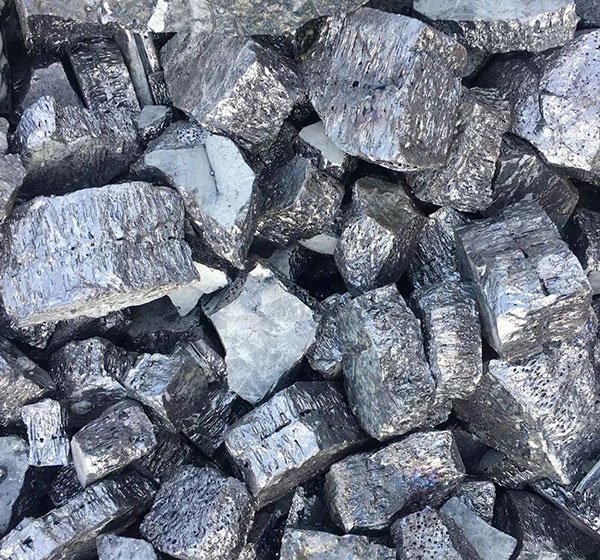
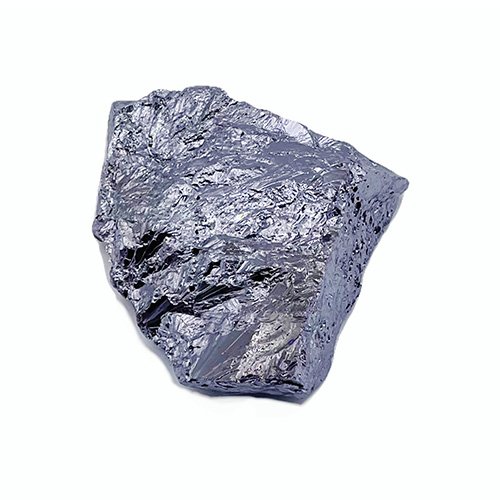
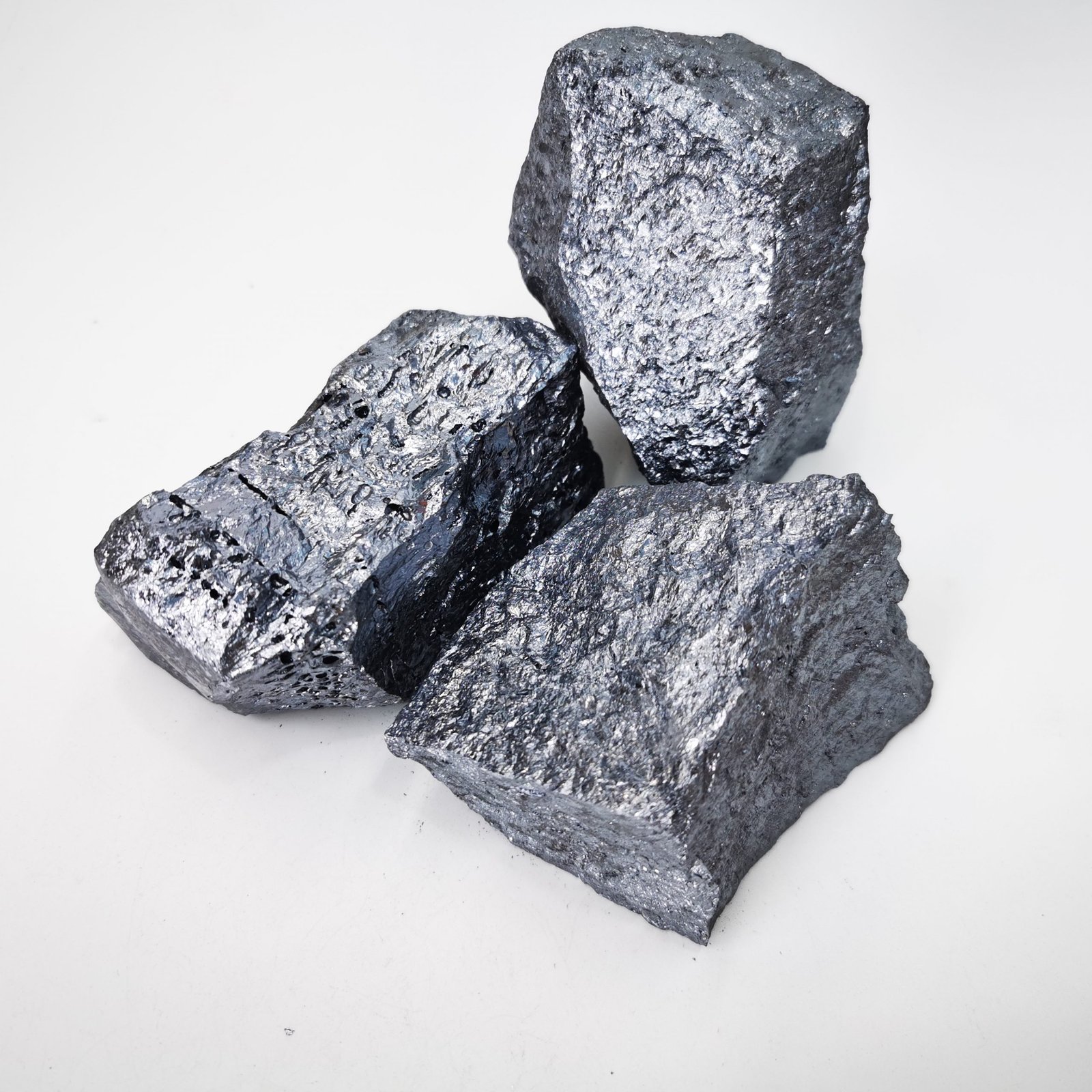
As the global aluminum industry accelerates toward carbon neutrality, secondary (recycled) aluminum has become the mainstream choice. However, compared to primary aluminum, the biggest challenge of secondary aluminum is downcycling — due to complex scrap sources, impurity elements (especially Fe, Mg, Ti, V) accumulate and severely limit high-end applications.
In secondary aluminum production, silicon (Si) addition is an essential alloying step. But if done improperly, instead of improving performance, it can worsen impurity issues. As a leading manufacturer of silicon metal and ferroalloys, Beifang Alloy combines the latest research breakthroughs with practical experience to help you achieve impurity balance during silicon alloying — enabling high-quality, closed-loop recycling.
For secondary aluminum producers, the role of buying industrial silicon (Si) has changed. Traditional needs focused on supplementing silicon lost during dilution. But today, for high-end applications (auto structural parts, conductor materials), the core procurement need is using silicon precisely to neutralize and remove harmful impurities.
In Al-Si alloys, silicon is a major element. Recent research (e.g., patents from the Chinese Academy of Sciences) shows that increasing the Si/Fe ratio can effectively reduce the harmful effects of iron-rich intermetallic phases. This means you are not just buying silicon — you are buying an impurity phase modifier.
Even though secondary aluminum uses scrap as feed, the added silicon must be clean. Beifang Alloy recommends that for high-end secondary aluminum, silicon material should have Fe, Ca, and Ti strictly controlled — avoiding secondary contamination.
Iron (Fe) is the most common and troublesome impurity in secondary aluminum. With very low solid solubility in aluminum, iron forms coarse, needle-like β-AlFeSi phases — like sharp blades cutting through the matrix — dramatically reducing toughness and fatigue life.
Traditional physical iron removal (gravity settling, centrifugal separation, electromagnetic) is costly and inefficient. The current frontier is impurity phase modification.
Technical explanation:
By adding an appropriate and precise amount of silicon to the secondary aluminum melt, together with elements like manganese (Mn), the needle-like β-Fe phase can be transformed into a Chinese-script α-Fe phase (e.g., AlFeSi or AlMnFeSi). When the Si/Fe ratio is controlled within a certain range, the harmful morphology of iron-rich phases is modified — greatly reducing their detrimental effect on the matrix.
Customers using Beifang Alloy’s high-purity silicon and AlSi master alloys report significantly lower crack rates during subsequent extrusion or rolling. This validates the “use silicon to manage iron” strategy.
To balance impurities, procurement decisions must go beyond price — focus on the following three technical indicators:
General casting: Meeting national standards is sufficient.
High-end wrought aluminum alloys: You must calculate total Fe in the furnace charge, then determine the required supplemental silicon.
Expert advice: Reserve 10–15% extra silicon as a “buffer” to handle furnace fluctuations.
Manganese (Mn): Mn can combine with Fe to form settled compounds. Because Mn is expensive, it is usually introduced via ferrosilicon or AlMn master alloy.
Boron / Vanadium / Titanium control: For high-conductivity secondary aluminum (e.g., 6101 alloy), V and Ti drastically reduce conductivity. Adding Al-B master alloy can effectively remove Ti and V. Beifang Alloy supplies high-purity boron alloys to help customers purify conductor aluminum during silicon alloying.
Purchased silicon requires proper melting practice:
Melting temperature: Recommended to add silicon and master alloys around 750°C for full diffusion.
Holding and cleaning: After silicon addition, use fluxes and rotary degassing (argon) to physically and chemically remove accumulated impurity phases.
Many silicon suppliers exist, but few provide metallurgical solutions. Below is a comparison between ordinary traders/plants and Beifang Alloy:
| Dimension | Ordinary Supplier | Beifang Alloy |
|---|---|---|
| Product Strategy | Standard grades (e.g., 553, 441), commodity-oriented | Customized solutions: high-purity silicon, AlSi master alloys, and specific “impurity-removing” silicon products |
| Impurity Control | Focuses only on main element (Si), limited Fe/Ca control | Trace-level management: ultra-pure silicon with low B, low P, low Ti — meets high-end conductive aluminum requirements |
| Technical Support | Pure supply relationship | Process integration: leverages CAS and international research to guide customers on Si/Fe ratio optimization and melt treatment |
| Applications | General aluminum alloys | Challenging scenarios: automotive wheels (high toughness), PV rails (corrosion resistance), bus bars (high conductivity) |
| Sustainability | High-carbon production | Clean energy + large submerged-arc furnaces; transparent carbon footprint data — helps customers pass EU CBAM |
The competitiveness of secondary aluminum production is essentially a battle of impurity control. When it is impossible to completely remove iron, vanadium and other impurities from scrap, scientific silicon addition to “turn waste into value” is currently the most economical technical path.
Beifang Alloy is not just a silicon metal provider — we are your melt formulation engineer. We offer a full range of products, from standard silicon metal to high-purity master alloys, helping you find the optimal balance between performance and cost in every silicon addition.
Beifang Alloy — Empowering secondary aluminum, purifying every melt.
Website: www.beifangalloy.com
Email: info@hnxyie.com
Call to Action: Need a Technical Data Sheet for Silicon Products in Secondary Aluminum or a solution for “low-iron silicon alloying”? Contact our technical sales team today.