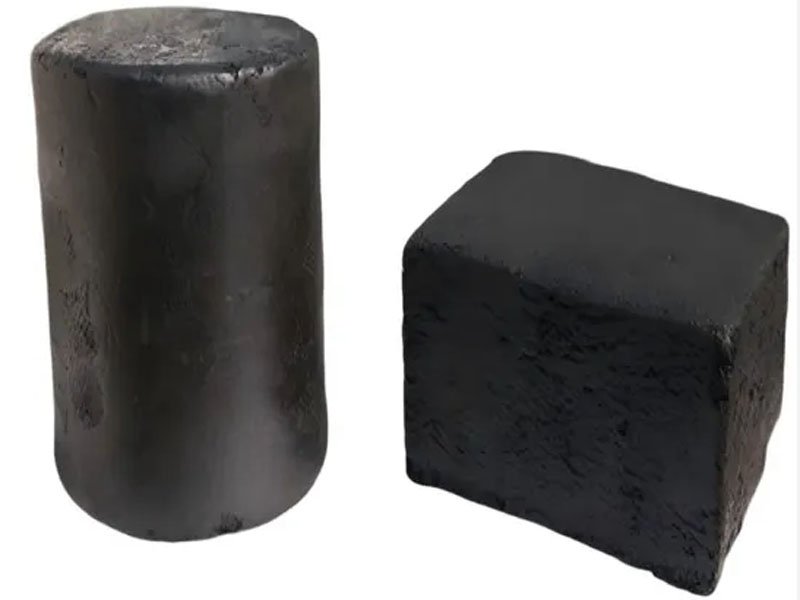
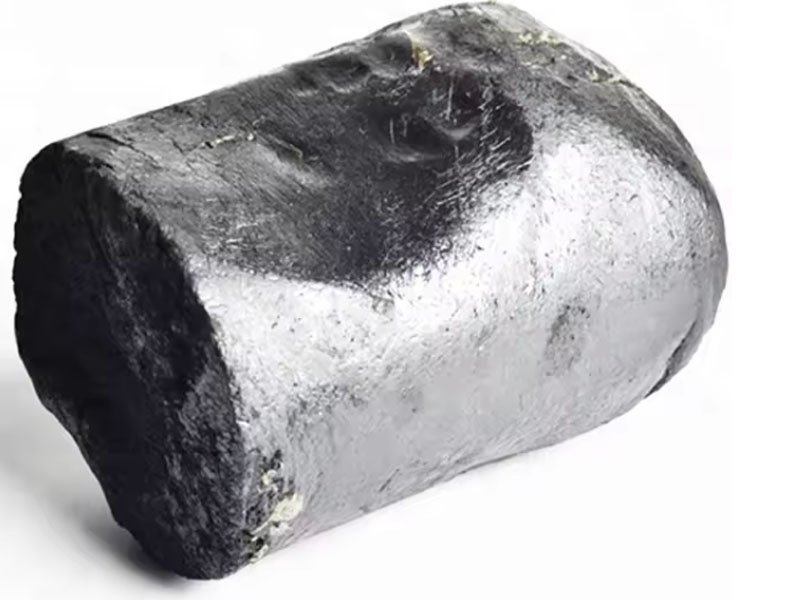
Walk into any ferroalloy plant’s taphole clay storage area, and you’ll likely see an experienced operator doing this:
Picking up a chunk of clay. Squeezing it. Maybe rolling it between their palms. Then declaring:
“This batch feels different.”
Sometimes they’re right. Sometimes they’re wrong. But everyone trusts the “hand feel” — because for decades, that was the only test available.
But here’s the question that separates professional procurement from guesswork:
Can taphole clay plasticity be quantified objectively? Or are we still relying on the ancient art of “squeeze and pray”?
The answer matters. Because plasticity isn’t just a property — it’s the property that determines whether your clay gun extrudessmoothly, whether your taphole seals properly, and whether your furnace stays online.
Let’s settle this once and for all.
When you specify taphole clay, what performance characteristic do you really need?
| If plasticity is… | The Result |
|---|---|
| Too low | Clay is “short” — cracks under pressure, won’t extrude properly, fails to seal taphole → safety hazard |
| Too high | Clay is “sticky” — clogs the gun, difficult to pump, inconsistent packing → production delay |
| Just right | Smooth extrusion, complete filling, consistent sealing → stable operation |
Plasticity is defined as “the quality of being easily shaped or moulded”. In clay-gun operation, it’s the single most important characteristic for closing a furnace tap-hole.
But here’s the problem most procurement teams face:
Most suppliers report a “workability index” on their datasheets — but rarely quote which method they used.
In one survey of 14 commercial taphole clay datasheets, 10 reported workability index results with values ranging from 22% to 70% — a spread so wide it’s essentially meaningless without knowing the test method.
So as a buyer, how do you know if you’re comparing apples to apples?
The good news: plasticity can be quantified. The bad news: there’s more than one way to do it.
This is the international standard method, specified in ISO 1927-3 (2012) and ASTM C180.
How it works:
A sample of taphole clay (200–300g) is placed in a cylindrical steel mould (50mm inside diameter)
A sand-rammer drops a 6.67kg weight from a fixed height of 47mm
The sample is rammed three times
The height reduction is measured and calculated:
Workability Index = 100 × (H − H₃) / H
Where H = original height, H₃ = height after three rams
What it tells you: A higher workability index means greater height reduction — indicating more plastic (easier to deform) material.
The catch: This test is conducted at room temperature (18–24°C), not at actual taphole operating temperatures. And there’s no clear correlation between lab workability index and actual clay-gun performance.
Also known as the “Marshall Softness Test” (MST), this method measures extrusion resistance.
How it works:
Clay is forced through a die (extrusion)
The maximum force divided by the die cross-sectional area = Marshall Value
What it tells you: A measure of both plasticity and “stiffness” — how much pressure is needed to push the clay through the gun.
Advanced option: Some MST testers include heated molds (RT–100°C) to prevent temperature drop during testing, giving more realistic results.
Recent research in Japan has developed image processing methods to evaluate plasticity.
How it works:
Measures not just water content and deformation ratio (like Pfefferkorn method)
Also evaluates crack formation during deformation
What it tells you: More comprehensive data — because a clay can deform without cracking (good plasticity) or deform and crack (bad).
Let’s be honest — this is still widely used. An experienced operator squeezes the clay and makes a judgment.
Pros: Fast, free, real-time.
Cons: Subjective, inconsistent between people, impossible to document for quality control.
An operator who’s been doing this for 20 years has valuable intuition. But intuition doesn’t hold up in a supplier audit or a quality dispute.
If you want to stop guessing and start measuring, here’s your procurement checklist:
When requesting quotes or reviewing supplier datasheets, ask:
“What test method did you use to determine plasticity/workability? Please provide the standard (ISO, ASTM, or other).”
If a supplier can’t answer this — red flag.
For every shipment, request:
Workability index (with method stated)
Marshall Value (if available)
Moisture content (critical — too high causes spitting, too low causes poor plasticity)
Modern taphole clay analyzers can measure moisture content in minutes using infrared or microwave drying, compared to hours with traditional oven methods.
Lab numbers are useful, but they don’t replace on-furnace validation.
Run a trial batch and measure:
Extrusion pressure at the clay gun
Taphole fill completeness
Opening ease on next tap
Taphole depth retention
Compare lab results to field performance — and build your own correlation database.
Plasticity isn’t the only property that matters. A complete taphole clay specification should include:
| Property | Why It Matters |
|---|---|
| Workability Index | Extrusion & packing ease |
| Marshall Value | Gun pressure requirements |
| Moisture Content | Spitting risk, plasticity |
| Cold Crushing Strength | After-baking integrity |
| Linear Change | Cracking during drying |
| Refractoriness | Withstands tapping temperature |
| Erosion Resistance | Taphole life |
| Evaluation Criterion | Commodity Supplier | Technical Partner (Beifang Alloy) |
|---|---|---|
| Plasticity data | “Good plasticity” (vague) | Workability index with ISO 1927-3 method stated |
| Test method transparency | Unwilling or unable to specify | Full disclosure of lab methods and equipment |
| Batch consistency | “Should be fine” | CoA (Certificate of Analysis) with each shipment |
| Moisture control | Unknown | Documented moisture content ± tolerance |
| Field validation | None | Trial support + performance tracking |
| Customization | One formula fits all | Adjustable plasticity for your furnace type & gun |
Why Beifang Alloy?
We don’t just sell taphole clay. We help you measure what matters.
We report workability index using recognized standards (ISO 1927-3)
We provide batch-specific data for every shipment
We’re both a ferroalloy producer and a taphole clay supplier — we actually use this stuff ourselves
We help you run valid on-furnace comparisons, not just read lab reports
Here’s the honest answer:
Both.
The instrument gives you objective, repeatable, documentable data — essential for quality control, supplier evaluation, and dispute resolution.
The experienced operator gives you real-time feedback that no lab test can fully replicate — yet.
But here’s the key insight from industry research:
The correlation between lab workability index and actual clay-gun performance is not yet fully understood.
That means: don’t rely on lab numbers alone. And don’t rely on hand feel alone.
Use both. Build your own correlation. And work with suppliers who help you do that.
Website: www.beifangalloy.com
Email: info@hnxyie.com