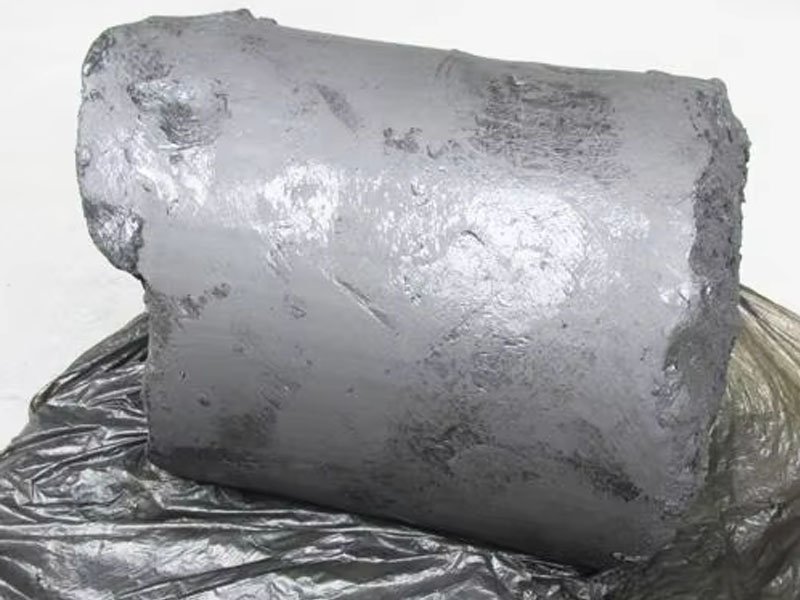
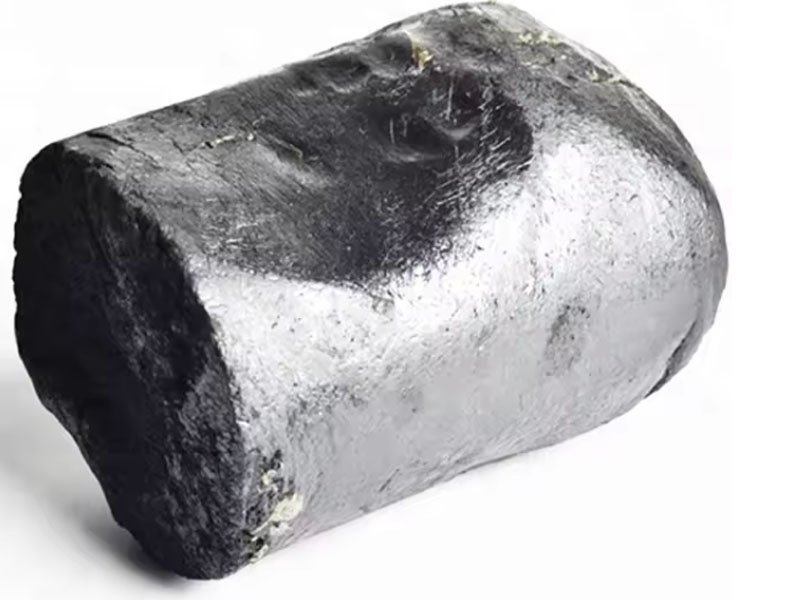
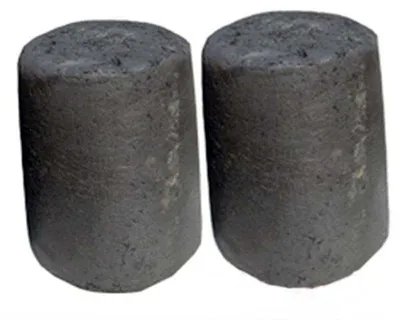
When environmental compliance shifts from “end-of-pipe treatment” to “source control”, and when fully enclosed tapping areas become the industry standard, one thing is being redefined: the “smoke-free” performance of taphole clay is no longer a selling point that suppliers use to differentiate themselves—it is a baseline requirement that determines whether a procurement decision can even move forward.
As a company deeply rooted in the ferroalloy sector, Beifang Alloy (www.beifangalloy.com) pays close attention to every detail on the production floor. In this article, we examine four dimensions—procurement needs, industry research, procurement guide, and supplier comparison—to explain why smoke-free taphole clay is no longer optional in today’s operating environment.
According to China’s Code for Design of Environmental Protection in Iron and Steel Industry (GB50406-2017), all dust-generating points at the tapping area—including the taphole, main trough, iron runner, slag runner, skimmer, and oscillating launder—must be enclosed. The Guidelines for Fugitive Emission Management in Blast Furnace Operations further specify that all dust-generating points must be fully enclosed, and the tapping area must be kept clean, tidy, and free of dust accumulation, with no visible fugitive smoke or dust emissions on site.
What does this mean in practice?
It means the old days of “keeping the doors open and letting the wind do the work” are over. In a fully enclosed environment, any smoke or dust emissions are immediately trapped and become impossible to ignore. If taphole clay generates yellow smoke or pungent odors during use, it will directly threaten operator health in the confined space—and quickly trigger environmental monitoring alarms.
In recent years, environmental requirements for steel and ferroalloy enterprises have been escalating rapidly at both the national and local levels. For example, following the implementation of the Environmental Production Standard for Ferrosilicon Alloys led by Jitie Company in Ulanqab, local ferrosilicon producers achieved a 42% average reduction in dust emissions, while waste gas recovery rates increased from 30% to 85%. Behind these numbers is a reality: production companies are tightening environmental requirements across their entire supply chains—and taphole clay is no exception.
For taphole clay, traditional coal tar binders release large amounts of yellow smoke containing polycyclic aromatic hydrocarbons (PAHs). The International Agency for Research on Cancer (IARC) classifies coal tar as Group 1 (carcinogenic to humans) . In a fully enclosed tapping area, the accumulation risk of such emissions is magnified exponentially, tightly coupling workers’ occupational health risks with the company’s legal liabilities.
Beifang Alloy’s position is clear: In a fully enclosed tapping area, procuring smoke-free taphole clay is not about choosing a “better product”—it is about choosing a “compliant product.” Any taphole clay that cannot deliver smoke-free performance is no longer suitable for today’s operating environment.
Traditional waterless taphole clay typically uses coal tar or coal tar pitch as the binder. These materials release large volumes of dense yellow smoke at high temperatures, primarily composed of PAHs, phenols, and other hazardous substances. Beyond environmental and health risks, coal tar is also included in the PRTR (Pollutant Release and Transfer Register) in many countries, facing increasingly stringent legal restrictions in transportation, storage, and usage.
Industry leaders have already delivered clear solutions:
Resin-Bonded Technology: Replacing coal tar with phenolic resin as the binder dramatically reduces hazardous emissions. Comparative data from Japan’s Krosaki Harima (AirGreen™) shows that at 70°C, conventional resin-bonded clay releases airborne phenol concentrations exceeding 25.0 ppm (the detection limit), while the eco-friendly version registers below the detection limit of 0.3 ppm.
Eco-Resin with Specialty Additives: RHI Magnesita’s Seven Tap™ series uses eco-friendly resin binders, completely eliminating coal tar and its derivatives, while incorporating carbides, nitrides, and other specialty additives to ensure high-temperature strength. It has been applied in over 50 blast furnaces globally, with the largest serving a 4,400 m³ furnace.
Smoke-Free Micro-Expansion Technology: As early as 2010, Chinese manufacturers had already developed smoke-free, micro-expansion waterless taphole clay using phenolic resin binders, which produces no yellow smoke and only minimal odor during use, with expansion agents added to compensate for high-temperature shrinkage cracks.
The reality is this: smoke-free taphole clay is not a laboratory concept—it is a mature, proven technology deployed worldwide. If a supplier still cannot offer smoke-free products today, the problem is not technological immaturity—it is a lack of R&D capability and environmental awareness that has failed to keep pace with industry requirements.
Drawing from Beifang Alloy’s hands-on procurement experience, we recommend evaluating suppliers across the following dimensions:
This is the core factor determining “smoky” vs. “smoke-free.” Require suppliers to clearly specify their binder type:
❌ Coal tar / coal tar pitch binder: Produces yellow smoke, contains PAHs, faces regulatory restrictions
✅ Phenolic resin binder: Low smoke, low phenol, low aldehyde—require test reports on emissions at simulated service temperatures
✅ Eco-resin binder: As in RHI Magnesita’s Seven Tap™—claims complete elimination of coal tar and non-hazardous classification
Procurement action: Request third-party test reports clearly indicating release concentrations of phenol, formaldehyde, PAHs, and other indicators at relevant temperature ranges.
Smoke-free is just the “entry ticket.” The real performance criteria include:
Smoothness of opening (does it require oxygen lancing?)
Stability of taphole depth maintenance
Tapping duration meeting production requirements
Cost efficiency (consumption per tap)
Industry benchmark references: taphole depth >1/3 of hearth diameter, with single tapping durations up to 200 minutes.
Taphole clay performance varies significantly across different furnace types, iron grades, and operating regimes. Beifang Alloy’s recommended procurement principle: small-batch trial → performance evaluation → volume procurement.
While some suppliers claim their “eco-friendly taphole clay achieves uniform flow rates and produces no hazardous emissions during opening and closing,” such claims must be verified under your actual production conditions.
Has the supplier served enterprises similar to yours?
Has it won tenders from major steel producers? (e.g., in Xinyu Steel’s 2025 tender for 1050 m³ blast furnace clay, all shortlisted candidates were established refractory specialists, with environmental performance already a baseline requirement)
Does it hold relevant patents or participate in industry standard-setting?
| Evaluation Dimension | Low-Performance Supplier | Qualified Supplier | High-Performance Supplier |
|---|---|---|---|
| Binder System | Still uses coal tar-based binders | Claims resin-based but lacks third-party verification | Clear eco-resin system; provides complete VOCs/PAHs test reports |
| Environmental Compliance | Cannot provide environmental certifications | Products meet current national standards | Meets REACH, PRTR, and other international standards—global benchmark |
| Tapping Performance | Difficult opening; requires oxygen lancing; unstable taphole depth | Satisfies basic operational requirements | No-oxygen opening; stable depth; economical per-tap consumption |
| Industry Experience | Serves primarily small furnaces or non-mainstream smelting applications | Has served medium-scale blast furnaces / submerged arc furnaces | Serves large blast furnaces or top-tier steel/ferroalloy producers; proven long-term partnerships |
| R&D Capability | No in-house R&D; relies on external formulations | Capable of formula adjustments | Holds proprietary patents; dedicated R&D line for eco-friendly products |
Real-world tender data shows that taphole clay procurement is consolidating toward technologically advanced suppliers. In Xinyu Steel’s 2025 waterless taphole clay tender, the top-ranked bidders were Zhengzhou Putai, Anyang County Hongye Refractories, and Changxing Meishan New Furnace Materials—with individual contract values exceeding RMB 20 million, reflecting the high importance that major steel producers place on clay quality and supply reliability.
Beifang Alloy has been deeply engaged in the ferroalloy industry for years, and we know this: In today’s regulatory environment, environmental compliance is not a choice—it is a requirement. Every panel and cover in a fully enclosed tapping area amplifies the environmental performance of taphole clay. Good smoke-free clay makes the enclosed space a safe workplace; smoky clay turns the entire enclosure into a chimney.
“Smoke-free” should not be a premium-upsell talking point—it is the most basic entry standard. Suppliers still saying “we’re working on a smoke-free product” are either lagging in technical capability or have misjudged industry direction—and in either case, they are not worth long-term trust.
Beifang Alloy invites our industry partners to join us in advancing procurement standards for taphole clay—controlling pollution at the source and making fully enclosed tapping areas truly smoke-free, dust-free, and clean in practice.
Beifang Alloy (www.beifangalloy.com)
Business inquiries: info@hnxyie.com
Beifang Alloy—Committed to the green and sustainable development of the ferroalloy industry