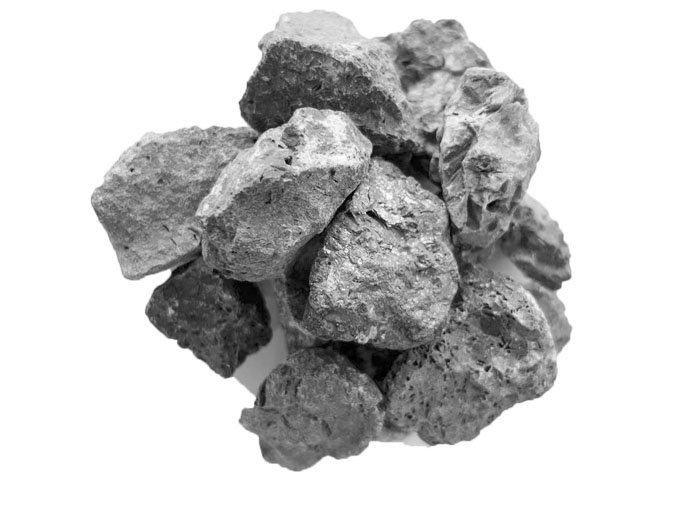
In today’s era of refined steelmaking cost management, the choice of deoxidizer is no longer just a technical process issue—it is a financial calculation that directly impacts profit per ton of steel. For a long time, the traditional “Silicon-Aluminum-Iron (Si-Al-Fe) + Calcium-Silicon (Ca-Si) Wire” deoxidation model has been regarded by many steel mills as the “standard configuration” for ensuring molten steel cleanliness. However, with the maturation of composite deoxidizer technology, a new type of auxiliary material called Silicon-Aluminum-Calcium (Si-Al-Ca) Composite Deoxidizer is challenging the old paradigm with its remarkable “cost-reduction and efficiency-improvement” capabilities.
This article will analyze from four dimensions—Procurement Needs, Industry Research, Procurement Guide, and Supplier Comparison—to answer the critical question: Can switching to Si-Al-Ca composite deoxidizer really reduce costs?
Why are more and more procurement and technical professionals turning their attention to Si-Al-Ca? The root cause lies in several undeniable pain points associated with the traditional “Si-Al-Fe + Ca-Si Wire” combination:
High Combined Alloy Costs: As standalone alloys, both Si-Al-Fe and Ca-Si wire command high unit prices. Moreover, their actual usage often involves resource waste. While aluminum in Si-Al-Fe is a strong deoxidizer, the Al₂O₃ inclusions generated are high-melting and prone to nozzle clogging. This necessitates the addition of calcium-based alloys for inclusion modification—doubling the alloy expenditure.
Complex Process and Unstable Recovery Rates: Feeding Ca-Si wire requires specialized equipment and precise operator control. The recovery rate of calcium is notoriously unstable. Variations between batches and operator skill levels lead to fluctuating deoxidation results, compromising molten steel quality consistency.
To address these issues, cost reduction and efficiency enhancement have become the core demands of procurement departments. Si-Al-Ca Composite Deoxidizer was developed precisely to solve this. By pre-melting and synthesizing silicon, aluminum, and calcium in specific ratios, it achieves a synergistic deoxidation effect—”1+1>2.” Industry research data indicates that using high-quality Si-Al-Ca composite deoxidizer can save 1–1.5 kg of alloy per ton of steel, reduce power consumption by 9–12 kWh, and deliver comprehensive cost savings of RMB 5–8 per ton of steel.
To determine whether cost per ton of steel can truly be reduced, we cannot rely solely on theory—we must examine actual production data.
A comparative deoxidizer trial conducted by Anyang Iron & Steel Group on plain carbon steel provides valuable reference. The trial compared three deoxidation modes: steel-sand aluminum, aluminum-iron, and the existing “Si-Al-Fe + Ca-Si” combination. The results were revealing:
Cost Comparison: The “Si-Al-Fe + Ca-Si” mode incurred a deoxidizer cost of RMB 17.23/ton, while using steel-sand aluminum or aluminum-iron alone cost RMB 15.58/ton and 16.12/ton, respectively. Although this trial did not directly include Si-Al-Ca data, it reveals a core principle—using a combination of single-function alloys is generally more expensive than using a high-efficiency composite deoxidizer.
Efficiency Comparison: The theoretical advantage of Si-Al-Ca deoxidizer lies in its low melting point and rapid diffusion. Upon addition to molten steel, it quickly creates a reducing atmosphere, effectively preventing oxidation of metallic elements and enhancing recovery rates.
Quality Improvement: Equally important is the quality account. Academic studies have shown that composite deoxidizers containing barium and calcium can significantly reduce total oxygen and nitrogen content in steel plates. Meanwhile, the grades of oxide and silicate inclusions are also notably lower than those from traditional deoxidation methods—meaning improved steel performance, representing a more subtle form of cost savings.
Conclusion: Although the unit price of Si-Al-Ca may vary by grade (ranging from RMB 600/ton to 2,300/ton), it achieves clear overall cost reductions by replacing 20% of aluminum wire and 30% of Ca-Si wire, thereby directly reducing consumption of two expensive raw materials. Coupled with power savings from shortened smelting times, the comprehensive cost reduction is demonstrable.
If you are considering introducing or switching suppliers for Si-Al-Ca deoxidizer, BeiFang Alloy recommends evaluating suppliers based on the following key indicators:
Check the “Effective Ratio” of Chemical Composition:
Higher elemental content is not necessarily better—what matters is a scientifically balanced ratio. Different steel grades require different Si/Al/Ca proportions. For example, common specifications include Si 30–35%, Al 8–10%, and Ca 15–18%. For high-end steel grades, the fluctuation of main elements should be ≤1.5%; otherwise, the melting point of deoxidation products may become unstable, leading to nozzle clogging.
Examine Physical Form and Particle Size:
Particle size determines the melting and reaction speed of the deoxidizer in molten steel. Lumpy products typically require 10mm–80mm, while powdered or briquetted products require finer mesh sizes. Too fine leads to excessive fume and losses; too coarse results in incomplete reactions. Currently, briquetted products (such as Si-Al-Ca briquettes) are favored for their rapid slag formation and good arc-submersion performance.
Monitor Harmful Impurities:
Strict control of moisture (H₂O), carbon, sulfur, and phosphorus is essential. High moisture content leads to hydrogen pickup in molten steel, creating a risk of hydrogen embrittlement. Quality products require moisture content ≤0.5%.
Given the uneven quality across the market—with some quotes as low as RMB 600/ton for crudely processed material and others as high as RMB 2,300/ton for high-calcium specialty grades—how do you choose?
| Evaluation Dimension | Ordinary Small Workshops/Traders | BeiFang Alloy Advantages |
|---|---|---|
| Industry Chain & Cost | Purchase raw materials for simple crushing, or act solely as traders; costs are volatile. | Leveraging the Anyang local metallurgical industrial cluster, full industry chain from raw material processing, smelting to finished product manufacturing—effectively reducing logistics and procurement costs. |
| Quality Stability | Wide composition fluctuations; lack of rigorous on-site testing equipment. | Precise composition control. Equipped with professional spectrometers and laser particle size analyzers, ensuring Si, Al, and Ca content deviation ≤1.5% per batch—guaranteeing stable deoxidation performance. |
| Technical Capability | Can only sell “generic” products; unable to optimize for specific steel grades. | Customization services. Provides tailored Si-Al-Ca and Si-Al-Ba-Ca multi-component deoxidizer formulations based on customers’ specific steel grades (plain carbon steel, HRB400, alloy steel, special steel). |
| Production Capacity & Delivery | Limited supply capability; unable to handle urgent orders. | Sufficient annual production capacity; equipped with large briquetting machines and crushing/screening production lines—delivery lead times 20% shorter than industry average, ensuring uninterrupted supply for high-volume customers. |
The question—”Still paying high prices for Si-Al-Fe + Ca-Si Wire?”—is becoming increasingly clear. Si-Al-Ca Composite Deoxidizer, with its three core advantages of synergistic deoxidation, molten steel purification, and process simplification, is indeed transforming the traditional deoxidation cost structure.
BeiFang Alloy, as a manufacturer deeply rooted in Anyang—the capital of China’s ferroalloy industry—understands that cost reduction and quality assurance go hand in hand. We don’t just sell products; we provide customized deoxidation cost optimization solutions tailored to your specific steel grades and furnace conditions.
Contact BeiFang Alloy today to request a Si-Al-Ca substitution proposal and sample trial for your plant!
Inquiry Hotline: Visit our official website www.beifangalloy.com or email us at info@hnxyie.com for one-on-one technical and commercial support.