In today’s steel industry, where margins are razor-thin, every cost counts. A saving of $2-4 per ton on deoxidation might sound small, but for a mill producing one million tons annually, that translates to **$2–4 million in pure profit per year**. This is a number every procurement manager and technical director should take seriously.
Why the “$2-4/Ton” Figure Matters
This is not just marketing talk. Research on cost-effective deoxidation processes for plain carbon steel confirms that by optimizing the deoxidation process—for example, adding inexpensive carburizer for pre-deoxidation during tapping, followed by ferrosilicon deoxidation and silicomanganese alloying—deoxidation alloy costs can be reduced by RMB 6.68/ton. Another study shows that with the “carburizer + ferrosilicon” combined process, savings of RMB 3.68/ton can be achieved when end carbon is 0.04%-0.05%, and RMB 3.33/ton when end carbon is 0.06%-0.10%.
The common thread across these findings is: there is significant room to reduce deoxidation costs, and the key lies in selecting the right deoxidizer combinations and optimizing the process.
1. Procurement Needs: What Is Your Mill Currently Using?
Common deoxidation approaches for plain carbon steel today include:
-
Traditional solutions: Ferrosilicon (FeSi), silicon metal, or aluminum-iron as primary deoxidizers
-
Combined solutions: Carburizer pre-deoxidation + ferrosilicon/silicomanganese alloying + aluminum wire deep deoxidation at the argon stirring station
-
Alternative solutions: Composite deoxidizers (multi-alloys containing Mn, Al, Si, Ca) or silicon carbide
The problem with the traditional approach: high-cost materials are being used for tasks that lower-cost materials can handle. Silicon metal (Si ≥ 97%) offers strong deoxidation but is expensive and has unstable recovery rates due to oxidation and flotation. Ferrosilicon offers stable performance but its unit price is still relatively high. In contrast, silicon slag and silicon carbide—low-cost materials—can effectively handle pre-deoxidation and temperature-raising tasks, reserving the premium materials for “finishing” work.
2. Industry Research: Where Do the Cost Differences Really Come From?
True Cost ≠ Unit Price
Comparing deoxidizer unit prices alone is misleading. The actual cost depends on effective deoxidation capacity and recovery rate stability.
| Deoxidizer Type | Unit Price | Recovery Stability | True Cost Characteristic |
|---|---|---|---|
| Silicon Metal | High | Unstable | High cost, high risk |
| Ferrosilicon | Medium | Stable | Predictable cost |
| Silicon Slag | Low | Moderate | Significant price advantage, needs combination |
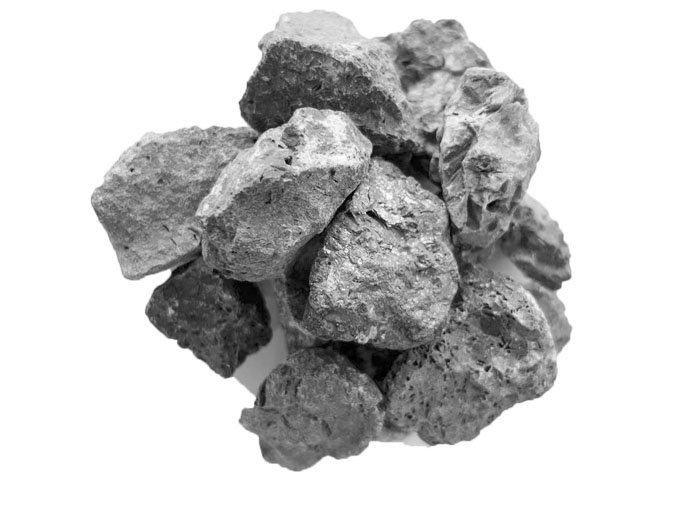
Silicon metal, despite its strong deoxidation capability, tends to oxidize and float due to the lack of an iron carrier, resulting in unstable recovery. Ferrosilicon, with its iron content and density, integrates smoothly into molten steel with stable recovery. Silicon slag, priced low, can effectively optimize the cost structure by partially replacing premium deoxidizers.
Hidden Benefits of Silicon Slag
Silicon slag’s value extends beyond just unit price. It also provides:
-
Exothermic reaction when added to the furnace or ladle, releasing useful heat that reduces electricity or fuel consumption
-
Improved molten steel fluidity, increasing yield
-
Supports slag formation, reducing flux consumption
-
Effective absorption of micro-oxides, leading to cleaner steel with fewer inclusions
These hidden benefits directly contribute to profit but are often overlooked in procurement decisions.
Process Optimization Synergies
Using the “carburizer pre-deoxidation + ferrosilicon” process, at end carbon levels of 0.04%-0.05%, costs can be reduced by RMB 3.68/ton; at 0.06%-0.10%, savings reach RMB 3.33/ton. This demonstrates that deoxidation cost savings come not only from the deoxidizer itself, but also from precise control of carbon content and process rhythm.
3. Procurement Guide: How to Choose the Right Deoxidizer
Step 1: Define Your Steel Grade and Process
-
Plain carbon steel, high-volume production: Prioritize ferrosilicon for stability and low cost
-
Higher-grade steel: Ferrosilicon + silicon metal combination for precision and purity
-
Cost-sensitive production lines: Silicon slag + ferrosilicon combination—use silicon slag early for cost savings and temperature boosting, then ferrosilicon for stability
Step 2: Calculate “Delivered Effective Cost”
Don’t just look at the ton price; calculate:
Effective Cost = Purchase Price ÷ Actual Recovery Rate + Quality Impact (inclusions, fluidity) Penalty
Step 3: Choose a Supplier with Stable Quality Control
The effectiveness of deoxidizers heavily depends on composition stability and particle size control. Anyang is a well-known hub for ferroalloy production in China, hosting numerous specialized manufacturers. When selecting a supplier, focus on:
-
Processing capabilities (screening, batching, briquetting)
-
Customization flexibility (particle size, composition)
-
Stable supply capacity and quality control systems
4. Supplier Comparison: Traditional Deoxidizers vs. Combined Solutions
| Dimension | Traditional Single-Use FeSi/Si Metal | Silicon Slag + Combined Solution |
|---|---|---|
| Cost per Ton | Baseline | Can reduce by $2-4 |
| Deoxidation Effect | Stable | Equally stable when properly combined |
| Recovery Rate | FeSi stable; Si metal fluctuates | More stable with combined solution |
| Additional Benefits | Single function | Temperature boosting, slag formation, steel purification |
| Procurement Risk | Price volatility | Can hedge price risk through combination |
5. What Beifang Alloy Can Do for You
Beifang Alloy (www.beifangalloy.com) is a trusted ferroalloy factory with deep expertise in deoxidizer production for the steel industry. Our core strengths include:
-
Comprehensive product range: Covering ferrosilicon, silicon slag, composite deoxidizer briquettes (Si-Ca-Mn-Al, Si-Ca-Ba-Al, etc.), AD powder, silicon carbide powder, and more, to meet various steel grades and process requirements
-
Strong processing capabilities: Equipped with large dry-press production lines to produce briquettes (1.5-2.5-3mm) customized to your required composition, improving feeding efficiency and recovery rate
-
Customization services: Available in powder, granular, and lump forms, with tailored deoxidizer formulations recommended for your specific melting conditions
📞 Contact Us: info@hnxyie.com
Samples available upon request. Factory direct pricing, competitive for bulk orders.
Run the Numbers and Make an Informed Choice
“$2-4 per ton savings on plain carbon steel deoxidation” is not empty rhetoric—it is a reality verified by research and proven in practice. The key is to break away from the “single-deoxidizer” mindset and adopt a combined solution that reduces the use of premium deoxidizers to a reasonable level, while using silicon slag, composite deoxidizers, and other low-cost materials to handle pre-deoxidation and temperature boosting.
In today’s low-margin steel market, this is an opportunity worth calculating carefully. Get it right, and the savings go straight to your bottom line.