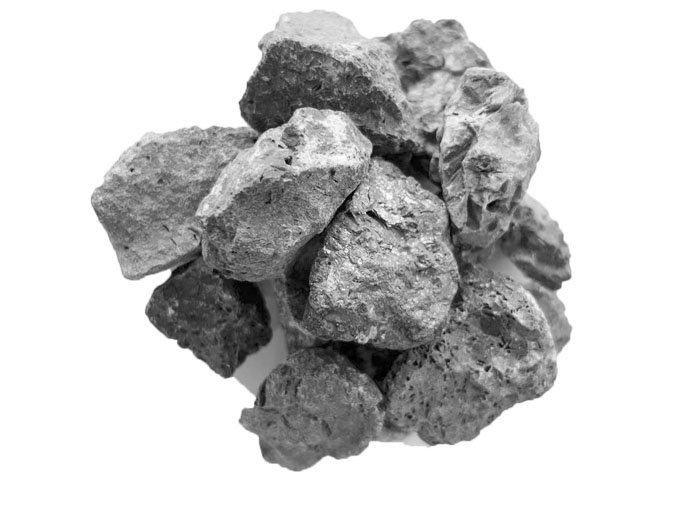
In today’s era of razor-thin margins in the steel industry, cost reduction and efficiency improvement are no longer just slogans—they are the lifeline of business survival. From traditional single-element deoxidizers to today’s composite alloys, market preferences are quietly shifting. If you’ve been following the ferroalloy market recently, you’ve likely noticed one name popping up frequently: Silicon-Calcium-Manganese (Si-Ca-Mn).
As Anyang Beifang Alloy Co., Ltd. (www.beifangalloy.com), we closely track steel mill procurement trends and industry technology developments. In this article, we will analyze from four key perspectives—procurement needs, industry research, procurement guidelines, and supplier comparison—to answer the question: With so many steelmaking deoxidizers available, why is Silicon-Calcium-Manganese rapidly gaining popularity?
In the past, steel mills often evaluated deoxidizers based solely on one metric: deoxidation capability. However, in actual production, issues such as incomplete deoxidation, poor steel fluidity, nozzle clogging during continuous casting, and low alloy recovery rates often lead to much higher comprehensive costs than expected.
Today’s procurement requirements have fundamentally shifted—what mills now demand can be summarized as “all of the above”:
Strong deoxidation and deep desulfurization: Modern steel grades demand extremely high cleanliness, which ordinary deoxidizers cannot achieve. The calcium (Ca) in Si-Ca-Mn has a strong affinity for oxygen (O) and sulfur (S), enabling deep deoxidation and desulfurization.
Improved steel fluidity: This is the key to solving continuous casting nozzle clogging and reducing subcutaneous porosity. Si-Ca-Mn effectively purifies molten steel, modifies inclusion morphology, and significantly improves fluidity.
Lower overall costs: Procurement looks at unit price, but more importantly, at “cost per ton of steel.” While Si-Ca-Mn may have a higher unit price than conventional ferrosilicon, its high recovery rates and multi-functionality significantly reduce refining power consumption and alloy consumption.
Data shows that when using Si-Ca-Mn composite deoxidizer, silicon recovery can reach over 85%, and manganese recovery can exceed 90%. Compared to traditional processes, it can save approximately 0.3 kg of silicomanganese alloy per ton of steel, directly reducing cost per ton by RMB 20–30 yuan.
What gives Si-Ca-Mn its edge? It comes down to its unique alloy design and reaction mechanisms.
1. Ternary Synergy with Complementary Strengths:
Silicon (Si): A strong deoxidizer and the foundational element.
Manganese (Mn): Not only deoxidizes but also combines with sulfur to improve steel’s hot workability. It reacts with FeO to form MnO, which is easier to float and remove from the melt.
Calcium (Ca): The core “soul” element. Calcium has an exceptionally strong deoxidation capacity and can modify Al₂O₃ inclusions in molten steel into low-melting-point calcium aluminates, fundamentally solving the nozzle clogging problem.
2. Superior Physical Properties:
Si-Ca-Mn alloy has a low melting point and fast dissolution rate. It quickly forms a liquid protective slag, effectively shortening refining time and reducing power consumption. Additionally, its use produces no smoke, no flames, and minimal dust, offering excellent safety and environmental performance.
3. Wide Application Range:
It is suitable not only for converter and electric arc furnace steelmaking but also serves as an ideal choice for high-quality steel, low-carbon steel, stainless steel, and special alloy production.
Faced with varying product quality in the market, how do you choose the right Si-Ca-Mn? As a ferroalloy manufacturer in Northern China, we recommend paying close attention to the following core metrics:
| Evaluation Dimension | Key Procurement Points | Important Notes |
|---|---|---|
| Chemical Composition | Strictly control Si, Ca, and Mn content; pay attention to impurities like P and S. | Different steel grades have different requirements. Always confirm whether the specific element indicators meet national standards and your internal quality control standards. |
| Physical Condition | Choose the appropriate particle size (powder, granule, or lump) to ensure dissolution rate and reaction efficiency. | Watch out for moisture absorption and pulverization—storage conditions directly impact product quality. |
| Cost-Effectiveness | Evaluate based on “comprehensive cost per ton of steel,” not just unit price. | Products with higher recovery rates may have slightly higher upfront prices, but they offer better overall economics. |
Product Specialization: We produce targeted products such as deoxidizers specifically for medium-frequency furnaces and Si-Ca-Mn composite deoxidizers. We can provide customized formulations tailored to different steel grades, including stainless steel and alloy steel.
One-Stop Service: From raw material processing to finished product supply, we can even offer free trials and formulation technical support based on your specific needs, ensuring our products are perfectly adapted to your unique processes.
The rising popularity of Silicon-Calcium-Manganese is no coincidence—it is an inevitable choice driven by the steel industry’s pursuit of higher purity, lower costs, and greener production. It not only simplifies the steelmaking process but also delivers significant advantages in improving steel quality and reducing comprehensive costs.
If you are looking for a composite deoxidizer that guarantees both deoxidation and desulfurization, while improving steel quality and lowering overall costs, Si-Ca-Mn is undoubtedly one of the most competitive options on the market today.
Welcome to contact us for samples and technical support:
Anyang Beifang Alloy Co., Ltd.
Website: www.beifangalloy.com
Email: info@hnxyie.com