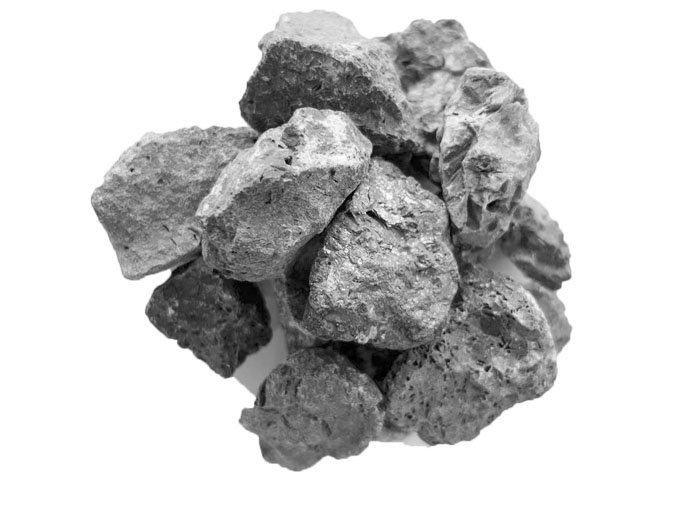
Beifang Alloy – as a player in China’s ferroalloy industry – understands that exporting metallurgical auxiliary materials is a landscape of both significant opportunity and complex challenges. This guide walks you through four critical dimensions: procurement needs, industry research, procurement guidelines, and supplier comparison. Our goal is to help you navigate overseas market expansion while keeping compliance risk firmly in check.
Successful exporting starts with a clear grasp of what target markets actually need. Current global procurement trends in metallurgical auxiliaries reveal several clear shifts:
Quality and purity standards are rising fast. The EU’s 2026 revised “Sustainable Certification System for Metallurgical Auxiliary Materials” and updated ASTM standards are driving surging demand for low‑impurity products. For example, low‑impurity high‑carbon silicon (Al≤1.0%) now commands a premium of over 25% in the market.
Green and low‑carbon credentials are now non‑negotiable. With global carbon‑neutrality targets taking hold and the steel industry shifting toward electric‑arc furnace production, carbon performance is now a core purchasing criterion. High‑carbon silicon, which can reduce carbon emissions by 18‑23%, is emerging as a policy‑favored material.
Buyers are becoming more systematic and standards‑driven. Standards such as T/CWAN 0079—2023 (Technical Conditions for Procurement of Raw and Auxiliary Materials for Welding Materials) now explicitly spell out ordering requirements, technical specs, test methods, inspection rules, and packaging/shipping provisions. In short, professional buyers increasingly evaluate suppliers against documented standards – and you should be ready to meet them.
The Asia‑Pacific region dominates the global metallurgical auxiliary materials market. In 2026, the high‑carbon silicon segment alone accounts for 65% of global market share – roughly RMB 4.225 billion – driven by steel capacity expansion and environmental upgrades across China, India, and other key economies.
Southeast Asian markets (Indonesia, Vietnam, Thailand) are showing particularly strong demand growth and represent a significant regional opportunity.
While starting from a smaller base, North America and Europe are growing fast – 30% and 27% year‑on‑year in 2026 respectively – fueled by new‑energy vehicles and green steel policies. These markets are less price‑sensitive and more receptive to premium, high‑spec products, making them an ideal fit for suppliers positioning themselves upstream.
The Middle East and Africa are also worth watching as incremental growth drivers.
The global high‑carbon silicon market already exceeds RMB 6.5 billion in 2026 and is projected to reach RMB 15 billion by 2031, representing a CAGR of over 19%.
Compliance is the “lifeline” of any export business. Recent policy changes demand your full attention – here are the most critical regulations to track:
Effective January 1, 2026, China introduced a new steel product export regime. The Ministry of Commerce and the General Administration of Customs jointly announced export quota controls on 300 steel product categories, subject to export licensing requirements. Crucially, pig iron, ferroalloys, scrap steel, and semi‑finished steel products (Items 1‑32) are all covered under this control scope.
Exporters must apply for export quotas using a valid export contract and a “Product Quality Inspection Certificate” issued by the manufacturer. This means exporting metallurgical auxiliary materials is no longer a free‑flow activity – quota planning must be integrated into your supply chain strategy well in advance.
On May 31, 2026, Indonesia’s Ministry of Finance issued Regulation No. 32/MK/BC/2026, imposing export restrictions on ferroalloy products (HS Code Ex.7202.60.00) effective June 1, 2026. This covers ferronickel with Ni≥8%, sponge nickel and nickel granules with Ni≥4%, and low‑grade ferronickel with Ni 2‑4% and Fe≥75%.
The more consequential deadline is January 1, 2027 – from that date, these ferroalloy products can only be exported by Indonesia’s state‑owned export company (BUMN Ekspor), or by holders of a qualification certificate issued by the Ministry of Trade. This policy fundamentally reshapes global nickel‑iron and ferroalloy trade flows – Chinese exporters must reassess their supply chain exposure now.
For shipments to Europe and the U.S., pay close attention to: the EU’s upgraded “Sustainable Certification System for Metallurgical Auxiliary Materials,” as well as ongoing updates to ASTM standards.
In export operations, selecting a supplier with stable delivery capability and solid compliance credentials is paramount. The table below contrasts different types of suppliers:
| Supplier Type | Representative Companies | Core Strengths | Watch Points |
|---|---|---|---|
| Large Group Enterprises | Tsingshan Holding Group, Erdos Group, Jiangsu Delong Nickel Industry | Scale advantages, fully integrated industry chains, stable production capacity | Higher partnership thresholds; limited flexibility for customization |
| Specialized Ferroalloy Producers | Ningxia Jiyuan Metallurgical Group, Henan XiBao Metallurgical Materials Group | Deep product specialization; strong quality assurance in niche categories | Need to verify their export track record and compliance readiness |
| Innovation‑Driven Enterprises | Hunan Xiangtou Jintian New Energy (formerly Hunan Jintian Ferroalloy) | Significant R&D investment; strong product innovation | Assess their production scale and delivery reliability |
| Resource‑Integrated Enterprises | Shanxi Coking Coal Group Huayang New Materials | Clear resource‑side advantages; strong cost control | Evaluate their strategic focus on metallurgical auxiliaries vs. broader portfolios |
Beifang Alloy – as a ferroalloy factory – recommends prioritizing these dimensions when screening suppliers for export:
Export compliance credentials: Can they issue the required “Product Quality Inspection Certificate” to support export quota applications?
Product consistency: Can they reliably meet impurity limits and environmental standards across multiple target markets?
Supply chain resilience: With policies tightening in major resource‑rich countries like Indonesia, is their raw material supply stable and diversified?
Closing Thoughts
Metallurgical auxiliary material exports are entering a new phase defined by policy‑driven regulation, green leadership, and professional execution. Exporters must seize the high‑growth opportunities in Asia‑Pacific while carefully navigating policy shifts such as China’s export licensing system and Indonesia’s export centralization. By building a robust quality control framework, strengthening your compliance infrastructure, and selecting reliable supply chain partners, you can compete – and win – in the global market.
Beifang Alloy
Ferroalloy Factory | Professional Supplier of Metallurgical Auxiliary Materials
Website: www.beifangalloy.com
Email: info@hnxyie.com