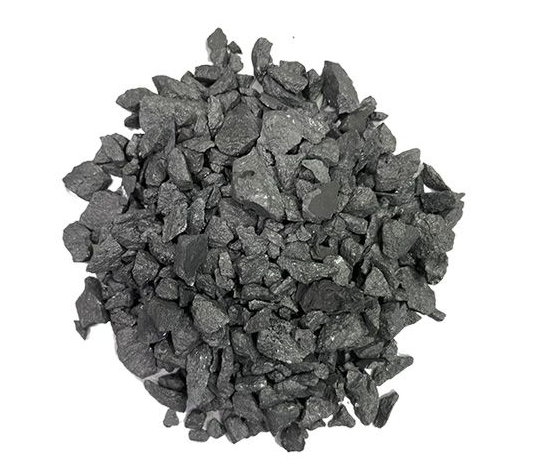
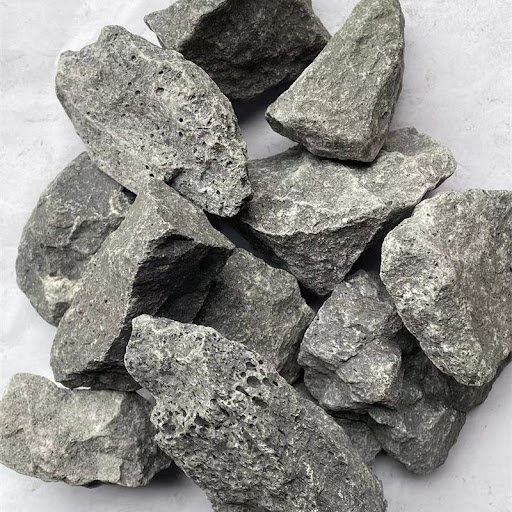
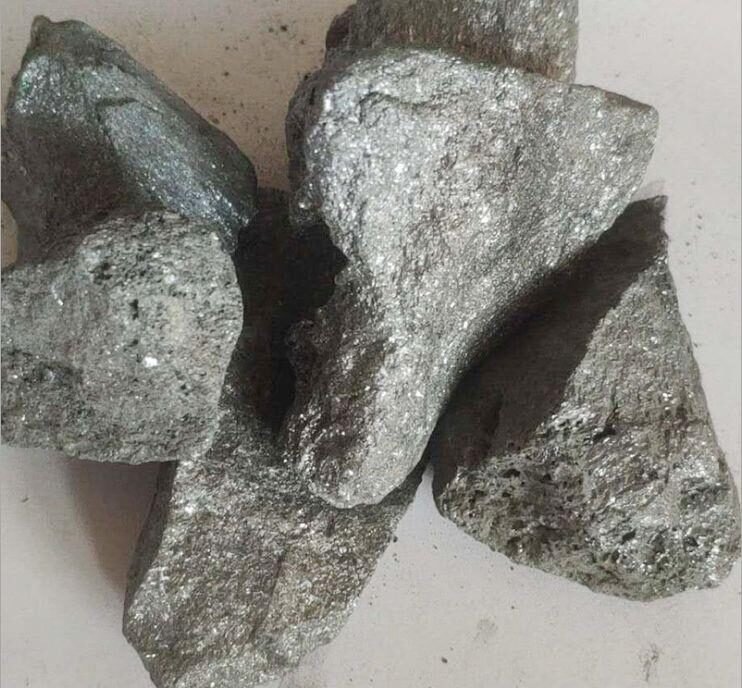
Si-Ca-Mn alloy, used as a composite deoxidizer and desulfurizer, is not a “one-size-fits-all” product. Different steel grades—from plain carbon steel and low-carbon steel to stainless steel and special alloys—have significantly different requirements for the ratios of silicon, calcium, and manganese. Understanding these differences is essential for accurate procurement, cost control, and smelting quality.
The core functions of Si-Ca-Mn are deoxidation, desulfurization, and manganese addition. Silicon and calcium have a strong affinity for oxygen, and calcium also has a strong affinity for sulfur; the deoxidation and desulfurization products float up and are easily removed. Manganese serves both as a deoxidizer and as an alloying element. However, different steel grades have different performance requirements for the finished product and different tolerances for residual elements and inclusions, which directly determines the choice and ratio of deoxidizers.
For example, low-carbon steel has strict limits on carbon content, requiring the deoxidizer to introduce as little carbon as possible. Stainless steel is sensitive to impurity elements and requires a cleaner deoxidation process. Plain carbon steel, on the other hand, focuses more on cost-effectiveness and can use Si-Ca-Mn with higher manganese content to partially replace silicomanganese, reducing alloying costs.
Based on mainstream suppliers and industry standards, Si-Ca-Mn alloy compositions typically fall within the following ranges:
| Element | Typical Range (%) | Function |
|---|---|---|
| Si | 40–60 | Strong deoxidation, improves steel fluidity |
| Ca | 10–20 | Deoxidation, desulfurization, purifies steel |
| Mn | 10–20 | Deoxidation and alloying, reduces silicomanganese usage |
| Al | ≤1.5–2.0 | Auxiliary deoxidation, residual must be controlled |
| C | ≤1.0 | Critical for low-carbon steel |
| P / S | ≤0.05 / ≤0.05 | Harmful elements, lower is better |
These ranges come from actual supply data of several domestic Si-Ca-Mn producers. Under ASTM A495, calcium-manganese-silicon alloy requires manganese content of 14.0–18.0%, silicon 53.0–59.0%, and calcium 16.0–20.0%, which differs somewhat from mainstream domestic products. Special attention is needed for export orders.
This category has the largest volume and is most cost-sensitive. Si-Ca-Mn is typically used to partially replace silicomanganese, using its manganese content to supplement the steel’s manganese level while completing final deoxidation. Addition is about 0.8–1.5 kg per ton of steel, keeping endpoint oxygen content below 70 ppm. When purchasing, focus on the cost-performance of manganese and silicon content; moderate calcium content is sufficient—there is no need to pursue excessively high levels.
Carbon is the core sensitive element. These steel grades require Si-Ca-Mn with carbon content as low as possible, typically C ≤ 0.5% or even lower. Aluminum content also needs control, because Al₂O₃ inclusions can cause continuous casting nozzle clogging. When purchasing, explicitly require low-carbon grades from suppliers and request actual carbon content test data.
Stainless steel has extremely high requirements for cleanliness and inclusions. Si-Ca-Mn is mainly used for deep deoxidation and desulfurization in these grades, with calcium’s desulfurization role being particularly critical. When purchasing, pay attention to whether calcium content is sufficient (typically ≥15%), and to the control levels of harmful elements such as phosphorus and sulfur. Some high-end grades may require custom low-phosphorus, low-carbon specifications.
For products targeting overseas markets, note standard differences. ASTM A495-25 specifies different composition requirements for calcium-manganese-silicon alloy compared to common domestic grades, with a narrower manganese range (14–18%) and higher silicon content (53–59%). Before purchasing, confirm the target market’s standard requirements to avoid returns due to composition mismatch.
The market has many Si-Ca-Mn suppliers with varying quality. When purchasing, evaluate from the following dimensions:
Composition Consistency: Quality suppliers provide products with small batch-to-batch composition variation. Calcium in Si-Ca-Mn is prone to segregation; particle size uniformity and calcium distribution stability are important indicators of process capability.
Customization Capability: Whether the supplier can adjust Si, Ca, and Mn ratios according to steel grade requirements, as well as control levels for carbon, aluminum, phosphorus, sulfur, and other residual elements. Domestic mainstream suppliers generally state they “can produce according to customer requirements,” but actual execution capability varies significantly.
Particle Size Control: Si-Ca-Mn particle size directly affects deoxidation effectiveness and recovery rate. Common sizes include 10–50mm, 5–50mm, 2–7mm, etc., to be selected based on converter, LF furnace, or continuous casting process. Products with excessive fines not only go to waste but may also affect steel cleanliness.
Industry Experience: Whether the supplier has a track record of stable supply to steel mills. The effectiveness of Si-Ca-Mn is closely related to steel grade, process, and addition timing; experienced suppliers can provide more targeted recommendations.
Beifang Alloy, as a ferroalloy manufacturing enterprise, focuses on providing steel mills with stable, customizable Si-Ca-Mn products. Whether it is the cost-reduction needs of plain carbon steel or the cleanliness requirements of stainless steel, we can provide matching composition solutions based on your specific steel grade and process conditions. Visit www.beifangalloy.com or send your requirements to info@hnxyie.com; our technical team will provide selection recommendations and sample support.
Clarify Steel Grade: Confirm your steel type (plain carbon / low-carbon / stainless) and smelting process (converter / LF furnace / electric furnace).
Confirm Key Indicators: Determine target Si, Ca, Mn ratios based on steel grade, as well as upper limits for carbon, aluminum, phosphorus, and sulfur.
Request Test Reports: Ask suppliers for recent batch chemical composition test data, not just product descriptions.
Start with Small-Batch Trials: For first-time cooperation, start with a trial order to verify recovery rate and steel quality before scaling up.
Sign Technical Agreements: Include composition ranges, particle size requirements, and packaging standards in procurement contracts as acceptance criteria.
References and Data Sources: Domestic Si-Ca-Mn product specifications compiled from publicly available supplier data; US standards reference ASTM A495-25 (calcium-manganese-silicon alloy section); deoxidation effectiveness data reference usage reports from Magang, Sinosteel Jigang, and other steel mills.