In the deoxidation and alloying stage of steelmaking, the recovery rates of C and Mn directly determine alloy consumption and cost per ton of steel. A low recovery rate means that materials such as manganese-silicon alloy and recarburizer fail to effectively enter the molten steel, instead being lost to the slag phase or flue gas as oxides. For procurement and smelting engineers, the core question is: which deoxidizer can achieve higher element recovery rates at a reasonable cost?
Silicon-calcium-manganese (SiCaMn) deoxidizer, as a type of composite deoxidizer, has attracted increasing attention in converter steelmaking and medium-frequency furnace smelting in recent years. This article systematically analyzes the effects of SiCaMn deoxidizer on C and Mn recovery rates from four dimensions—procurement needs, industry research, procurement guide, and supplier comparison—to provide reference for procurement decisions in metallurgical enterprises.
Fluctuations in C and Mn recovery rates are directly reflected in alloy consumption. Taking HRB400B low-alloy steel production as an example, industry data shows that C recovery typically ranges from 80% to 100%, while Mn recovery ranges from 85% to 100%. Even a slight decrease in recovery rate rapidly amplifies into significant raw material cost increases in large-scale production.
Factors affecting recovery rates include converter endpoint temperature, molten steel weight, alloy type and addition amount, and deoxidizer type. Among these, deoxidizer selection is particularly significant: it does not directly provide C or Mn elements (or only provides minimal amounts), but indirectly determines the absorption efficiency of subsequently added manganese-silicon alloy, recarburizer, and other materials by influencing molten steel oxidizability, inclusion morphology, and alloy melting behavior.
From a procurement perspective, choosing SiCaMn deoxidizer over single deoxidizers (such as ferrosilicon powder or aluminum blocks) is mainly based on the following considerations: composite deoxidation capability reduces molten steel oxygen levels and decreases oxidation losses of alloying elements; inclusion modification treatment improves molten steel fluidity and promotes floating of deoxidation products; reduction of alloy types simplifies batching processes and lowers inventory management costs. As a composite alloy, SiCaMn is homogeneously smelted from Si, Ca, and Mn, simultaneously performing deoxidation, desulfurization, and pre-alloying functions.
Industry empirical studies show that calcium-based deoxidizers have a clear enhancement effect on alloy element recovery rates. Practice at Xinyang Steel’s converter deoxidation process optimization showed that after changing the final deoxidizer from silicon-aluminum-barium to calcium-based deoxidizer, ferromanganese recovery increased by 5.11%, and ferrosilicon recovery increased by 2.72%. The significance of this data lies in: calcium’s deoxidation capacity is stronger than barium, and calcium treatment changes the morphology of deoxidation products, making inclusions easier to float and remove, thereby reducing the probability of alloying elements being lost through inclusion entrapment.
From a thermodynamic perspective, Ca has an extremely strong affinity for oxygen, with calcium’s vapor pressure reaching 1.98 atmospheres at 1600°C. This means that calcium reacts vigorously in molten steel but has limited solubility. Research shows that elements such as C, Si, and Al can significantly increase Ca solubility in molten iron, with carbon having the most prominent effect—each 1% C can double Ca solubility. This mechanism suggests that if SiCaMn deoxidizer contains an appropriate amount of carbon, it may help calcium dissolve and distribute uniformly, thereby enhancing deoxidation effectiveness.
It is worth noting that academic research has different findings regarding the relationship between “silicon-calcium-carbon deoxidizer” and C, Mn recovery rates. A study based on principal component regression (targeting HRB400B) pointed out that silicon-calcium-carbon deoxidizer can improve C and Mn recovery rates, while some other deoxidizers (such as silicon-aluminum-calcium) have a certain negative effect on recovery rates. However, another mathematical modeling study showed in correlation analysis that the correlation coefficient between “silicon-calcium-carbon deoxidizer” and C recovery rate was -0.123, and it did not enter the top ten influencing factors for Mn recovery rate.
This discrepancy may stem from differences in process conditions, addition amounts, and steel grades. Both studies targeted HRB400B-type steel grades, but differences in smelting parameters (temperature, endpoint carbon, slag carryover, etc.) may lead to significant differentiation in deoxidizer effectiveness. A more robust conclusion should be: the enhancement effect of SiCaMn deoxidizer on recovery rates depends on correct addition timing, addition amount, and particle size control.
The core advantage of SiCaMn deoxidizer is not “directly increasing C and Mn content,” but rather creating conditions for effective absorption of C and Mn through deep deoxidation and inclusion control. Its functional chain is: Si, Ca, Mn synergistic deoxidation → reducing molten steel oxygen level → reducing oxidation losses of subsequently added manganese-silicon alloy and recarburizer → indirectly improving C and Mn recovery rates. Meanwhile, calcium treatment modifies solid inclusions such as Al₂O₃ into low-melting-point calcium aluminates, preventing continuous casting nozzle clogging and improving continuous casting sequence rates. The reflection of these indirect benefits in cost per ton of steel often exceeds the procurement price difference of the deoxidizer itself.
When procuring SiCaMn deoxidizer, the following core indicators should be noted:
| Indicator | Recommended Range | Significance |
|---|---|---|
| Si content | 40%~50% | Main deoxidation element, determines deoxidation capacity |
| Ca content | 17%~23% | Core element for deoxidation and inclusion modification |
| Mn content | 16%~23% | Auxiliary deoxidation, pre-alloying |
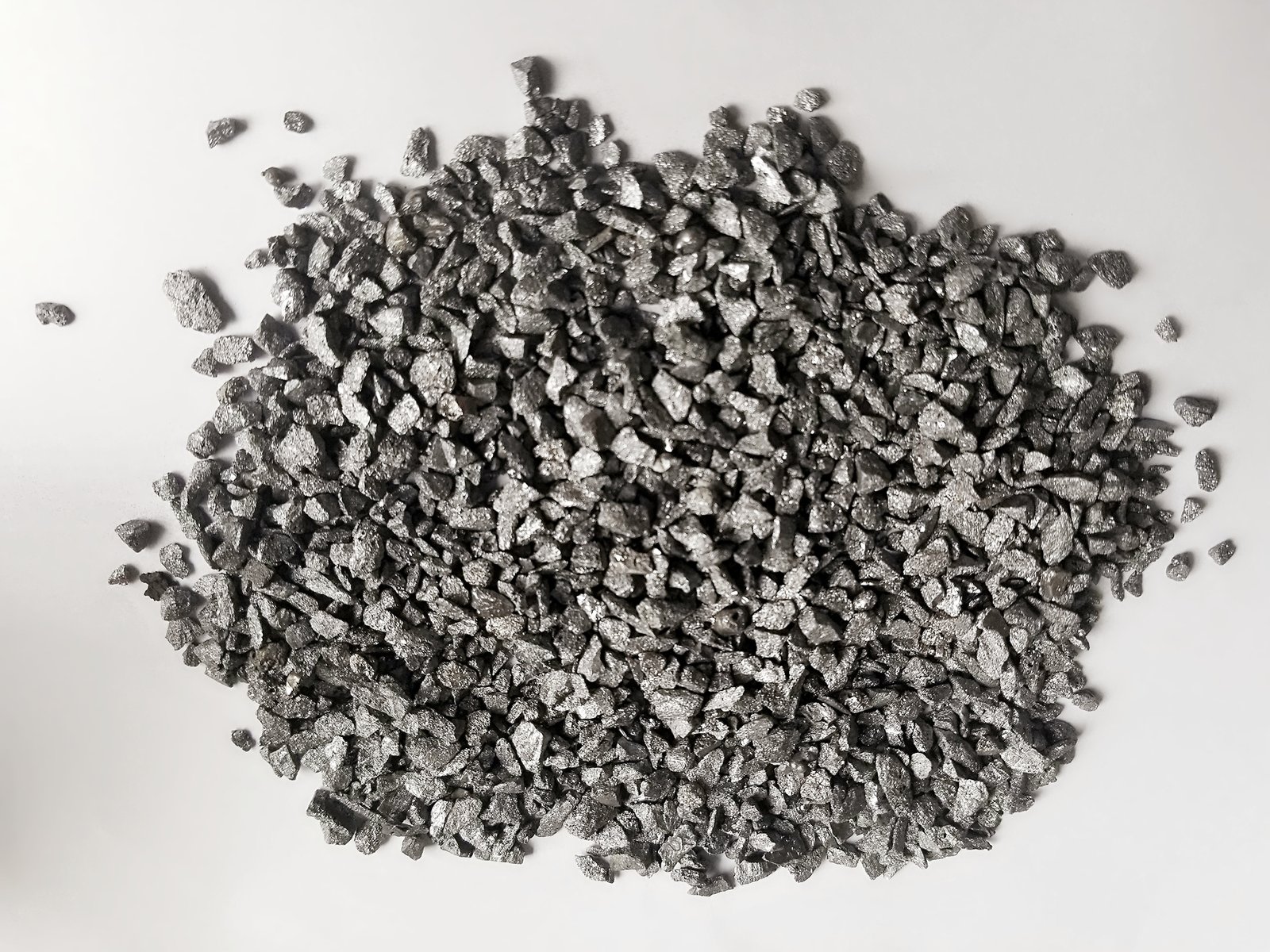
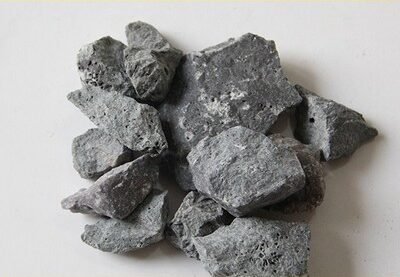
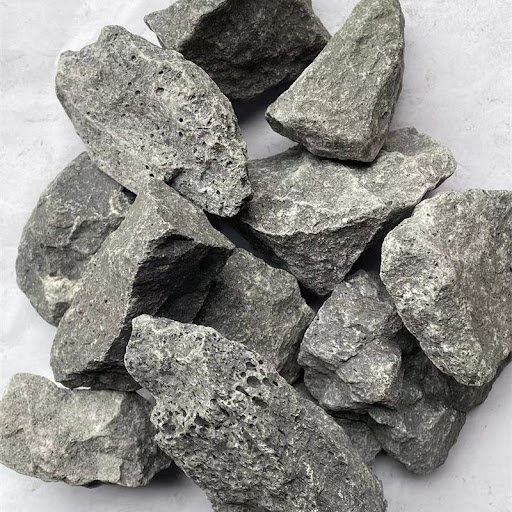
| Particle size | 2~8mm or 10~30mm | Affects melting speed and recovery rate |
| S, P | ≤0.05%, ≤0.1% | Impurity control |
Product specifications vary significantly among different suppliers. Some products have Ca content up to 25%~30%, with Mn content reduced to 8%~13%. Procurement should be based on the tolerance of the specific steel grade for residual calcium. For steel grades with strict requirements on no silicon increase and no nitrogen increase, aluminum-based deoxidizer products should be preferred.
Particle size is a key physical parameter affecting deoxidizer recovery rate. When particles are too large (>15mm), calcium dissolution is limited by boundary layer diffusion, and most calcium evaporates and is lost after local saturation; when particles are too fine, they easily fly and oxidize, increasing dust losses. Small particles of 2~8mm or moderate particle sizes of 10~30mm are relatively reasonable choices. For medium-frequency furnace and ladle refining scenarios, small particle size products are recommended to ensure rapid melting and uniform distribution.
In industry practice, the addition amount of SiCaMn deoxidizer per ton of steel is typically 3~5kg, and medium-frequency furnace专用 deoxidizer can reference 4kg/ton. The recommended addition timing is adding to the ladle bottom before tapping, or adding with the steel stream during tapping, utilizing the steel stream impact to promote mixing. For converter steelmaking, a “final deoxidation + bottom blowing stirring” process is recommended, with sufficient calm time to ensure full floating of inclusions.
Procurement decisions should not only compare the ton price of deoxidizer, but should calculate comprehensive cost per ton of steel. The calculation formula can be simplified as:
Comprehensive Benefit = Alloy Material Savings + Refining Power Consumption Reduction + Continuous Casting Rate Improvement Revenue – Deoxidizer Procurement Cost
Industry data shows that after using SiCaMn-type composite deoxidizers, steelmaking costs per ton can be reduced by 20~30 yuan. This benefit mainly comes from: reduced usage of manganese-silicon alloy and recarburizer, shortened refining time, and improved tundish nozzle clogging issues.
Domestic production and supply of SiCaMn deoxidizer shows obvious regional clustering characteristics. Anyang, Henan is a core production area, gathering multiple ferroalloy enterprises. Suppliers in this region can be divided into two categories: one is professional deoxidizer manufacturers with dry-pressing machine production lines that can press powdered or difficult-to-smelt alloy materials into balls, with high customization capability; the other is comprehensive ferroalloy enterprises that also supply SiCaMn, with product lines covering manganese-silicon alloy, silicon-calcium alloy, inoculants, and other varieties.
In supplier comparison, it is recommended to evaluate from the following dimensions:
Composition stability is the primary indicator. The actual content of Si, Ca, and Mn in the deoxidizer should match the nominal value, with batch-to-batch fluctuation controlled within a small range. Insufficient calcium content will directly weaken deoxidation and inclusion modification effects; abnormal manganese content may interfere with steel grade composition control.
Particle size consistency reflects production process level. Suppliers using dry-pressing molding processes typically have better particle size control than simple crushing processes, and spherical or flat-spherical products have better flowability with less flying loss when added to molten steel.
Customization capability has value for steel plants with special requirements. The chemical composition and particle size of SiCaMn deoxidizer can be customized according to customer requirements, and some suppliers can also provide deoxidizer formula references.
Technical services include deoxidizer trial use, addition amount recommendations, and effect tracking. For steel grades or process conditions being used for the first time, whether the supplier can provide trial support is an important guarantee for reducing procurement risks.
Be alert to the following common problems: using ferrosilicon powder or silicon-calcium powder to pass off as SiCaMn—can be quickly identified by testing Mn content; false calcium content labeling—calcium testing requires precision methods such as ICP, and simple titration methods have large errors; particle size not meeting usage requirements—particle size range should be clarified before procurement, and sampling and screening verification should be conducted upon receipt. For suppliers claiming “can improve C and Mn recovery rates,” it is recommended to require application data or trial reports for similar steel grades, rather than judging solely based on product descriptions.
The effect of SiCaMn deoxidizer on C and Mn recovery rates is an “indirect but real” metallurgical proposition. It does not change recovery rates by providing C and Mn elements, but rather creates more favorable thermodynamic and kinetic conditions for effective absorption of subsequently added manganese-silicon alloy and recarburizer through strong deoxidation, inclusion modification, and molten steel purification. Industry practice data of ferromanganese recovery improvement of more than 5 percentage points, and verified benefits of 20~30 yuan reduction in cost per ton of steel, both support this judgment.
For procurement decision-makers, the core strategy should be: use comprehensive cost per ton of steel rather than deoxidizer unit price as the selection criterion; use stability of particle size and composition rather than nominal content values as the quality judgment basis; use supplier customization capability and technical services rather than pure price as the cooperation foundation. In the application of SiCaMn deoxidizer, correct addition process and addition amount are equally important as the product quality itself—the value of the deoxidizer is ultimately realized in the ladle, not on the procurement order.