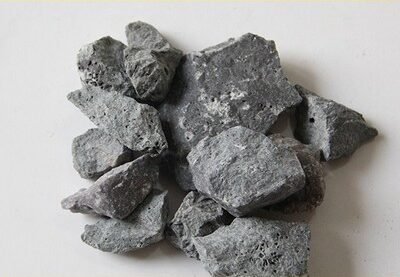
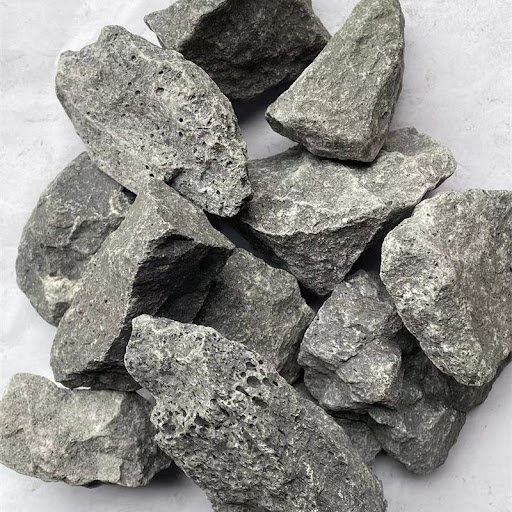
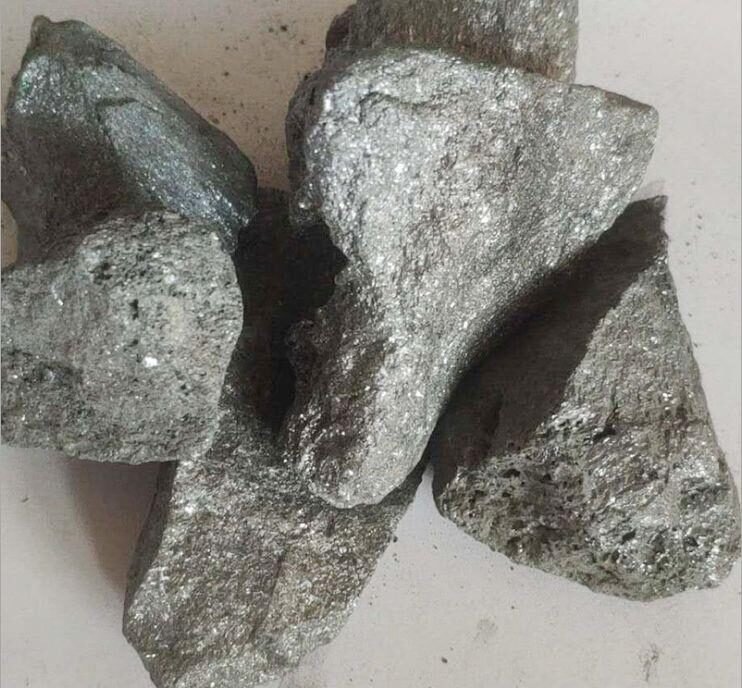
As cost pressure on the steel industry continues to mount, “cost reduction and efficiency improvement” has become a core keyword in procurement decisions at steel mills. Deoxidizers are indispensable functional materials in the steelmaking process, and their selection directly affects both steel quality and production costs. Traditional aluminum-based deoxidizers (pure aluminum, Si-Al-Fe, Si-Al-Ba) offer strong deoxidizing power but come with high prices and a tendency to generate high-melting-point Al₂O₃ inclusions, leading to a series of problems including continuous casting nozzle clogging and reduced fatigue performance of steel products. Si-Ca-Mn composite deoxidizers have entered the spotlight precisely against this backdrop—can they truly achieve a balance between “low-cost deoxidation” and “clean steel”? This article analyzes the topic from four dimensions: procurement needs, industry research, procurement guide, and supplier comparison.
I. Procurement Needs: Why Consider Si-Ca-Mn Deoxidizers
The essence of deoxidizer procurement is finding the optimal balance between “deoxidizing effectiveness” and “total cost.” In current procurement decisions at steel mills, two priorities are increasingly prominent: cost control and steel cleanliness.
The dilemma of traditional aluminum-based deoxidizers lies in this: although deoxidizing power is strong, the deoxidation product Al₂O₃ has a melting point as high as 2050°C and exists as fine, dispersed particles in the molten steel that are difficult to remove completely by flotation. Residual Al₂O₃ inclusions not only reduce the toughness and impact resistance of steel but also readily adhere to the inner wall of the nozzle during continuous casting, causing nozzle clogging or even casting interruption. While pure calcium deoxidation offers extremely strong deoxidizing capability, calcium has high vapor pressure and low solubility in molten steel; when added alone, its recovery rate is low and difficult to control consistently.
The value of Si-Ca-Mn deoxidizers lies in composite synergy. When silicon and manganese are added in appropriate proportions, they form unsaturated liquid silicates with low density and low melting point that readily agglomerate and float up, achieving deoxidation results far superior to using silicon or manganese alone. In the “favorable environment” created by Si-Mn, calcium solubility increases and evaporation loss decreases, enabling it to more effectively modify high-melting-point Al₂O₃ inclusions into low-melting-point calcium aluminates, purifying the molten steel while improving fluidity.
From an economic perspective, data from some steel mills show that after adopting Si-Ca-Mn deoxidizers, the consumption of Si-Mn alloy and ferrosilicon can be reduced. While maintaining deoxidation effectiveness, comprehensive cost per ton of steel can be reduced by approximately 20-30 RMB. For a steel mill with annual output in the millions of tons, this translates to tens of millions of RMB in cost savings.
However, Si-Ca-Mn is not a “universal solution.” For ordinary carbon steel and low-alloy steel (such as Q355B) where Si-Mn + aluminum deoxidation already meets requirements, introducing Si-Ca-Mn may add unnecessary costs. For calcium-sensitive steel grades and induction furnaces with basic linings, the amount of calcium addition also needs careful evaluation. Before procurement, it is recommended to systematically assess one’s own steel grade requirements, continuous casting process pain points, and lining compatibility.
II. Industry Research: Technical Trends and Market Landscape of Composite Deoxidizers
From a metallurgical perspective, deoxidation is no longer merely a simple operation of “removing dissolved oxygen” but a systematic subject of inclusion engineering. The industry consensus is shifting from “meeting deoxidation requirements” to “pursuing clean steel and comprehensive economic benefits.”
The technical advantages of Si-Ca-Mn deoxidizers are reflected at two levels. First, the kinetic advantages of Si-Mn combined deoxidation: the composite addition of silicon and manganese generates low-melting-point liquid manganese silicate products that readily agglomerate, grow, and float up, significantly reducing the number of inclusions in steel. Second, the inclusion modification function of calcium: calcium converts high-melting-point Al₂O₃ into low-melting-point calcium aluminates, fundamentally solving the problem of continuous casting nozzle clogging. Industry practice shows that controlling dissolved oxygen in steel within the range of 30×10⁻⁶ to 50×10⁻⁶ is the optimal window for balancing “nozzle clogging” (oxygen too low, excessive Al₂O₃) and “subsurface blowholes” (oxygen too high).
From a market trend perspective, non-aluminum deoxidation routes have attracted increasing attention in recent years. Although aluminum deoxidation can reduce oxygen content to below 10 ppm, the resulting nozzle clogging and fatigue failure problems have prompted steel mills to seek alternatives. Si-Ca-Mn deoxidizers have found their positioning precisely within this trend. Meanwhile, the deoxidizer market in 2026 has grown by approximately 15% compared to the same period last year. Users are no longer satisfied with basic deoxidation functions alone but are placing greater emphasis on quality consistency, environmental friendliness, and improvements in production efficiency.
In terms of product specifications, typical compositions of commercially available Si-Ca-Mn deoxidizers are: Si 18-35%, Ca 16-30%, Mn 8-20%. Some products contain a small amount of aluminum (3-8%) to achieve deeper deoxidation, but aluminum content must be strictly controlled to avoid pure Al₂O₃ inclusion problems. Composition ratios can be customized and adjusted according to specific steel grades and processes at each steel mill.
III. Procurement Guide: Key Decision Points for Si-Ca-Mn Deoxidizers
First, clarify composition specifications and acceptance standards. Before procurement, it is essential to confirm the major element contents and tolerance ranges of silicon, calcium, and manganese, while also specifying upper limits for impurity elements such as aluminum, phosphorus, sulfur, and carbon. The calcium content in Si-Ca-Mn deoxidizers is the core indicator determining the inclusion modification effect, while the Si/Mn ratio affects the melting point and flotation performance of deoxidation products. It is recommended to request historical inspection reports from suppliers to confirm batch-to-batch composition consistency.
Second, pay attention to moisture and particle size indicators. This is a step that many buyers tend to overlook. Si-Ca-Mn deoxidizers (especially calcium-containing products) have a certain degree of hygroscopicity. Excessive moisture will decompose at high temperatures to produce hydrogen, causing “white spot” defects in steel, while also consuming effective deoxidizing components and reducing recovery rates. Particle size distribution directly affects melting speed and the uniformity of the deoxidation reaction—particles too large melt slowly with delayed reaction; particles too fine are prone to oxidation loss and can clog feeding systems. Reasonable particle size acceptance indicators should be proposed based on the characteristics of one’s own feeding equipment (hopper, chute, or cored wire).
Third, understand the difference between cost and price. The core of “low-cost deoxidation” is not the lowest purchase unit price but the optimal comprehensive deoxidation cost per ton of steel. This requires comprehensively calculating the deoxidizer addition amount, the substitution effect on Si-Mn/ferrosilicon alloy consumption, improvements in continuous casting nozzle service life, and quality benefits from improved steel cleanliness. Suppliers should be asked to provide reference data on addition amounts per ton of steel when quoting, to facilitate cost comparison.
Fourth, choose the appropriate addition method. Si-Ca-Mn deoxidizers can be added through hopper feeding, chute pouring, or cored wire injection. Different addition methods have different requirements for particle size and density. Before procurement, communicate with suppliers to confirm whether the product form matches existing process equipment.
Fifth, establish a multi-supplier strategy. It is recommended to maintain 2-3 qualified suppliers and dynamically allocate procurement proportions based on composition stability, price competitiveness, and delivery timeliness to reduce supply interruption risks.
IV. Supplier Comparison: How to Select Reliable Si-Ca-Mn Partners
Chinese Si-Ca-Mn deoxidizer suppliers are mainly concentrated in major ferroalloy production regions such as Anyang in Henan, Inner Mongolia, and Ningxia. The Anyang region enjoys natural advantages in supply chain completeness and logistics costs due to its proximity to raw material sources for silicon, calcium, and aluminum.
When selecting suppliers, the following dimensions should be systematically evaluated:
Production qualifications and quality control systems. Prioritize suppliers with ISO9001 certification and verify whether they have comprehensive quality control processes. The production of Si-Ca-Mn deoxidizers involves multiple stages including raw material crushing and batching, smelting and casting, and crushing and screening. The level of process control directly affects product composition stability and impurity content. Suppliers with independent R&D capabilities and relevant production process patents typically possess stronger technical strength.
Composition consistency. This is the core indicator that distinguishes excellent suppliers from ordinary ones. Since deoxidizers are typically delivered in batch form, composition distribution may be uneven. The supplier’s batching precision and smelting control capabilities are crucial. Evaluation can be conducted by requesting multi-batch inspection data and understanding their raw material sources and batching processes.
Product customization capability. Different steel mills have different requirements for Si-Ca-Mn composition ratios, particle size distribution, and packaging forms. Suppliers with flexible customization capabilities can adjust formulations according to customer steel grades and processes, rather than offering only fixed-specification standard products.
Service responsiveness and technical support. Professional suppliers should be able to provide addition amount recommendations per ton of steel, addition method guidance, and deoxidation effect tracking services. Suppliers with slow responses or those that only provide product quotations without technical support may bring more hidden costs in long-term cooperation.
Flexibility in commercial terms. This includes minimum order quantity, delivery lead time, payment methods, and whether sample testing is supported. For initial cooperation, it is recommended to start with small batches to verify the supplier’s comprehensive performance before scaling up.
About Beifang Alloy
Beifang Alloy is a professional ferroalloy manufacturer dedicated to providing high-quality Si-Ca-Mn composite deoxidizers and various ferroalloy products to the global steel and casting industries. We have comprehensive production facilities and a strict quality control system. Product compositions can be customized according to customer requirements, with support for multiple particle size specifications and packaging forms. Welcome to visit our website at www.beifangalloy.com for more product information, or send an email to info@hnxyie.com for quotations and technical consultation.