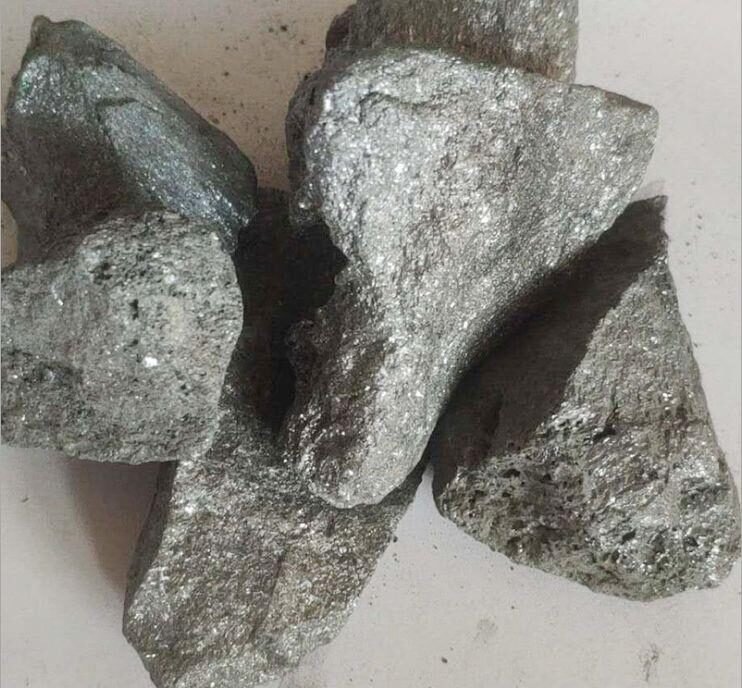
In the steel deoxidation process, the choice of SiCaMn (silicon-calcium-manganese) alloy directly affects both the cost per ton of steel and the quality of the molten steel. As a professional sharing from Beifang Alloy (www.beifangalloy.com), this article systematically examines the price differences between different grades of SiCaMn from four dimensions: procurement needs, industry research, procurement guide, and supplier comparison — and the pricing logic behind those differences.
SiCaMn is a composite deoxidizer composed of silicon, calcium, and manganese, offering three functions in one: deoxidation, desulfurization, and temperature rise. Its core value lies in the fact that calcium has an extremely strong affinity for oxygen and sulfur, and its deoxidation products float up easily; manganese simultaneously increases the manganese content of the molten steel, reducing the amount of additional silicomanganese alloy needed.
However, what the market calls “SiCaMn” varies enormously in composition. Some products have silicon content as high as 40–60%, with calcium and manganese each at 10–20%; others have calcium content of only 10–15% and manganese as low as 18–20%. Different grades mean completely different addition amounts per ton of steel.
For steel mill procurement, the key is not the “price per ton” but the “price per unit of effective component.” If a low-priced grade has low effective calcium and silicon content, the dosage per ton of steel may double — and the actual comprehensive cost will be higher instead.
There is no unified national standard grade system for SiCaMn. The market mainly distinguishes products by the content ranges of the “calcium-silicon-manganese” ternary composition. Common product specifications include:
| Typical Grade (Ca-Si-Mn) | Ca Content | Si Content | Mn Content | Application |
|---|---|---|---|---|
| High-silicon type (e.g., 10-40-18) | 10–15% | 40–60% | 15–20% | Ordinary steel deoxidation |
| Balanced type (e.g., 20-35-30) | 18–22% | 30–40% | 25–30% | Quality steel refining |
| High-calcium type (e.g., 25-30-20) | 22–27% | 25–35% | 18–22% | Low-carbon steel, stainless steel |
| High-manganese type (e.g., 15-25-40) | 13–17% | 22–28% | 35–45% | Steels requiring manganese addition |
The above ranges reference typical ratios disclosed in SiCaMn patents (Si 25–50%, Ca 10–25%, Mn 20–45%) as well as actual product parameters from multiple manufacturers.
Calcium content is the number-one price variable. Calcium is the most “expensive” element in SiCaMn. Calcium raw materials are costly, and adding calcium reduces alloy density and increases smelting difficulty. For every 5 percentage point increase in calcium content, the price per ton typically rises by several hundred RMB. Using SiCa alloy as a reference: Ca28Si60 is priced at about 9,450 RMB/ton, while Ca30Si60 is quoted at 9,550 RMB/ton — just 2 percentage points difference in calcium content translates to about 100 RMB/ton in price difference.
Silicon content determines the base cost. Ferrosilicon is the main source of silicon in SiCaMn. The higher the silicon content, the greater the demand for ferrosilicon. 75 ferrosilicon is significantly more expensive than 72 ferrosilicon, so the “floor price” of high-silicon SiCaMn is inherently higher.
Manganese content affects marginal cost. Manganese comes from manganese ore or manganese-rich slag, and its price fluctuations directly affect high-manganese grades. Currently, silicomanganese alloy is quoted at about 5,600–5,700 RMB/ton in northern China and 5,700–5,780 RMB/ton in the south. Manganese prices are relatively more transparent than silicon-calcium, so the pricing of high-manganese SiCaMn follows the manganese market more closely.
According to Mysteel data, in August 2026, Ca28Si60 SiCa alloy was quoted at 11,500–11,900 RMB/ton (tax-inclusive, cash, ex-works) in main production regions, and at 11,000–11,400 RMB/ton (tax-exclusive) from Anyang traders. Because SiCaMn contains manganese and has a lower calcium-silicon ratio, its price is typically lower than SiCa alloy with the same calcium content but higher than ordinary silicon manganese alloy.
Using the market as of October 8, 2026, as a reference: northern silicomanganese FeMn65Si17 is quoted at 5,600–5,700 RMB/ton, while the reasonable price range for SiCaMn is roughly 6,000–9,000 RMB/ton, depending on calcium and silicon content. High-calcium types (Ca ≥ 22%) may approach or exceed 9,000 RMB/ton, while low-calcium, high-silicon types may fall in the 6,000–7,000 RMB/ton range.
Ordinary carbon steel deoxidation: A low-calcium, high-silicon type is sufficient for final deoxidation, offering the best cost-performance. Addition per ton of steel is about 1–2 kg.
Quality steel / alloy steel refining: Higher calcium content is needed to ensure deoxidation depth and inclusion modification effects. Grades with Ca ≥ 20% are recommended.
Stainless steel / nickel-based alloys: Carbon, phosphorus, and sulfur impurities must be strictly controlled. Low-carbon, low-phosphorus grades should be selected. Even if the price per ton is 10–15% higher, the quality benefits from impurity control far outweigh the price difference.
Don’t just compare price per ton. Use the following formula for comparison:
Effective Deoxidation Cost = Price per Ton ÷ (Ca Content + Si Content)
For example:
Grade A: 8,000 RMB/ton, Ca 12%, Si 55% → Effective component 67% → 119.4 RMB/%
Grade B: 9,500 RMB/ton, Ca 22%, Si 35% → Effective component 57% → 166.7 RMB/%
Grade A appears cheaper, but if Grade B’s higher calcium content reduces the dosage per ton of steel by 40%, the actual comprehensive cost may be lower.
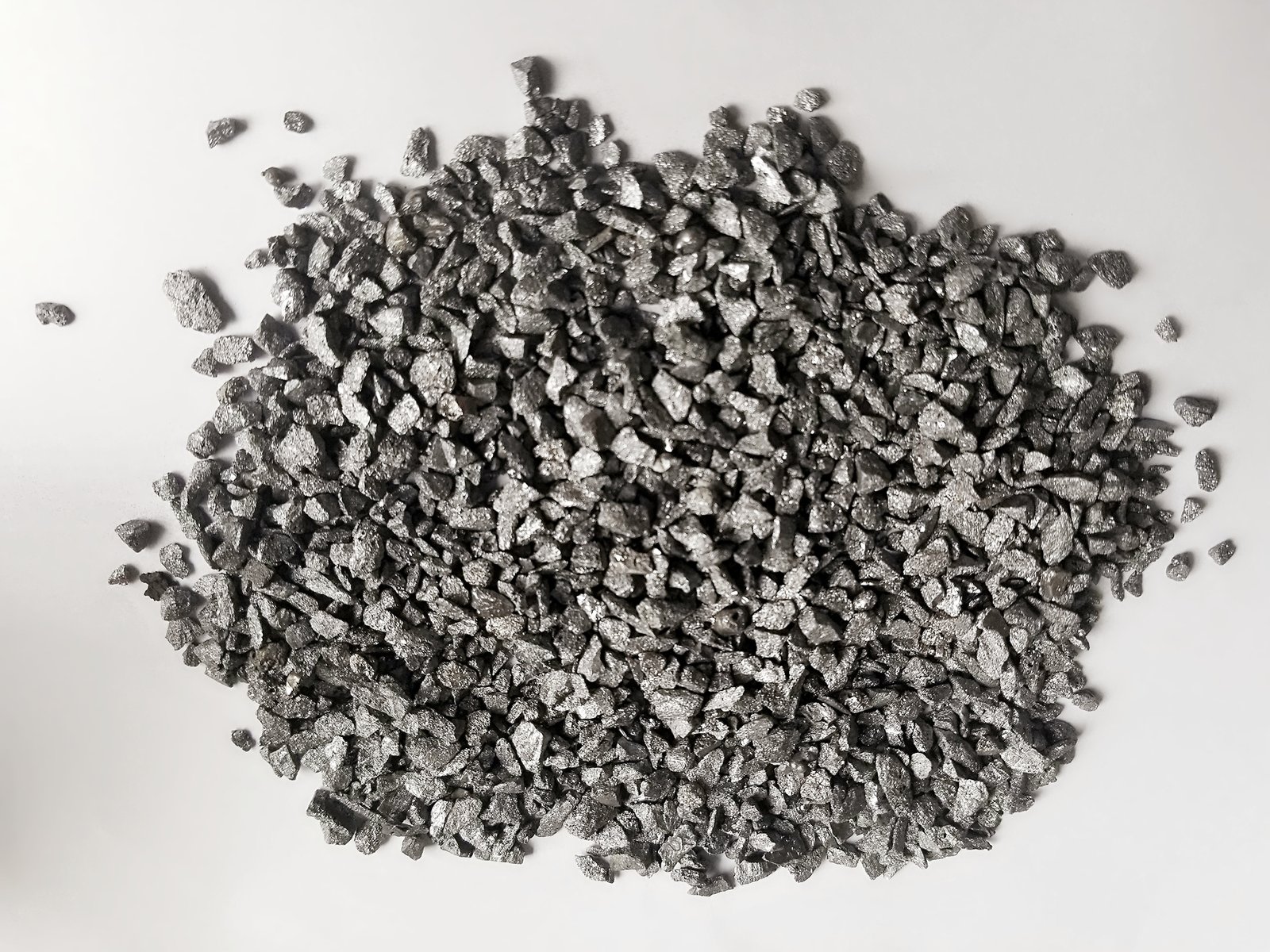
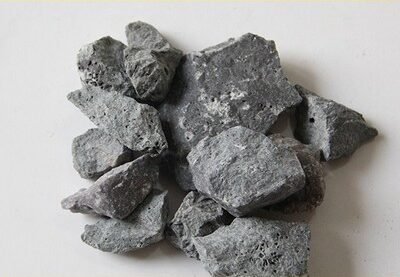
SiCaMn particle sizes range from 0–1mm powder to 10–100mm natural lumps, and processing costs vary significantly across sizes. Powder products require additional grinding processes and are typically 200–400 RMB/ton more expensive than natural lumps. However, powder products have lower burn-off loss and react more uniformly when added to the ladle, potentially offering higher actual utilization. Procurement decisions should be made by comprehensively considering the addition method.
SiCaMn production has certain requirements for submerged arc furnace configuration, and composition control is more difficult than ordinary silicomanganese. When selecting a supplier, prioritize manufacturers with a stable submerged arc furnace operation record and the ability to provide batch quality inspection reports. Capacity scale need not be the largest, but production continuity must be reliable — a SiCaMn supply interruption affects steelmaking rhythm far more than a few percentage points of price fluctuation.
The core technical difficulty of SiCaMn lies in calcium recovery rate and composition uniformity. Calcium volatilizes easily at high temperatures. With manufacturers whose smelting processes are inadequate, actual delivered composition may deviate significantly from nominal values. Before procurement, require suppliers to provide quality inspection certificates for the most recent three batches, focusing on the batch-to-batch fluctuation range of calcium content. Suppliers with calcium content fluctuations exceeding ±3% should be approached with caution.
The processing profit for SiCaMn is relatively transparent. Based on current raw material cost estimates, a reasonable processing fee typically falls in the 800–1,500 RMB/ton range. If a supplier quotes more than 500 RMB/ton below the market average, it is highly likely they have made a “subtraction” on calcium content — nominal Ca 20% may actually be only Ca 15–16%. Conversely, suppliers with noticeably higher quotes are not necessarily better in quality — it may simply be due to more channel layers.
SiCaMn is a routine steelmaking auxiliary material. Steel mills typically maintain safety stock and require suppliers to deliver “on demand.” Choosing a manufacturer within 500 km with stable logistics partnerships is more cost-effective than cross-regional procurement that saves 50 RMB/ton but requires an extra week of waiting.
About Beifang Alloy
Beifang Alloy (www.beifangalloy.com) is located in Anyang, Henan, specializing in ferroalloy production and supply, and can provide SiCaMn alloy in various specifications. For current grade quotations or technical parameters, please contact info@hnxyie.com. We can recommend the most economical grade solution based on your steel grade requirements and provide samples for steel mill trials.