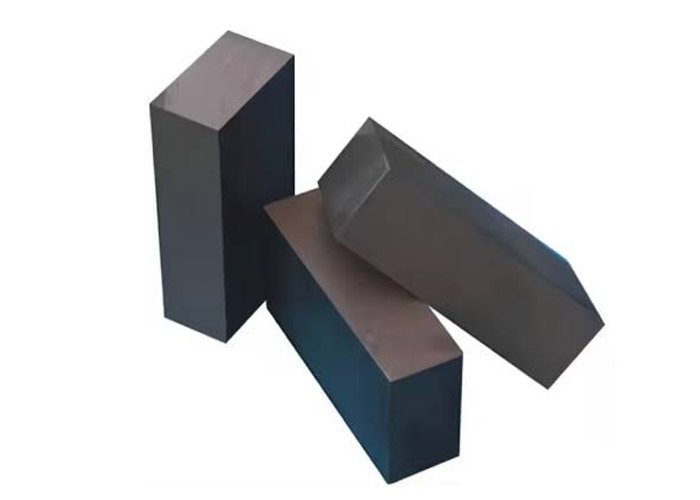
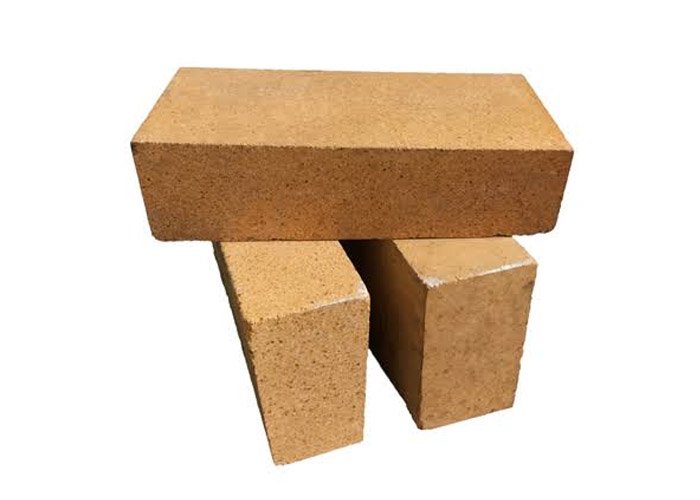
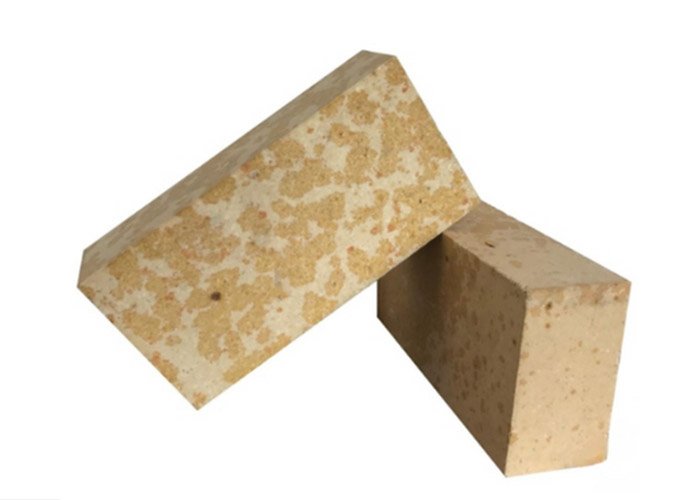
In industrial kiln and high-temperature equipment procurement, conflating firebricks with insulation bricks is a high-frequency mistake. Many purchasing officers look at a kiln masonry drawing, see the word “brick,” and assume the two are interchangeable—only to end up with an overheated shell and soaring energy consumption, or a lining that wears out prematurely and has its service life cut in half. As the refractory team at Beifang Alloy, we frequently have to help clients in the ferroalloy and metallurgical industries clarify the boundary between these two material categories.
This article approaches the topic from four dimensions—procurement needs, industry research, procurement guide, and supplier comparison—to help you make a more precise judgment in your next procurement round.
Firebricks and insulation bricks belong to two entirely different categories in terms of procurement logic. The core mission of a firebrick is to withstand—withstand high temperature, withstand charge abrasion, withstand chemical attack, withstand thermal shock. The core mission of an insulation brick is to block—prevent heat loss, lower the shell temperature, and reduce fuel consumption.
The difference is visible directly from performance parameters: the thermal conductivity of insulation bricks typically falls in the 0.2–0.4 W/(m·K) range, while that of firebricks is generally above 1.0 W/(m·K)—a gap of three to five times. In terms of density, insulation bricks are generally 0.8–1.0 g/cm³, while firebricks are basically above 2.0 g/cm³. This means that building an entire furnace body with firebricks significantly increases both the heat storage of the furnace wall and the structural load.
A frequently cited comparison is illustrative: under a 900°C operating condition, a traditional dense firebrick solution has a total thickness of about 344 mm, an outer wall temperature of 104°C, and a heat loss of about 3630 kJ/(m²·h); while a solution using a lightweight insulation material combination has a total thickness of only 175 mm, an outer wall temperature dropping to 74°C, and heat loss halved to 1940 kJ/(m²·h). For continuously operating industrial furnaces, this energy account should be settled at the procurement stage.
Therefore, the first step in procurement needs is not to ask about price, but to clarify: Does this location come into direct contact with flame and molten slag? If yes, choose dense firebricks; if it is only a backup insulation layer, choose lightweight insulation bricks. The two are in a complementary relationship, not a substitutive one.
In traditional understanding, “firebrick = dense, insulation brick = lightweight” largely holds true, but a clear trend in the industry in recent years is that the temperature ceiling of lightweight firebricks continues to rise.
Early insulation bricks were mostly used for ordinary insulation layers below 1000°C, with typical products such as diatomite bricks and expanded perlite bricks. However, with the maturation of lightweight high-alumina bricks, lightweight mullite bricks, and alumina bubble bricks, the service temperature of some lightweight bricks can already cover the 1400–1500°C range and even higher. This means that in the non-flame-facing or low-corrosion zones of certain medium- and high-temperature kilns, lightweight solutions have gained greater room for application.
What warrants caution, however, is that the compressive strength and chemical corrosion resistance of lightweight bricks remain significantly weaker than those of dense bricks of the same material. A technical document from the U.S. Environmental Protection Agency points out that insulating firebricks are far less resistant to chemical attack than dense bricks; the high porosity brought about by low density allows corrosive substances to penetrate more easily, while the increased specific surface area also intensifies reactivity. In other words, a lightweight brick being “temperature-capable” does not mean it “holds up.”
Another industry trend worth noting is the popularization of composite lining designs. More and more kiln designs adopt a multi-layer structure of “dense brick working layer + lightweight brick insulation layer,” and even add a fiber blanket or insulating castable transition between the dense working layer and the lightweight insulation layer. This design ensures both the mechanical strength and corrosion resistance of the flame-facing surface, while keeping the shell temperature and heat loss within an ideal range. For buyers, this means the order structure should shift from “single brick type, large volume” to “multi-category matching,” and whether a supplier can provide a complete solution from dense to lightweight becomes more informative than a single-category quotation.
First, look at the operating conditions before looking at the price. The selection of dense firebricks is based on service temperature, atmosphere nature (oxidizing/reducing/acidic/basic), and mechanical stress. The service temperature of fireclay bricks generally does not exceed 1350°C; high-alumina bricks can cover 1400–1650°C and have better slag resistance than fireclay bricks. If alkaline slag is present in the furnace, magnesium-based or magnesia-chrome materials may also need to be considered. The selection of lightweight bricks mainly depends on the insulation target and the allowable cold-face temperature, as well as whether the area bears any mechanical load. A common mistake is using low-strength lightweight bricks in the furnace roof without suspension reinforcement, resulting in brick fracture and detachment shortly after commissioning.
Second, physical and chemical indicators must be written into the contract, not left in the sample brochure. The Shandong Provincial Administration for Market Regulation explicitly recommends in its refractory consumption tips: give priority to products with a neat appearance and avoid bricks with cracks in the cross-section; differences in compressive strength and bulk density among different specifications and models directly correspond to different uses, and materials with insufficient performance indicators should not be chosen for the sake of low price. In procurement practice, the Al₂O₃ content, bulk density, cold crushing strength, refractoriness under load, and apparent porosity of dense bricks should be listed item by item; the thermal conductivity (with the test mean temperature noted), bulk density, compressive strength, and reheat linear change of lightweight bricks are equally indispensable.
Third, beware of batch fluctuations where “the sample is excellent but the bulk is inferior.” This is a relatively hidden risk in refractory procurement. Industry practitioners point out that for the same model across different batches, slight adjustments in raw material ratios and binders will affect performance, and a quality gap between submitted samples and bulk supply is not uncommon. The countermeasure is to stipulate in the contract that each batch of arriving goods be accompanied by a physical and chemical test report for the same batch, and to reserve the right to conduct third-party sampling inspection on the first batch of arrivals. For a supplier you are working with for the first time, trial use in small quantities before scaling up is the lowest-cost risk control method.
Fourth, distinguish between a “manufacturer’s self-inspection report” and an “engineering-usable report.” Many suppliers provide a red-stamped factory self-inspection sheet, but what the buyer needs to confirm is: Do the test items in the report cover the key indicators you care about? Do the test standards match your operating conditions? If a supplier does not even dare to commit to the measured Al₂O₃ value and the specific compressive strength figures in the quotation, that in itself is a signal.
Suppliers in the refractory industry roughly fall into two categories: manufacturing factories with kilns and testing capabilities, and traders doing OEM repackaging or pure distribution. The gap in quotations between the two may not be large, but in batch stability, technical support, and traceability after problems arise, the gap is often decisive.
When screening suppliers, the following three dimensions deserve focused examination:
Visibility of production facilities. A genuine source factory is usually willing to open its kilns and testing laboratory for client inspection, whether on-site or by video. If the other party, citing “environmental production restrictions” or “inconvenience,” only lets you see the warehouse, be on guard—a warehouse can only prove that stock exists, not that production capability exists. For a product as batch-sensitive as refractories, the automation level and temperature control level of the production line directly bear on product consistency.
Technical support capability. The value gap between a mere brick supplier and a supplier that can offer masonry scheme recommendations is considerable. The brick type matching for different parts of the kiln, the provision of expansion joints, and the customization capability for special-shaped bricks all affect the final service result. At the communication stage, you can tentatively raise a specific operating-condition question (for example, “Our slag basicity is around 1.2—how should the high-alumina brick grade be selected?”), and observe whether the other party gives an evidence-based technical response or merely replies that “they can all be used.”
Completeness of the product line. For projects that need to procure both dense working-layer bricks and lightweight insulation bricks, sourcing them as a set from the same supplier can reduce logistics coordination costs and the risk of responsibility-shifting. As a refractory supplier with a ferroalloy factory background, Beifang Alloy has a deep appreciation of this when serving metallurgical clients: the furnace lining is a system, and the thermal expansion matching and interface treatment of the dense layer and the lightweight layer also affect service life. Separate procurement may look cheaper on unit price, but the hidden costs are often higher.
If you are planning your next batch of refractory procurement, or have specific questions about the selection and matching of lightweight and dense bricks, you are welcome to contact us through the following channels. The Beifang Alloy team can provide full-process support from operating-condition analysis and brick type recommendations to sample trials.
Website: www.beifangalloy.com
Email: info@hnxyie.com
One-sentence summary: Firebricks are used to “withstand,” insulation bricks are used to “save”—they are partners, not rivals. The starting point of selection is always the operating conditions, not the price; the bottom line of supplier screening is batch traceability, not the lowest quotation.