In high-temperature industrial settings such as steel smelting, cement production, and glass furnaces, refractory bricks are the core material that ensures safe equipment operation. However, many procurement professionals often find themselves confused when selecting the right type: acidic, basic, and neutral refractory bricks may all look like bricks, yet their prices can differ by several times over. How exactly do you determine which is which? Choosing the wrong one not only wastes costs but can also lead to premature lining failure, unplanned shutdowns, and even safety accidents.
As Beifang Alloy — a company deeply engaged in the ferroalloy and high-temperature materials sector — we understand well the close relationship between refractory materials and ferroalloy smelting processes. This article will help you systematically master the logic of distinguishing and selecting refractory bricks from four dimensions: procurement needs, industry research, procurement guide, and supplier comparison.
The first step in purchasing refractory bricks is not comparing prices, but confirming chemical compatibility.
The acidic, basic, and neutral classification of refractory bricks is essentially determined by their main chemical composition. Acidic refractory bricks use silicon dioxide (SiO₂) as their primary component, basic refractory bricks use magnesium oxide (MgO) or calcium oxide (CaO) as their core, and neutral refractory bricks use aluminum oxide (Al₂O₃), chromium oxide (Cr₂O₃), or carbon as their main components.
In high-temperature operating environments, refractory bricks react chemically with slag and furnace gases. Acidic bricks have strong resistance to acidic slag erosion, but will rapidly deteriorate when encountering basic slag; basic bricks are the opposite — they have excellent resistance to basic slag and iron slag, but are easily eroded by acidic substances. Neutral bricks have relatively stable chemical behavior, with a certain degree of tolerance to both acidic and basic environments, and are often used as isolation layers to prevent direct contact and reaction between acidic and basic bricks.
For ferroalloy smelting, the acid-base nature of the slag is often determined by the alloy grades being produced and the raw material ratios. For example, the slag from ferrosilicon smelting tends to be acidic, while the slag from certain manganese-based alloys may tend to be basic. Choosing the wrong chemical type of refractory brick is equivalent to planting a “time bomb” inside the furnace lining — no matter how high the brick’s refractoriness or how expensive the price, chemical erosion will cause its service life to plummet.
From a procurement cost perspective, the “unit price” of a refractory brick is only part of the total cost of ownership. A brick that needs replacement in three months due to incorrect selection, even if 30% cheaper per unit, has a comprehensive cost far higher than a brick that lasts a year. Therefore, the first principle of procurement decision-making is: match the chemical properties first, then consider other indicators.
To accurately distinguish the three types of refractory bricks, it is necessary to build systematic understanding from three levels: chemical composition, performance characteristics, and typical application scenarios.
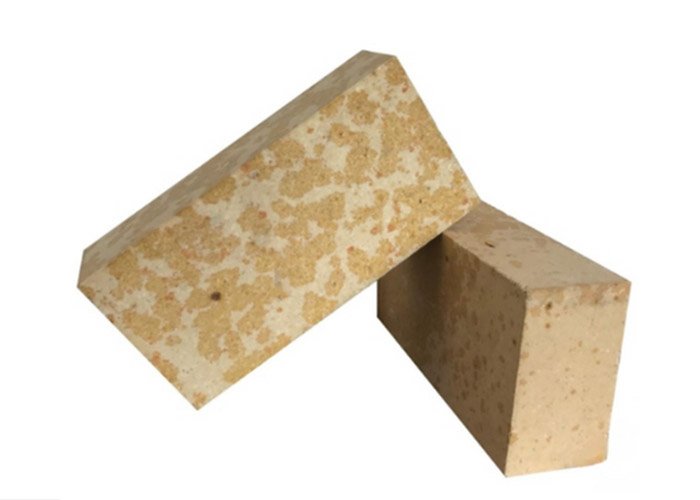
The representative products of acidic refractory bricks are silica bricks and clay bricks. Silica bricks contain over 93% SiO₂, have high softening temperature under load, do not shrink and may even slightly expand in volume after repeated firing, and have strong resistance to acidic slag erosion, but poor thermal shock resistance. They are mainly used in coke ovens, glass furnaces, and acidic steelmaking furnaces. Clay bricks contain 30%–46% Al₂O₃, are weakly acidic materials, have relatively good thermal shock resistance, and are resistant to acidic slag erosion, with a wide range of applications.
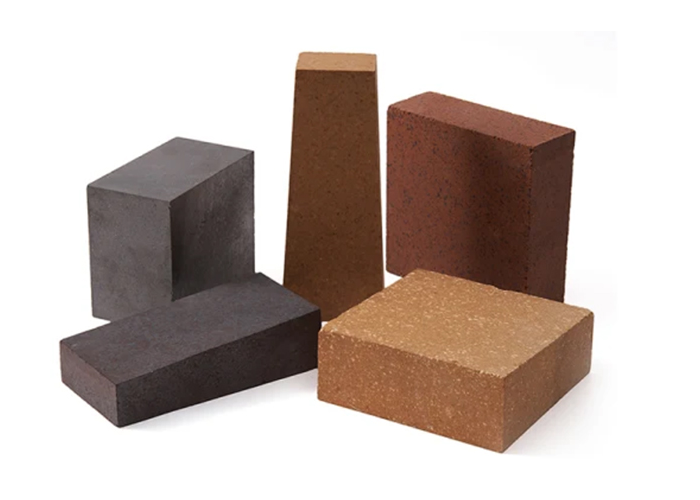
Basic refractory bricks are represented by magnesia bricks, containing over 80%–85% MgO, with refractoriness higher than clay bricks and silica bricks, and good resistance to basic slag and iron slag. Magnesia-chrome bricks, dolomite bricks, and forsterite bricks also belong to this category. Basic bricks are mainly used in open-hearth furnaces, converters, electric furnaces, non-ferrous metal smelting equipment, and cement kilns.
Neutral refractory bricks include high-alumina bricks, mullite bricks, corundum bricks, carbon bricks, and chrome bricks. Corundum products containing over 95% Al₂O₃ have wide applications; carbon refractory materials have low thermal expansion coefficient, high thermal conductivity, good thermal shock resistance, and are not wetted by metals and molten slag. High-alumina bricks have “variable” chemical behavior: they exhibit acidic characteristics when encountering basic oxides, and exhibit basic characteristics when encountering strongly acidic oxides, so they are classified as neutral materials.
A key industry trend worth noting: with the advancement of “dual carbon” goals, the requirements of high-temperature industries for refractory materials are shifting from “usable” to “long-lasting, energy-saving, and environmentally friendly.” Refractory material enterprises are transitioning from scale expansion to comprehensive competition in quality and service. Although product homogenization exists, the gap in service capability and solution capability is widening.
Based on industry practice, we recommend that procurement professionals follow this systematic selection process:
Step One: Confirm the chemical nature of the slag. This is the cornerstone of all subsequent decisions. Consult smelting process documentation to confirm the ratio of CaO to SiO₂ in the slag. For slag with a C/S ratio greater than 2 (leaning basic), prioritize basic or neutral bricks; for acidic slag, consider acidic or neutral bricks.
Step Two: Clarify working temperature and thermal shock conditions. Refractoriness must be higher than the actual working temperature. For example, clay bricks have a refractoriness of about 1730°C, but their actual service temperature is usually only around 1350°C. If the equipment involves frequent starts and stops or temperature fluctuations, thermal shock stability is a key indicator.
Step Three: Verify key physical and chemical parameters. Require suppliers to provide third-party test reports, focusing on: Al₂O₃ or MgO content (directly related to refractoriness and corrosion resistance), softening temperature under load (ability to resist deformation at high temperatures), apparent porosity and bulk density (affecting slag penetration resistance and strength), and cold crushing strength (reflecting mechanical load-bearing capacity).
Step Four: Pay attention to appearance and dimensional accuracy. High-quality refractory bricks should have a smooth surface with no visible cracks, chipped corners, or impurities. Excessive dimensional deviation will lead to oversized masonry gaps, allowing slag and gases to penetrate along the gaps at high temperatures, accelerating lining damage.
Step Five: Consider system compatibility. Refractory bricks are not used in isolation; they need to be compatible with supporting materials such as refractory mortar and castables. When mixing bricks of different materials, attention should be paid to matching thermal expansion coefficients to avoid excessive stress during heating.
In the 2025 market environment, the selection of refractory material suppliers can no longer remain at the level of “comparing prices and looking at samples.” Leading procurement organizations are evaluating suppliers from three dimensions: total cost of ownership, core performance verification, and system adaptability.
The total cost of ownership perspective requires accounting not only for the unit price of bricks, but also for supporting auxiliary material costs, masonry service costs, and the annualized wear cost based on expected service life. Core performance verification requires suppliers to provide typical application cases and measured data for your specific industry, rather than general product introductions. System adaptability examines whether the supplier can grow with your business — when you develop new alloy grades or adjust smelting processes, does the supplier have the corresponding technical response capability?
From the industry landscape, the refractory materials market is polarizing: leading enterprises are building barriers through full industry chain integration and technological R&D, while a large number of small and medium-sized manufacturers are still struggling in homogeneous competition. For procurement professionals, a pragmatic judgment when selecting suppliers is: can the other party clearly explain “why this brick suits your furnace,” rather than just “this brick is cheaper”?
As a high-temperature materials supplier in the ferroalloy sector, Beifang Alloy understands well the synergistic relationship between smelting processes and refractory materials. If you have any questions about refractory brick selection or ferroalloy procurement, please contact us: www.beifangalloy.com | info@hnxyie.com. Our technical team can provide targeted material selection recommendations based on your specific operating conditions.