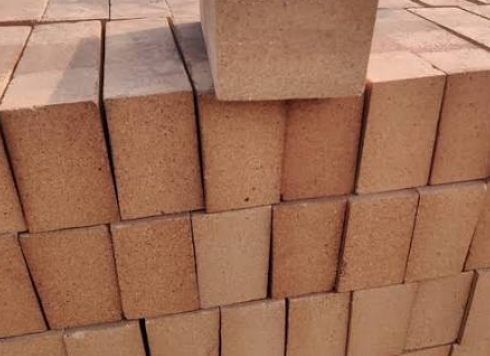
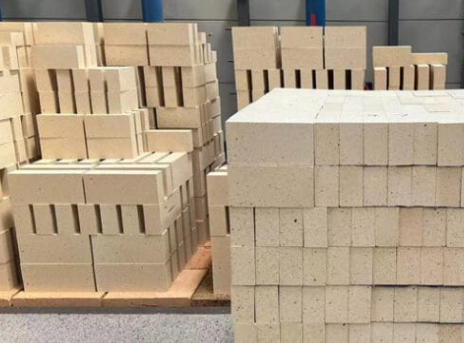
Aluminium electrolysis cells operate under brutally corrosive conditions: molten cryolite at approximately 950°C, sodium fluoride vapor penetration, and thermal cycling that punishes every lining layer. The refractory brick selection directly determines cell campaign life and energy efficiency. The core procurement dilemma is straightforward: materials that block electrolyte seepage tend to conduct heat, while materials that insulate well often lack the density and chemical resistance to stop infiltration.
This guide addresses that tension from four angles: procurement requirements, industry research findings, a practical procurement guide, and supplier comparison criteria. The intended audience is procurement managers and technical buyers at aluminium smelters and ferro alloy operations seeking lining materials that deliver predictable service life without over-specifying cost.
Aluminium electrolysis cell linings face three simultaneous degradation mechanisms: chemical attack from cryolite and NaF vapor, thermal load at 950–1000°C, and mechanical stress from cathode block expansion and bath movement. Procurement specifications must therefore address not just brick composition but the layered system in which each brick functions.
A typical cell bottom lining, from the steel shell inward, includes: insulation board or calcium silicate board → lightweight insulation brick → refractory brick (barrier/backup) → anti-seepage layer (dry barrier mix or impermeable brick) → cathode carbon block. The refractory brick in this stack serves as a structural backup and thermal transition layer—it must not fail prematurely, but it is not the primary anti-seepage barrier. Confusing these roles leads to over-specification and inflated costs.
Buyers should specify and verify the following for any refractory brick intended for electrolysis cell service:
| Parameter | Why It Matters | Typical Target |
|---|---|---|
| Al₂O₃ + SiO₂ content | Determines refractoriness and chemical stability | ≥90% for backup brick |
| Bulk density | Higher density generally improves seepage resistance but raises conductivity | 1.9–2.1 g/cm³ for barrier bricks |
| Apparent porosity | Lower porosity reduces infiltration pathways | ≤18% preferred |
| Cold crushing strength | Must withstand handling and thermal stress | ≥30 MPa |
| Thermal conductivity | Directly affects cell energy balance | 0.4–0.6 W/(m·K) at 400°C acceptable for backup layer |
| Cryolite resistance | Measured by crucible test (penetration depth) | ≤15 mm at 950°C/96h is good |
The buyer’s fundamental challenge is that these two properties trade off against each other. A dense, low-porosity fireclay brick resists cryolite penetration but conducts more heat out of the cell. A lightweight insulating brick saves energy but offers little resistance to NaF vapor. The solution is not a single “super brick” but correct layer sequencing: place the anti-seepage function in a dedicated barrier layer (dry barrier mix or impermeable brick) and allow the refractory brick behind it to prioritize structural integrity and moderate insulation.
Procurement should therefore treat refractory brick and anti-seepage material as separate line items with distinct specifications, not as a combined requirement.
Industry practice distinguishes sharply between sidewall bricks and bottom backup bricks. Sidewall materials face direct bath contact and must resist cryolite erosion and oxidation. Silicon nitride-bonded silicon carbide (Si₃N₄-SiC) bricks dominate this application, with research showing that boron and/or calcium additions improve cryolite corrosion resistance and oxidation stability. Modified Si₃N₄-SiC-C compositions using cheaper carbon raw materials have also been developed to reduce cost while maintaining sodium fluoride resistance.
Bottom backup refractory bricks, by contrast, sit behind the anti-seepage layer and cathode carbon. They are typically fireclay or high-alumina bricks with moderate density. Their primary function is to provide a stable thermal and structural foundation, not to be the first line of defense against bath penetration.
Recent technical analyses confirm that the dry barrier mix layer, not the refractory brick, is the critical anti-seepage component. Comparative data on domestic versus imported barrier mixes shows that optimized Chinese formulations achieve cryolite penetration depths of 11 mm versus 18 mm for typical imported products, while maintaining thermal conductivity below 0.47 W/(m·K) at 600°C. This performance comes from engineered particle gradation and binder chemistry that promotes rapid glassy phase formation on contact with electrolyte, sealing infiltration pathways.
For procurement, this means the refractory brick specification can be relaxed slightly on cryolite resistance if the barrier layer is correctly specified and installed. The money is better spent on a proven dry barrier mix than on an ultra-premium backup brick.
Some lining designs use impermeable bricks instead of or in addition to dry barrier mix. Chinese patent literature describes impermeable bricks made from fine-powder aluminum silicate raw materials (pyrophyllite, flint clay, clay, silica, albite, potassium feldspar) with sintering aids, achieving high volume density and low apparent porosity. The mechanism is uniform structure and rapid reaction with infiltrating electrolyte to form a sealing layer. These bricks offer installation convenience compared to tamped dry mix but generally come at higher unit cost.
The literature does not support the use of a single brick type to simultaneously achieve best-in-class seepage prevention and best-in-class insulation. Claims of such dual-purpose bricks should be treated with skepticism unless backed by independent crucible test data and thermal conductivity measurements at operating temperature. The layered approach remains the engineering consensus.
Before issuing an RFQ, map each lining layer and assign a primary function to the brick or material being purchased:
Sidewall (bath contact): Si₃N₄-SiC brick or equivalent. Priority: cryolite erosion resistance, oxidation resistance.
Bottom barrier layer: Dry barrier mix or impermeable brick. Priority: cryolite penetration resistance, thermal conductivity ≤0.5 W/(m·K).
Bottom backup refractory: Fireclay or high-alumina brick. Priority: structural stability, moderate insulation, cost efficiency.
Insulation layer: Lightweight insulation brick or calcium silicate board. Priority: low thermal conductivity.
Require suppliers to provide test data using recognized methods:
Cryolite penetration: Crucible test at 950°C for 96 hours, report penetration depth in mm.
Thermal conductivity: Laser flash or hot-wire method at 200°C, 400°C, and 600°C.
Porosity and density: Archimedes method per GB/T or ASTM standards.
Cold crushing strength: Per GB/T 5072 or equivalent.
Suppliers who cannot provide method-referenced data should be deprioritized.
Refractory bricks for electrolysis cells are typically rectangular or specially shaped for tight joints. Procurement should confirm:
Dimensional tolerances (typically ±1–2 mm on length/width, ±0.5 mm on thickness).
Whether mortarless or thin-joint installation is planned (affects surface flatness requirements).
Availability of matching mortar or ramming mix from the same supplier.
The cheapest brick per ton is rarely the lowest-cost lining. A total cost model should include:
Material cost (brick + barrier mix + mortar).
Installation labor (complex shapes and tight tolerances increase labor time).
Expected service life (a lining that lasts 2,500 days versus 1,800 days changes the economics dramatically).
Energy penalty from higher thermal conductivity (calculate using cell heat balance).
A brick with 15% higher unit price but 30% longer service life is the better procurement decision.
For any new supplier, request at least three reference cells in operation for over 12 months, with contact information for the plant’s lining engineer. Follow up. A supplier’s own data sheet is marketing; a smelter engineer’s assessment of how the lining performed is procurement intelligence.
When comparing refractory brick and barrier material suppliers for aluminium electrolysis applications, score each supplier on the following weighted criteria:
| Criterion | Weight | What to Look For |
|---|---|---|
| Technical data quality | 25% | Method-referenced test reports; crucible penetration data; thermal conductivity at operating temperature |
| Aluminium industry experience | 20% | Reference cells; years supplying to smelters; familiarity with cell lining designs |
| Product consistency | 15% | Batch-to-batch density and porosity variation; ISO 9001 certification |
| Barrier system integration | 15% | Can supply brick + barrier mix + mortar as a compatible system; technical support during installation |
| Price and lead time | 15% | Delivered cost per ton; production capacity; typical lead time for full lining sets |
| After-sales technical support | 10% | Availability of lining engineers for installation supervision; responsiveness to failure analysis requests |
Category A: Specialist refractory manufacturers with aluminium cell experience. These suppliers typically offer a full lining package: Si₃N₄-SiC sidewall bricks, fireclay backup bricks, dry barrier mixes, and mortars. Their technical data is usually reliable, but pricing is premium. Best suited for smelters prioritizing lining life and predictability.
Category B: General fireclay and high-alumina brick producers. These suppliers offer competitive pricing on backup bricks but often lack cryolite-specific test data or barrier mix capability. Suitable for buyers who source barrier mix separately and can accept more internal QC responsibility.
Category C: Trading companies and distributors. Pricing and lead time may be attractive, but technical accountability is weak. If considering this route, require the trading company to disclose the actual manufacturing source and provide the manufacturer’s test reports directly.
Claims of a single brick achieving both “excellent insulation” and “excellent seepage resistance” without third-party data.
Reluctance to provide crucible test results for cryolite resistance.
No named reference installations or refusal to provide contactable references.
Barrier mix offered as a commodity without particle size distribution data or recommended installation moisture content.
For aluminium electrolysis cell refractory procurement, the technically sound and commercially defensible approach is:
Do not seek a single brick that solves both seepage and insulation. Assign the anti-seepage function to a dedicated dry barrier mix or impermeable brick layer.
Specify the backup refractory brick primarily for structural stability and moderate thermal properties. Fireclay or high-alumina brick with density ~1.9–2.1 g/cm³, porosity ≤18%, and thermal conductivity 0.4–0.6 W/(m·K) is appropriate.
For sidewall bricks, accept the premium for Si₃N₄-SiC. The cryolite resistance and oxidation stability justify the cost in this direct-contact application.
Evaluate suppliers on test method rigor and reference installations, not on ISO certificates alone.
Model total lining cost, not brick unit price. The barrier layer and backup brick together account for a fraction of total cell economics compared to downtime and relining labor.
Beifang Alloy supplies ferro alloy and metallurgical materials to aluminium and steel producers. For inquiries regarding refractory specifications, barrier material sourcing, or technical referral to qualified lining suppliers, contact us at info@hnxyie.com.