If you are sourcing refractory bricks for a waste-to-energy plant or industrial incinerator, the single most common question we hear is deceptively simple: “Should we use acid-resistant bricks or alkali-resistant bricks?”
The honest answer is that municipal solid waste incineration creates a chemical environment that is both acidic and alkaline—often simultaneously, and in different zones of the same furnace. Specifying a brick solely on “acid” or “alkali” resistance is a recipe for premature failure. This article breaks down the procurement needs, the industry research behind material selection, a practical procurement guide, and how to compare suppliers—so you can make an informed decision rather than a guess.
Before comparing brick datasheets, procurement teams must map the furnace by zone. Waste incinerators are not uniform chemical reactors. The flue gas and ash chemistry shift dramatically from the feed chute to the stack.
Municipal waste contains chlorinated plastics (PVC), sulfur compounds, and significant amounts of sodium and potassium salts. During combustion, this produces:
HCl and SO₂ in the flue gas—strong acids when moisture condenses.
Alkali metal vapors (Na, K) that condense on cooler refractory surfaces and react with the brick matrix.
Molten ash and slag at 800–1000°C that can penetrate porosity and chemically attack the brick structure.
Industry guidance consistently identifies alkali attack and chloride/sulfate corrosion as the dominant degradation mechanisms in the hot zones of waste incinerators. Acid condensation becomes a serious concern in downstream zones where flue gas temperatures drop below the acid dew point.
| Furnace Zone | Dominant Threat | Recommended Brick/Refractory Type |
|---|---|---|
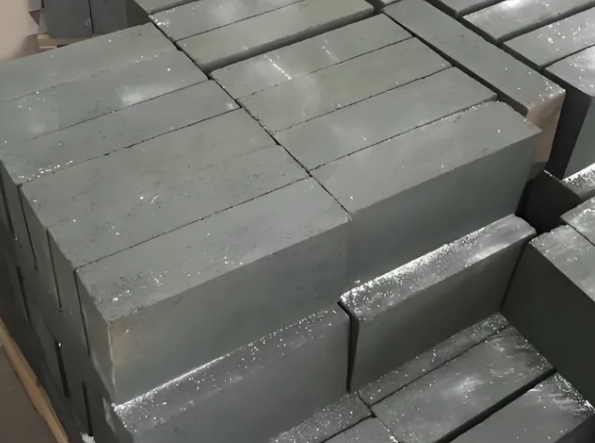
| Grate area / combustion zone | Alkali slag attack, abrasion, thermal shock | Silicon carbide (SiC) bricks or high-SiC castables; SiC is the brick of choice for severe wear zones |
| Side walls / lower furnace | Alkali vapor attack, slag adhesion | Dense high-alumina bricks with low porosity; SiC bricks where wear is severe |
| Upper furnace / boiler pass | Thermal shock, moderate alkali/acid | High-alumina bricks (Al₂O₃ ≥ 60–70%), mullite-based bricks |
| Downstream / cooler zones | Acid condensation (HCl, SO₂) | Acid-resistant bricks or acid-resistant castables where temperatures permit |
The key insight for procurement: alkali resistance is the primary selection criterion for the hot-face bricks in the combustion chamber, while acid resistance becomes relevant in the cooler downstream sections and in any area subject to condensation. A single brick type will not optimally serve the entire furnace.
Search results and technical literature converge on one point: waste incineration flue gas is chemically complex. One source explicitly notes that in the 815–1204°C range, refractory materials are “subject to attack by both alkali and acid vapors, which become more severe as density is reduced; thus, high-density low-porosity material should be used”. In other words, the industry’s own guidance says: stop thinking in binary acid/alkali terms, and start thinking in terms of density and porosity.
Patent literature on refractory bricks for waste incinerators emphasizes alkali resistance as a key performance target. One recent patent for a long-life castable explicitly claims “strong resistance to alkaline furnace ash erosion” as a primary benefit, using silicon carbide and synthetic leucite to achieve it. Another product description from a Japanese ceramics manufacturer highlights “alkali resistance” as the headline feature for its high-alumina brick line designed for waste incinerators, citing “high alumina content, low porosity, and optimized matrix composition” as the mechanism.
Where acid resistance becomes critical is in the cooler flue gas paths. Standards for incinerator chimney and scrubber linings specify acid-resistant refractories that can withstand hydrochloric and sulfuric acid exposure without excessive weight loss. This is not typically the brick used in the combustion chamber, but it is essential for the overall system.
The practical industry consensus for waste incinerator hot-face bricks is:
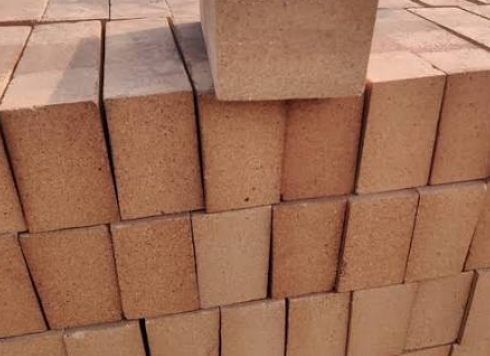
High alumina content (Al₂O₃ ≥ 60–70%) for refractoriness and structural stability.
Low porosity (apparent porosity ≤ 16–18%) to block vapor and slag penetration.
Silicon carbide addition for the most severe wear and slag zones—SiC provides excellent alkali and slag resistance combined with high thermal conductivity and abrasion resistance.
Acid-resistant formulations only for downstream, lower-temperature zones where condensation occurs.
Do not issue a single “refractory brick” specification for the whole incinerator. Break the procurement package into at least three lots:
Hot-face combustion zone bricks: High-alumina or SiC-based, alkali-resistant, low porosity.
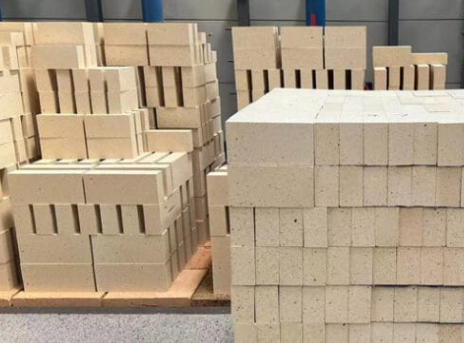
Intermediate/backup insulation bricks: Lightweight insulating bricks with adequate temperature rating.
Downstream/acid-exposed bricks: Acid-resistant high-alumina or specialized acid-proof bricks where flue gas temperatures drop.
Instead of specifying “acid-resistant” or “alkali-resistant” as a binary label, require suppliers to provide test data on:
| Parameter | Target for Hot-Face Bricks | Rationale |
|---|---|---|
| Al₂O₃ content | ≥ 60% (higher for severe zones) | Refractoriness and structural stability |
| Apparent porosity | ≤ 16–18% | Critical for blocking alkali vapor and slag penetration |
| Bulk density | ≥ 2.5–2.8 g/cm³ | Dense structure resists penetration |
| Cold crushing strength | ≥ 55 MPa | Mechanical durability |
| Thermal shock resistance | ≥ 20 cycles (1100°C water quench) | Resistance to furnace cycling |
| Alkali resistance test | Provide data (mass loss or penetration depth) | Directly relevant to dominant attack mechanism |
| SiC content (for severe zones) | ≥ 50–70% for SiC bricks | Slag and wear resistance |
Many brick datasheets proudly list “acid resistance ≥ 98%.” This is a standard test and useful for downstream zones, but it tells you little about performance in the combustion chamber. Ask specifically for alkali resistance test results—such as resistance to sodium/potassium carbonate or hydroxide exposure at operating temperature. Suppliers who cannot provide this data are likely selling general-purpose bricks, not incinerator-grade material.
Waste incinerators start up, shut down, and experience load swings. A brick that is chemically perfect but thermally fragile will crack and spall, exposing fresh surfaces to attack. The 1100°C water-quench thermal shock test (≥ 20 cycles) is a reasonable minimum for hot-face bricks.
For the grate area, side walls near the grate, and slag discharge zones, silicon carbide bricks or high-SiC castables are the industry standard for a reason. SiC offers a combination of high thermal conductivity (reducing thermal gradients), excellent abrasion resistance, and strong resistance to alkali slag attack. The higher unit cost is offset by significantly longer service life in these aggressive locations.
When comparing refractory brick suppliers for waste incinerator applications, price per ton is a poor metric. The true cost is cost per year of service life, which depends on material quality, consistency, and application support.
| Criterion | What to Look For | Red Flags |
|---|---|---|
| Incinerator-specific experience | References from waste-to-energy plants; case studies with service life data | Only general industrial furnace references |
| Alkali resistance data | Published test results for alkali attack (not just acid resistance) | Datasheet lists only acid resistance and generic “corrosion resistance” |
| Porosity control | Consistent apparent porosity ≤ 16–18% across production lots | Wide porosity range or no stated porosity |
| SiC capability | Ability to supply SiC bricks or SiC-containing bricks with controlled SiC content | SiC offered only as castable, not as fired brick for severe zones |
| Quality consistency | Statistical process control data; batch traceability | No batch testing records or certificate of analysis per lot |
| Technical support | Ability to review furnace zone drawings and recommend brick grades per zone | Sales-only contact; no application engineering |
| Shape and dimensional tolerance | Compliance with incinerator brick shape standards (e.g., T/CSTM 00199-2020 for grate incinerator brick dimensions) | Generic shapes only; cutting and fitting on site |
Be skeptical of suppliers who market a single brick as “both acid and alkali resistant” without qualification. While it is possible to formulate bricks with broad chemical resistance, the dominant failure mode in the hot zone is alkali/slag penetration and spalling, not bulk acid dissolution. A supplier who understands incinerators will talk about porosity, slag viscosity, and thermal gradients—not just acid solubility percentages.
For waste incinerator refractory bricks, the question “acid or alkali?” misleads more than it helps. The combustion zone demands alkali-resistant, low-porosity, high-alumina or SiC-based bricks that resist slag penetration and thermal shock. The cooler downstream zones may require acid-resistant bricks where condensation occurs. The best procurement strategy is to specify by zone, demand alkali resistance data alongside acid resistance data, and prioritize density and porosity control over marketing labels.
At Beifang Alloy, we supply ferroalloys and related materials to refractory and steel producers. If you are sourcing raw materials for refractory brick production—including silicon carbide, alumina-based additives, or alloying elements—contact us at info@hnxyie.com or visit www.beifangalloy.com to discuss your requirements.