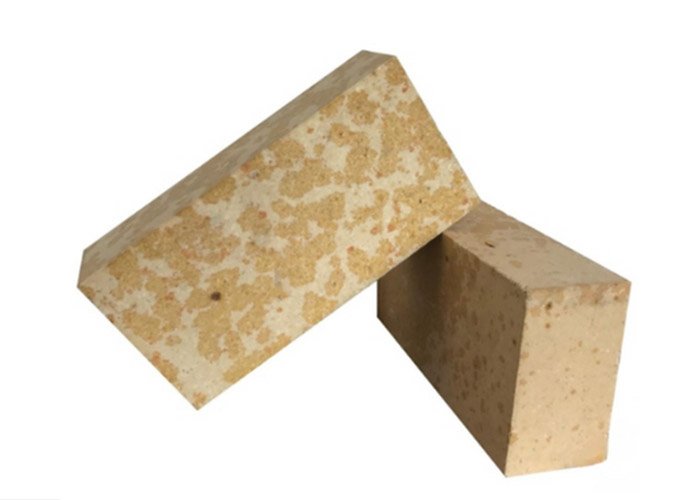
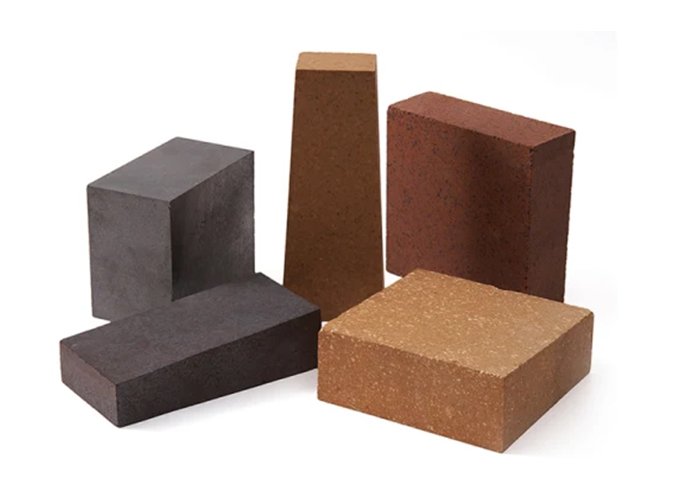
Refractory bricks are heavy, brittle, and dimensionally critical. A brick that arrives chipped or cracked is not a minor inconvenience—it is a lining weak point, an installation delay, and a cost you did not budget for. Yet breakage rates in refractory brick transport remain stubbornly high across the industry, often ranging from under 1% in well-managed domestic shipments to far higher figures in poorly handled or long-distance logistics.
This article breaks down the packaging and transport requirements, explains why breakage persists, and gives procurement teams a practical framework for evaluating suppliers on logistics competence—not just brick quality.
China’s national standard GB/T 16546-2020 (“General rules for packing, marking, transport, storage and quality certificates of shaped refractory”) is the governing specification for shaped refractory products, including refractory bricks. While the full text is not freely available in English, the standard’s scope and industry practice indicate the core requirements:
Packaging must prevent movement and impact between individual bricks during transport.
Marking must identify product type, grade, dimensions, and quantity clearly on each package or pallet.
Transport conditions must protect against moisture, contamination, and mechanical shock.
Quality certificates must accompany shipments, documenting batch, specification, and inspection results.
For buyers, the practical takeaway is straightforward: if a supplier cannot state which packaging standard they follow and show evidence of compliance, their breakage performance is likely inconsistent.
Beyond the standard’s minimums, well-managed refractory shippers apply several practices:
1. Edge and Corner Protection
Refractory bricks are most vulnerable at edges and corners. Standard practice includes corner boards, edge protectors, and interlayer separators (cardboard, plastic sheeting, or wood) to prevent brick-on-brick contact. For high-value shapes (e.g., ladle bricks, checker bricks), individual wrapping or compartmentalized packaging is common.
2. Unit Load Stabilization
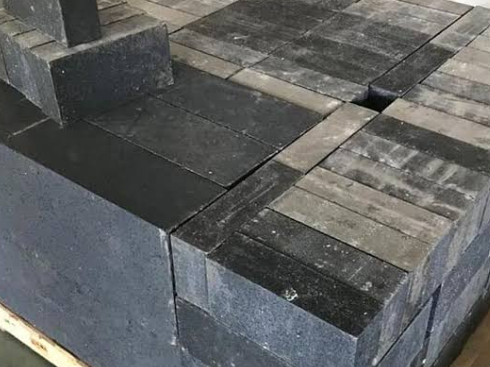
Bricks are typically stacked on wooden pallets, shrink-wrapped, and strapped. The goal is a rigid unit that cannot shift internally. Loose stacking inside a container or truck is a primary cause of transport damage.
3. Moisture Protection
Many refractory bricks (especially clay and high-alumina types) are sensitive to moisture absorption, which can affect properties before installation. Packaging should include moisture barriers or desiccants for long-sea voyages or humid climates.
4. Loading and Securing
Trucks and containers must be clean, dry, and free of oil or chemical residue. Bracing and dunnage prevent load shift during transit. Forklift handling at origin and destination must use proper attachments to avoid puncturing packaging or dropping pallets.
5. Documentation and Traceability
Each shipment should include a quality certificate identifying brick type, batch, and inspection results. Marking on packaging should match the packing list and purchase order exactly—mismatched markings create confusion at the job site and increase the risk of mishandling.
The persistence of refractory brick breakage is not a mystery. It is the predictable result of several structural factors in the supply chain.
Refractory bricks are ceramic bodies. They are strong in compression but weak in tension and shear. A brick that can withstand 30–40 MPa of compressive load in a furnace wall can crack from a modest impact or a torsional stress during handling. No packaging can change this material reality—it can only mitigate it.
A standard refractory brick weighs 3–5 kg; a pallet can exceed 1.5 tons. Stacking multiple pallets or loading bricks directly on top of each other creates point loads and edge stress that accumulate during transport vibration. Vibration-induced fatigue is a silent killer: bricks may look fine on arrival but develop micro-cracks that fail during heat-up.
The highest-risk moments are not the long highway miles—they are the loading and unloading. Forklift operators under time pressure, inadequate lifting equipment, or poorly stabilized pallets cause more breakage than road vibration in many supply chains. Industry sources note that a portion of brick loss occurs specifically during unloading and re-loading at intermediate warehouses or job sites.
Many suppliers default to the cheapest packaging that will physically contain the bricks. Cardboard separators are omitted, strapping is minimal, and corner protection is skipped. The savings per ton are small; the breakage cost per shipment is not. Procurement teams that evaluate suppliers only on brick price per ton—without asking about packaging specifications—inadvertently incentivize this behavior.
Sea freight introduces humidity and container movement. Rail introduces longitudinal impact during coupling. Road transport over poor infrastructure introduces sustained vibration. Each transfer point—factory to port, port to vessel, vessel to port, port to warehouse, warehouse to site—is an opportunity for damage. Suppliers who quote CIF or DDP prices without specifying packaging standards are transferring this risk to the buyer.
Before price negotiation, request the supplier’s standard packaging specification in writing. Specifically ask:
What separators are used between bricks?
Are corner protectors applied to every pallet?
What is the pallet configuration (bricks per pallet, layers, total weight)?
Is shrink-wrap used, and how many straps per pallet?
What moisture protection is included for sea freight?
A supplier who answers these questions precisely has a system. One who says “standard export packaging” without detail does not.
Ask: “What is your historical breakage rate for shipments to our region, and what is your policy for breakage claims?”
A supplier with reliable logistics will have data. A supplier without data either does not track breakage or does not want to discuss it. Either answer is informative.
Under FOB, the buyer assumes risk once the cargo passes the ship’s rail. Under CIF, the supplier arranges freight and insurance but risk still transfers at origin. Only under DDP or DAP does the supplier bear risk until delivery to your site. For high-value or fragile refractory shapes, negotiating DAP terms—or at minimum requiring marine insurance that covers breakage—shifts the incentive toward better packaging.
Establish a receiving inspection protocol:
Photograph every pallet before unloading.
Count broken/chipped bricks per pallet and record against the packing list.
Document packaging condition (crushed corners, torn wrap, shifted loads).
File claims immediately with the supplier and, if applicable, the freight insurer.
Breakage discovered after bricks have been moved to storage or staging is difficult to attribute and almost impossible to claim.
A supplier quoting $500/ton FOB with 3% breakage delivers an effective cost of $515/ton plus the labor and schedule impact of dealing with damaged bricks. A supplier quoting $520/ton with 0.5% breakage delivers at $522/ton with far less downstream disruption. The cheapest FOB price is rarely the cheapest delivered brick.
Refractory bricks are the containment boundary for furnaces, ladles, and high-temperature reactors. A cracked brick in a critical zone is not a cosmetic issue; it is a path for molten metal or slag penetration, a point of accelerated wear, and a potential safety hazard.
For ferro alloy producers and high-temperature processors, lining reliability directly affects campaign life and production continuity. A truckload of bricks that arrives with 5% breakage forces either:
Installation of compromised bricks in less critical zones (if the design allows), or
Emergency re-ordering, delaying the relining schedule and extending downtime.
Neither outcome is acceptable in a well-run procurement process. The packaging and transport discussion is therefore not administrative—it is a direct input to furnace availability and maintenance cost.
At Beifang Alloy, we treat packaging and transport as part of the product specification, not an afterthought. Our refractory brick shipments are palletized with interlayer separation, corner protection, and moisture barrier where required. We provide packaging specifications in writing before order confirmation, and we work with customers to establish receiving inspection protocols that make breakage claims straightforward.
If you are sourcing refractory bricks and want a supplier who can document their logistics standards, contact us.
Website: www.beifangalloy.com
Email: info@hnxyie.com