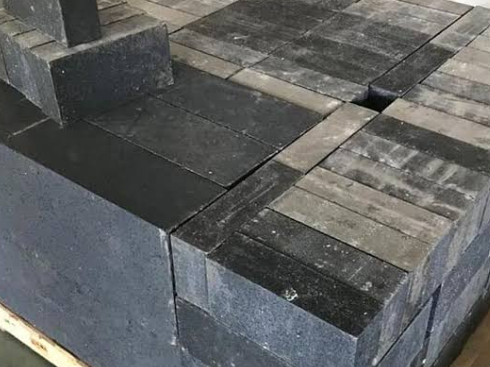
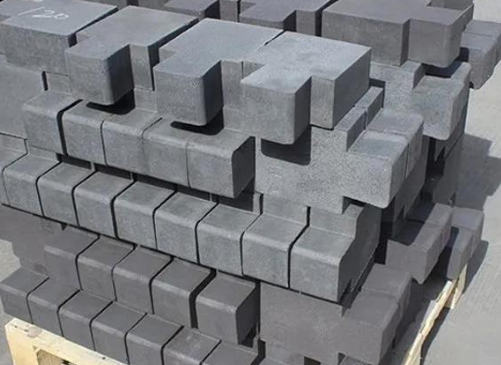
A container of refractory bricks arrives at the customer’s warehouse. The purchase order said “high-alumina brick, Al₂O₃ ≥ 70%.” The supplier’s mill certificate says the same. So what actually needs to happen before the buyer signs off—and what happens if the results don’t match?
In practice, arrival acceptance is where most disputes begin. Not because the bricks are necessarily bad, but because the sampling method, the test standard, and the judgment rule were never aligned before shipment. This article walks through the sampling rules and conformity criteria for refractory brick acceptance, from the buyer’s perspective.
Buyers often treat arrival inspection as a formality—check the packing list, glance at the mill certificate, sign the receipt. That approach works until it doesn’t.
The core problem is this: a mill certificate reflects what the supplier tested on samples they selected. Arrival acceptance reflects what you find in the goods you actually received. The two are not the same thing. If the contract does not specify the sampling standard and the judgment rule, the supplier’s data is the only reference point, and the buyer has limited grounds to reject a non-conforming batch.
For Chinese domestic procurement or imports from Chinese suppliers, the governing sampling standard is typically GB/T 10325-2012 “Rules for Acceptance Sampling Inspection of Shaped Refractory Products”. This standard covers the preparation for sampling, the implementation of sampling, the product quality judgment rules, and the acceptance sampling inspection report. It applies to ordinary shaped refractory products; oversized, undersized, or high-value shapes may refer to it by analogy.
For European-origin goods or suppliers working to EN standards, the sampling reference is typically ISO 5022, which is cited by EN product standards as the basis for obtaining representative samples. For ASTM-based supply, sampling provisions are often embedded in the individual product specification (e.g., ASTM C64 for fireclay brick) or in the test method standards themselves.
The procurement takeaway: before the order is placed, the contract should name the sampling standard and the judgment rule. “Per GB/T 10325” is a starting point, not a complete specification. The batch size definition, the number of samples, and the acceptance/rejection criteria all need to be stated explicitly.
Batch definition is the first control point. Under GB/T 10325, a batch is generally composed of products of the same grade, same production process, and same continuous production period. For high-alumina bricks specifically, industry guidance points to a maximum batch size of 500 tons. This matters for buyers receiving large orders: if the total shipment exceeds the batch limit, it should be divided into multiple inspection lots, and each lot should be sampled and judged independently. A single “pass” on one lot does not extend to the entire container.
Sample quantity follows a predictable pattern in Chinese supervisory practice. Provincial market supervision implementation rules for refractory products commonly specify 18 bricks per batch: 9 for testing and 9 as retained backup samples. This is a supervisory inspection figure, not necessarily the contractual figure, but it provides a useful benchmark. For commercial acceptance, the contract can specify a different number based on batch size and criticality, but the principle of retaining backup samples is sound—if the first test fails, the backup samples allow for retesting without reopening the shipment.
What gets tested is not always the full specification. Supervisory inspections typically select key performance indicators rather than testing every property. For high-alumina bricks, common inspection items include chemical composition (Al₂O₃), physical properties (bulk density, apparent porosity, cold crushing strength), and high-temperature performance (refractoriness under load, permanent linear change). For commercial acceptance, the buyer should specify which properties are “acceptance-critical” and which are “informational.” Testing everything is expensive; testing nothing is risky.
The judgment rule in Chinese practice is binary. Under the implementation rules reviewed, if all tested items conform, the batch is judged as “no nonconformity found in the tested items.” If any one item fails, the batch is judged non-conforming. There is no partial acceptance based on a weighted score. This is a strict rule, and it places a premium on ensuring that the samples tested are representative and that the test methods are agreed upon in advance.
A note on international alignment. If the end customer or design institute requires EN or ASTM data, the acceptance protocol should reference the corresponding test method from the outset. A batch tested to GB/T 5072 for cold crushing strength may not satisfy a specification that requires EN 993-5 or ASTM C133. The standard reference must match the contract requirement, not the supplier’s convenience.
Step 1: Verify batch identity before opening anything. Check the packing list, pallet labels, and mill certificate against the purchase order. Confirm grade, quantity, production date, and batch number. If the shipment contains multiple production batches, separate them physically before sampling.
Step 2: Sample according to the agreed standard. If GB/T 10325 is the basis, follow its sampling procedure. Retain backup samples under seal, stored separately from the test samples. Photograph the sampling process—pallet positions sampled, sample condition, seal numbers. This documentation is your evidence if a dispute arises.
Step 3: Test the acceptance-critical properties. At minimum, for high-alumina or clay bricks, this typically means Al₂O₃ content, bulk density, apparent porosity, and cold crushing strength. If the application is high-temperature load-bearing, add refractoriness under load. Use a third-party laboratory with CMA or CNAS accreditation for disputed or high-value batches.
Step 4: Apply the judgment rule as written. If the contract specifies “any item failing = batch rejected,” apply that rule. Do not negotiate informally on the warehouse floor. If retesting is permitted under the contract, use the sealed backup samples and document the chain of custody.
Step 5: Document and close. Record the sampling date, standard used, sample quantities, test results, and judgment. Attach the third-party report if applicable. File the backup samples for the retention period specified in the contract (typically 3–6 months).
A common gap: the contract says “quality per GB/T 2988” but does not say which sampling standard applies or what happens if one brick in the batch fails. GB/T 2988 is a product specification; GB/T 10325 is the acceptance sampling rule. They serve different functions and should both be referenced.
Question 1: “What sampling standard do you recommend for arrival acceptance, and why?” A supplier that answers “GB/T 10325, batch size per the standard, backup samples retained” understands the acceptance process. A supplier that answers “our mill certificate is sufficient” is telling you they expect the buyer to accept without independent verification.
Question 2: “If one sample fails cold crushing strength, what is your proposed resolution procedure?” The answer reveals whether the supplier has a real quality management process. A serious supplier will reference retesting provisions, backup samples, or a joint third-party test. A supplier that says “that never happens” is not answering the question.
Question 3: “Can you provide the batch breakdown for this shipment?” If the order exceeds the batch limit under the applicable standard, the supplier should be able to identify which bricks came from which production batch. A supplier that treats the entire container as one undifferentiated lot is either unfamiliar with the standard or hoping you won’t ask.
About Beifang Alloy. As a ferroalloy factory, our core products are deoxidizers and alloy additives for steelmaking. The acceptance logic for ferroalloys shares the same principle as refractory bricks: the contract must specify the sampling standard and judgment rule, or the buyer is relying on the supplier’s data alone. If you have questions about acceptance terms in ferroalloy procurement, reach us at info@hnxyie.com.
Arrival acceptance is not about distrust. It is about making the quality agreement enforceable. The sampling standard, the batch definition, the test items, and the judgment rule are all contractual terms, not technical afterthoughts. Get them right before the container ships, and arrival acceptance becomes a routine confirmation. Leave them vague, and it becomes a negotiation.
Beifang Alloy | Ferroalloy products and high-temperature materials sourcing
info@hnxyie.com | www.beifangalloy.com