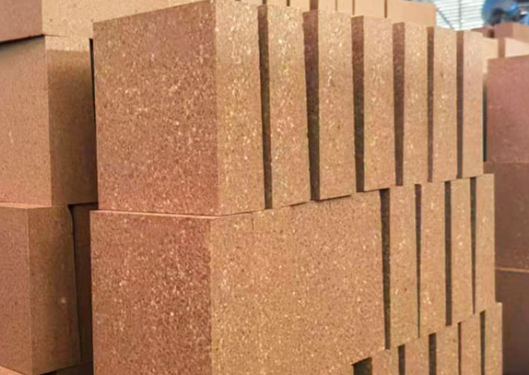
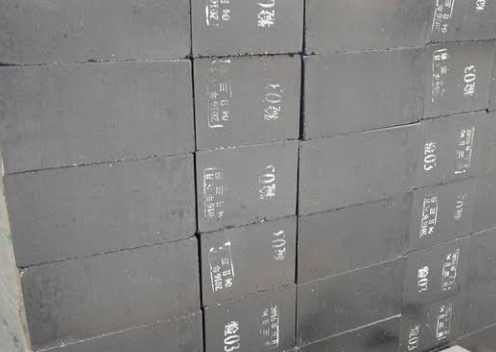
In refractory material procurement, price is an important commercial consideration—but making decisions on price alone is often the starting point for shortened furnace campaign life and unplanned downtime. Refractory brick performance directly affects the operational stability and total operating cost of high-temperature furnaces. As a long-term practitioner in the ferroalloy production field, Beifang Alloy understands well the cascading impact of improper refractory selection on smelting operations.
This article approaches the topic from three dimensions—clarifying procurement needs, industry research, and in-depth supplier comparison—and identifies the core questions procurement teams must ask refractory brick suppliers beyond price.
I. Procurement Needs First: Ask Yourself Before Asking the Supplier
Before questioning suppliers, procurement teams must first precisely define their internal requirements. Refractory bricks are not commodity items—the same grade of “high-alumina brick” can perform vastly differently under different operating conditions.
The first set of questions you need to clarify: Where will these refractory bricks be used? Is it the lining of a ferroalloy submerged arc furnace, a ladle lining, or the transition zone of a cement rotary kiln? Different zones endure completely different erosion mechanisms—ferroalloy furnace linings face chemical attack from high-temperature melts and slag, while cement kiln transition zones are primarily damaged by thermal shock spalling. If a supplier cannot recommend a material based on your specific operating conditions but only asks “what alumina content do you need,” that itself is a warning signal.
The second set of questions: What are the acceptance criteria? High-alumina bricks are classified by Al₂O₃ content into multiple grades from LZ-48 to LZ-80, corresponding to different refractoriness-under-load temperatures and cold crushing strength indicators. If the buyer only vaguely requests “high-alumina bricks,” the supplier will naturally tend to supply at the minimum compliance line. Specifying the applicable standard (e.g., GB/T 2988) and minimum thresholds for key indicators is your strongest bargaining chip at the negotiation table.
II. Industry Research: Probing Suppliers on Technical Details
Once procurement needs are clear, the following questions should be put to each candidate supplier one by one, while observing the professionalism and responsiveness of their answers.
Question 1: Please provide third-party test reports for this batch—not just in-house inspection certificates
Many suppliers can quickly produce internal lab sheets, but the true performance of refractory materials requires independent verification. Buyers should require suppliers to provide chemical composition and physical property test reports issued by a qualified third-party laboratory, focusing on Al₂O₃ content, bulk density, apparent porosity, cold crushing strength, and refractoriness-under-load softening temperature. For high-alumina bricks, the refractoriness-under-load temperature is the core indicator of high-temperature structural stability; for silica bricks, residual quartz content directly affects thermal expansion behavior. If a supplier refuses to provide third-party data citing “commercial confidentiality,” or if the report lacks key test items, it is advisable to remove them from the candidate list.
Question 2: What is the actual service life of your bricks under similar operating conditions?
This is the key question that distinguishes “traders” from “manufacturers.” A genuine refractory brick producer should be able to provide supply records and usage feedback from similar furnaces under comparable operating conditions. For high-alumina bricks used in ferroalloy submerged arc furnaces, for example, the supplier should understand whether the typical lining failure mode in that application is slag erosion or thermal spalling, and explain accordingly how their product is designed to address this through microstructure or bond phase. If a supplier can only vaguely answer “it lasts two or three years” without specific operating parameters and failure analysis, their technical support capability is questionable.
Question 3: Who is responsible for dimensional tolerances and the masonry installation plan?
The quality of refractory brick masonry directly affects the integrity and gas tightness of the lining. Excessive dimensional deviation leads to overly wide joints, which become pathways for slag penetration. Buyers should ask: What dimensional tolerance standard does the supplier follow? Do they provide brick layout drawings and masonry guidance? For special-shaped bricks or on-site cutting, can the supplier dispatch technical personnel to assist with installation? A responsible supplier will proactively ask for your furnace drawings rather than simply confirming brick numbers and quoting a price.
III. Supplier Comparison: Penetrating Due Diligence from Qualifications to Capacity
After obtaining the technical answers above, buyers must also cross-verify the supplier’s underlying capabilities.
Checkpoint 1: Is production in-house or outsourced? Some suppliers present excellent samples but source from small third-party factories during volume supply, causing significant quality fluctuation. Buyers should request a production line visit or on-site records of key processes (batching, forming, firing). Manufacturers with their own tunnel kilns or shuttle kilns generally offer greater batch consistency.
Checkpoint 2: Does the quality control system cover the entire process? ISO 9001 certification is a basic threshold, but more important is whether the supplier performs batch-by-batch inspection of incoming raw materials, semi-finished dimensions, and finished product physical-chemical indicators. The quality control capability grading specifications for refractory suppliers published by the China Building Materials Federation grade suppliers across dimensions including equipment and technical capability, product batch statistics, and physical sampling data. Although this grading is not yet mandatory, it can serve as a reference framework for evaluating supplier management practices.
Checkpoint 3: Do delivery lead times and packaging protection match project timelines? Refractory bricks are fragile goods—improper packaging leading to edge and corner breakage will cause excessive joint widths during masonry. The packaging method (wooden pallets, shrink wrap, corner protectors) and transport responsibility division should be clearly specified. For projects with tight maintenance schedules, the supplier’s regular stock levels and emergency replenishment capability must also be confirmed in advance.
IV. Practical Recommendations for Buyers
Based on Beifang Alloy’s experience with refractory materials in ferroalloy production, we recommend sending suppliers a concise technical inquiry sheet at the RFQ stage, containing the following items: application zone and operating conditions, applicable standards and key indicator requirements, required brick shapes and quantities, expected delivery date, and a list of documents to be provided with shipment (inspection reports, certificates, masonry drawings). The quality of a supplier’s response to this inquiry sheet is itself an efficient screening tool.
Price negotiation should be built on a confirmed technical solution. When suppliers know you have the ability to discern, the “padding” and “traps” in their quotations decrease significantly.
Contact us: For further information on refractory material selection for ferroalloy production, visit Beifang Alloy’s website at www.beifangalloy.com or email us at info@hnxyie.com.