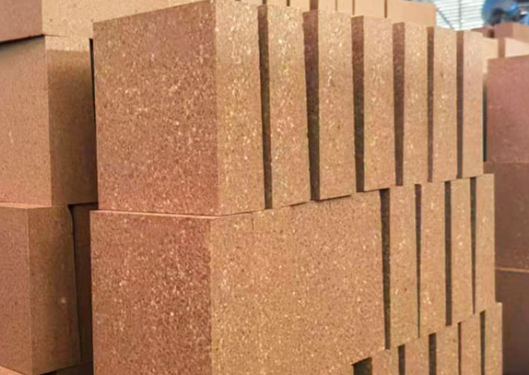
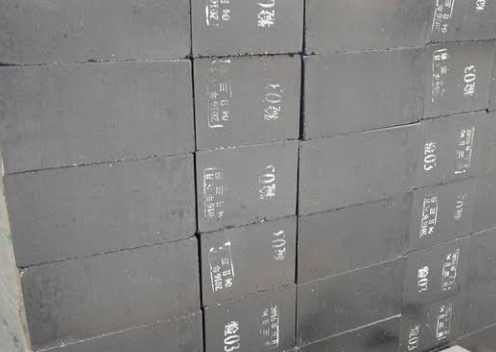
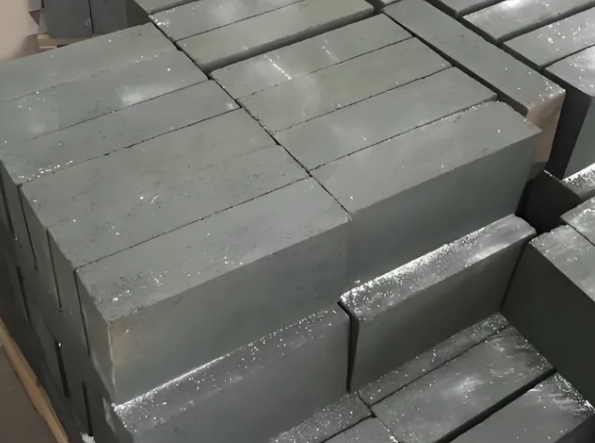
In the masonry and maintenance of industrial kilns and furnaces, standard bricks often cannot meet the structural requirements of complex sections, making custom special-shaped refractory bricks a critical part of the procurement process. However, many procurement personnel encounter repeated communication and even project delays when first dealing with custom shaped bricks, either because parameters are incompletely provided or because lead time expectations are unrealistic. As a service provider under Beifang Alloy, specializing in refractory and alloy materials, we have combined industry practice and procurement standards to outline the core parameter checklist and lead-time logic for custom special-shaped refractory bricks, helping you complete procurement decisions efficiently.
Special-shaped refractory bricks are non-standard products. Manufacturers cannot ship from stock and must produce based on the complete technical documents provided by the buyer. Missing any key parameter may result in rejected brick shapes or masonry failure. The following four categories of information must be provided during procurement:
First, operating conditions. This is the fundamental basis for material selection. It is necessary to specify the service temperature of the kiln, the atmosphere nature (oxidizing/reducing), the pressure environment, whether chemical attack exists (such as alkali vapor or molten slag), as well as mechanical load and thermal shock frequency. For example, high-alumina shaped bricks are suitable for high-temperature load-bearing sections, while clay-bonded shaped bricks are mostly used for furnace walls and flues at relatively lower temperatures. The more specific the operating condition description, the more accurately the manufacturer can recommend the material grade.
Second, material and physicochemical index requirements. Simply saying “refractory bricks are needed” is far from sufficient. It is necessary to specify the material category (clay-bonded, high-alumina, mullite, silica, etc.) and the for key indices. Taking high-alumina shaped bricks as an example, the alumina content usually needs to be stated as whether ≥55%, ≥65%, or a higher grade is required; at the same time, the acceptance ranges for refractoriness, refractoriness under load, cold crushing strength, bulk density, and apparent porosity should be agreed upon. The buyer should require the supplier to list measured values item by item in the contract, rather than merely marking “meets national standard.”
Third, drawings and dimensional tolerances. This is the core document for custom shaped brick production. Two-dimensional CAD drawings or three-dimensional models must be provided, marking every non-standard dimension, recessed corner, groove position, and installation fit relationship. Particular attention should be paid to the fact that tolerance requirements must be marked on the drawings. Common industry practice can be referenced as follows: for dimensions ≤200 mm, allowable deviation ±1 mm; for 201–300 mm, ±1.5 mm; for >300 mm, ±2 mm; for wedge bricks, the difference between large and small ends is usually required to be ≤0.5 mm. If tolerances are not specified on the drawings, the manufacturer will produce according to free tolerances, which can easily lead to uneven brick joints or failure to lock tightly upon arrival.
Fourth, procurement quantity and acceptance standards. Because special-shaped bricks require separate mold opening, the minimum order quantity directly affects the unit cost. At the same time, the acceptance basis should be clarified, such as dimensional and appearance inspection according to GB/T 10326, and physicochemical indices according to the corresponding material national standard or a technical agreement agreed upon by both parties. For critical kiln sections, it is recommended to stipulate that each batch be accompanied by a physicochemical test report for the same batch upon delivery, avoiding the risk of “good samples but poor batches.”
The delivery lead time for special-shaped refractory bricks is not a fixed number but is formed by the superposition of four stages: mold opening cycle, production scheduling, firing cycle, and logistics. If the buyer estimates lead time based on the in-stock mindset of standard bricks, they will often find themselves in a passive position in the later stages of the project.
From the mold opening stage, the production of special-shaped brick molds usually requires 7 to 15 working days, depending on the complexity of the brick shape. If the brick body has multiple recessed corners, thin walls, or high-precision fitting surfaces, the time for mold design and verification will be correspondingly extended. Some manufacturers can waive the one-time mold opening fee when the batch order reaches a certain scale, but the mold opening time cannot be compressed.
The production and firing stages also have rigid cycles. Taking fired bricks as an example, from billet forming to tunnel kiln firing, cooling, and inspection, additional time is usually required. If materials such as high-alumina or mullite that require higher firing temperatures are involved, the cycle is even more stringent. It is worth noting that tender data from large industrial projects can provide a reference for lead time: in a procurement project for special-shaped bricks for an anode flue wall overhaul, the winning supplier committed to a delivery node of 30% of goods arriving 50 days after contract signing, with the remaining goods delivered in batches according to the buyer’s overhaul progress. This reflects that for batch orders of special-shaped bricks, around 50 days is a meaningful benchmark lead time.
In summary, for small-to-medium batch custom shaped bricks of moderate complexity, a reasonable expectation from drawing confirmation to shipment is 25 to 40 days; if the brick shape is complex or the order volume is large, it is advisable to reserve 45 to 60 days. During inquiry, the buyer should proactively require the manufacturer to provide a staged schedule (mold completion date, first firing date, full completion date), rather than accepting only a general “fastest lead time.”
Inquiry stage: exchange parameters for accurate quotations. Package the above operating conditions, material indices, drawings, and quantity together and send them to candidate manufacturers, requiring them to quote based on the same set of parameters. This prevents manufacturers from reducing configuration under the pretext of “using conventional materials” to lower prices. At the same time, ask whether the mold opening fee is charged separately and whether it can be refunded or offset for batch orders.
Contract stage: lock in key commitments in writing. Require the contract to clearly stipulate: each batch upon arrival is accompanied by a physicochemical test report for the same batch; dimensional tolerances are executed according to the markings on the drawings, and unspecified tolerances are judged according to the acceptance standards confirmed by both parties; if masonry failure is caused by the supplier’s brick shape problems, the supplier shall bear rework or compensation liability. For delivery time, it is recommended to agree on staged nodes and liability for overdue breach rather than merely stating a final delivery date.
Acceptance upon arrival: check “identity” first, then “appearance.” Verify whether the batch number on the accompanying quality certificate matches the actual batch received, and confirm that the physicochemical indices are within the agreed range. In terms of appearance, focus on checking crack width (cracks with width >0.10 mm are generally not allowed), the degree of chipped corners and edges, and cross-sectional lamination. For bricks used in critical sections, it is recommended to retain samples for subsequent re-inspection or dispute arbitration.
The technical threshold of custom shaped bricks determines that whether the supplier has its own mold workshop and firing kiln is the first dividing line in supplier screening. Intermediaries or OEM-branded traders cannot control mold opening precision and firing curves. Once dimensional deviations or fluctuations in physicochemical indices occur, the traceability and rectification chain becomes extremely long.
Comparison can be approached from three dimensions. First, look at mold capability. Ask whether the molds are self-made or outsourced. Manufacturers with their own mold workshops can respond more quickly to drawing changes and maintain mold maintenance frequency during batch production, which is crucial for consistency of dimensional tolerances. Second, look at kilns and testing. Source manufacturers usually have tunnel kilns or shuttle kilns and are equipped with independent physicochemical laboratories. You can request recent firing curve records and sample test reports for the same type of special-shaped bricks. Third, look at cases and responsiveness. Require the supplier to provide at least one supply case of special-shaped bricks for the same type of kiln section (such as blast furnace, hot blast stove, ladle lining, or cement kiln). During the technical communication stage, observe whether the supplier can propose material adjustment suggestions based on your operating conditions, rather than merely replying “we can do it.”
As a service team under Beifang Alloy (beifangalloy.com), we leverage production experience in the ferroalloy and refractory fields to provide customers with one-stop custom shaped brick services from material selection and drawing review to mold opening and production. If you are looking for a supplier of special-shaped refractory bricks for kiln maintenance or new construction projects, you are welcome to send your operating condition parameters and drawings to info@hnxyie.com. Our technical team will provide parameter confirmation opinions and staged lead-time estimates within one to two working days. You can also visit our official website www.beifangalloy.com to learn more about our products and delivery capabilities.