In the ferroalloy and metallurgical processing chain, heating furnaces and heat treatment furnaces are both thermal equipment, yet their operating logic is fundamentally different. As a company with its own ferroalloy factory, Beifang Alloy has learned through years of frontline production and equipment maintenance that the core of refractory brick selection for heating furnaces lies in “erosion and scour resistance,” while for heat treatment furnaces it lies in “insulation and atmosphere control.” A mismatch in selection not only shortens lining life dramatically but also directly affects the heating quality of alloy products and energy costs. This article analyzes the differences from four dimensions: procurement needs, industry research, procurement guide, and supplier comparison.
The first step in procuring refractory bricks is not requesting a quote but pinning down the physical and chemical environment of the furnace type.
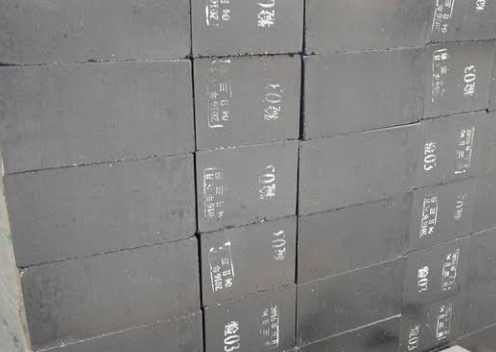
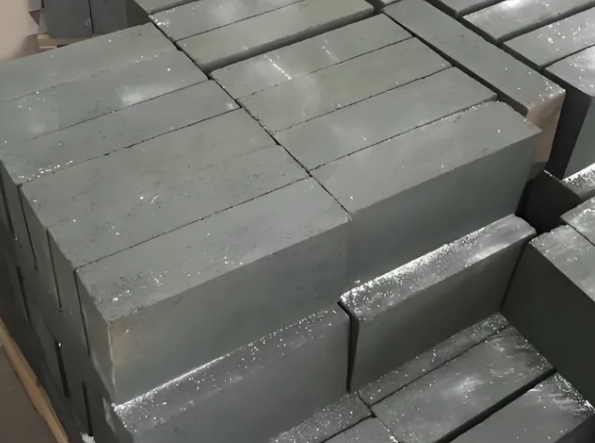
For heating furnaces (typically reheating furnaces for rolling or forging), the task is to heat metal billets to a plastic state. Furnace temperatures are extremely high, with the heating zone often reaching 1150–1400°C. Procurement requirements must first focus on refractoriness under load and slag resistance. The furnace bottom and lower walls of a heating furnace are highly susceptible to chemical attack by molten mill scale (FeO); if slag resistance is insufficient, the furnace bottom can pit rapidly or even leak steel. Therefore, the working layer for heating furnaces tends toward high-alumina bricks (Al₂O₃ ≥ 65%) or magnesia-chrome bricks to withstand the dual assault of high temperature and chemical erosion.
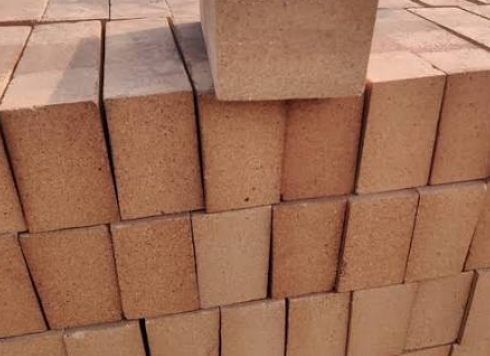
By contrast, the procurement logic for heat treatment furnaces (annealing, tempering, normalizing) is completely different. Their operating temperature is usually below 1000°C (except for special processes), and their main task is to alter the metal’s internal structure rather than soften it plastically. Here the core spec shifts from “high-temperature erosion resistance” to low thermal conductivity and low heat storage. Heat treatment furnaces commonly use lightweight clay bricks, lightweight high-alumina bricks, or lightweight mullite bricks. If heavy high-alumina bricks are used “just to be safe” in a heat treatment furnace, it not only substantially increases the steel structure load but also causes slow furnace heating, soaring energy consumption, and extremely poor temperature uniformity control.
In our industry research, we find that many ferroalloy and machining enterprises easily overlook the chemical attack of furnace atmosphere on refractory bricks when expanding or upgrading.
Heating furnaces typically operate in an oxidizing atmosphere, but heat treatment furnaces (especially bell-type annealing or pit furnaces) often introduce protective atmospheres (such as CO, H₂, or nitrogen-based gases). Research data shows that in reducing atmospheres containing CO or H₂, the Fe₂O₃ in ordinary clay or high-alumina bricks is reduced to metallic iron, causing the brick to become porous and expand in volume, and even promoting CO decomposition and carbon black deposition, ultimately leading to early spalling of the lining. Therefore, for heat treatment furnaces performing carburizing or bright annealing, low-iron, carbon-resistant bricks must be selected (Fe₂O₃ content typically required to be < 1%).
Research data on thermal shock stability also points to different choices. Heating furnaces mostly run continuously; once shut down for maintenance, the lining must withstand severe temperature swings. Heat treatment furnaces (such as car-bottom furnaces) often run intermittently, and frequent heating/cooling cycles place extremely high demands on thermal shock resistance. Although high-alumina bricks have high refractoriness, their thermal shock resistance is often inferior to mullite or cordierite bricks with specific aggregates. In Beifang Alloy’s practice, for car-bottom heat treatment furnaces that start and stop frequently, we tend to recommend lightweight mullite bricks at key locations on the roof and walls, using their low thermal expansion coefficient to offset structural stress from repeated thermal shock.
In actual procurement execution, scientific selection should not be “one brick for the whole furnace” but should follow the composite structure principle of “dense, erosion-resistant working layer + lightweight, energy-saving insulating layer.”
Procurement list for heating furnaces:
Furnace bottom and high-temperature wall sections: Must use dense high-alumina bricks (LZ-65 and above) or magnesia-chrome bricks. Although the unit price is higher, their resistance to mill scale erosion ensures a service life of at least 2–3 years, lowering the cost per ton of steel.
Furnace roof: High-alumina suspended bricks are recommended, with strict verification of high-temperature creep rate to prevent roof sagging.
Insulating layer: Pair lightweight clay bricks or insulation boards outside the dense bricks to reduce heat loss.
Procurement list for heat treatment furnaces:
Main lining: Prefer lightweight clay bricks (NG-1.0 or NG-1.3) or lightweight mullite bricks. A bulk density of around 1.0 g/cm³ is appropriate—ensuring certain structural strength while significantly reducing heat storage.
Special locations (support bricks/muffle): Where heating element support bricks or muffle cores are involved, high-alumina bricks or corundum bricks are needed, as these must withstand localized high temperatures and load from heating elements.
Anti-carburizing treatment: If a reducing atmosphere exists in the furnace, Fe₂O₃ content test reports must be explicitly requested from suppliers; ordinary clay bricks are highly prone to failure under such conditions.
As a buyer, when comparing refractory brick suppliers, you cannot look only at the ton price on the quote. Drawing on Beifang Alloy’s supply chain management experience, we recommend horizontal comparison from three dimensions:
First, assess operating-condition diagnostic capability. A good supplier (such as a refractory enterprise with full industry-chain capability) will ask before quoting: Is your heating furnace pusher-type or walking-beam? Does the heat treatment furnace use protective gas? Are there water-cooled pipes in the furnace bottom? If a supplier only replies “high-alumina brick, 1,800 yuan/ton” without asking about conditions, the cooperation risk is extremely high. A professional supplier should be able to provide a composite lining design solution, not just sell a single brick type.
Second, compare the authenticity of physical and chemical indicators. When comparing suppliers, focus on two often-overlooked indicators: refractoriness under load (for heating furnaces) and linear change on reheating (for heat treatment furnaces). Some low-price suppliers cut costs by reducing alumina content or increasing impurities, causing the heating furnace bottom to soften and deform prematurely at 1300°C, or the heat treatment furnace lining to shrink and develop through-cracks after long use. We recommend requiring third-party test reports from suppliers and retaining samples for later comparison.
Third, evaluate supporting services and delivery flexibility. Heating furnace overhauls are usually urgent and require suppliers to have rapid customization capability for special-shaped bricks (such as burner blocks and anchor bricks). Heat treatment furnace upgrades often involve coordination between old furnace demolition and new brick masonry; if the supplier can provide masonry technical guidance or a furnace dry-out plan, it will greatly reduce the buyer’s engineering coordination costs. In comparison, suppliers with their own construction teams or long-term partnerships with kiln companies often offer better overall cost-performance than pure traders.
In Beifang Alloy’s factory operations, we always treat refractories as “part of the process” rather than mere consumables. Brick selection for heating furnaces is about “holding up” to extreme temperature and chemical erosion to ensure smooth production; brick selection for heat treatment furnaces is about “holding steady” the temperature field and atmosphere to ensure product quality. We hope this guide helps industry peers avoid the “one-size-fits-all” pitfall in procurement and achieve the optimal balance between equipment life and operating cost.