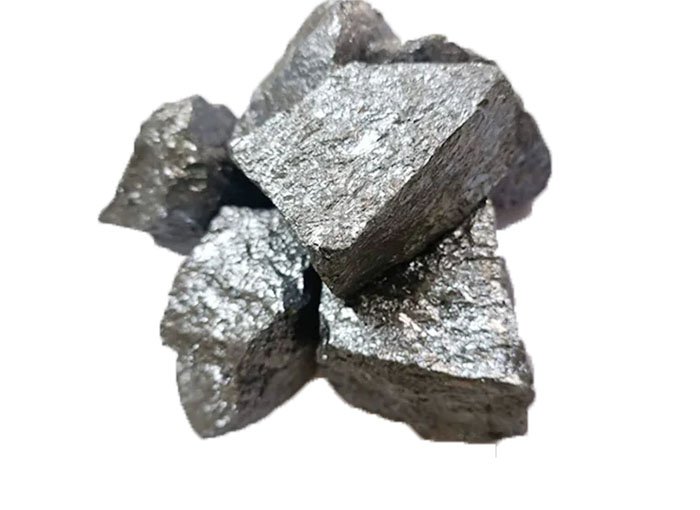
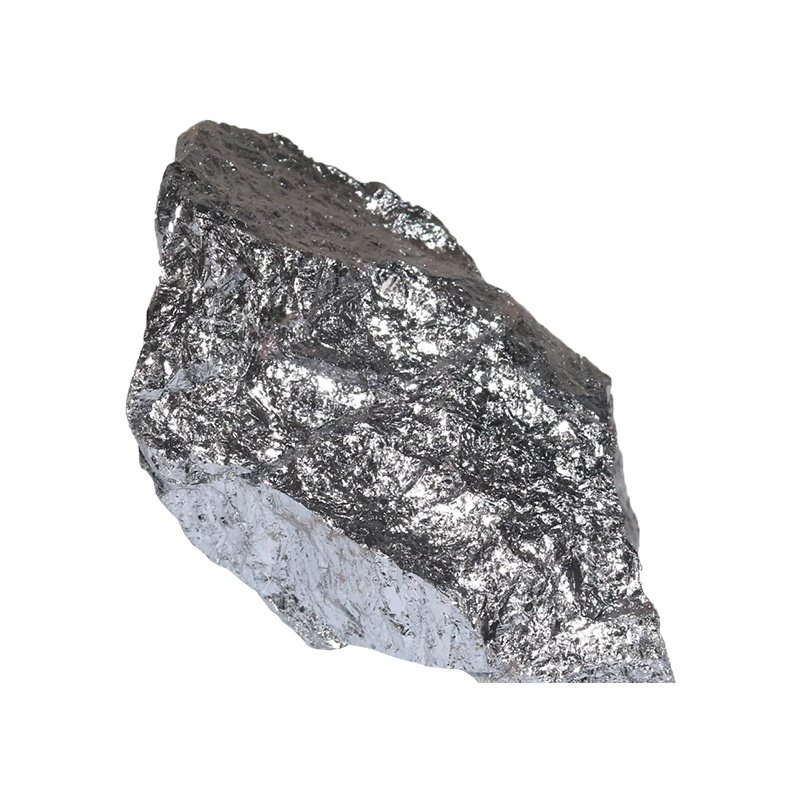
The particle size of silicon metal refers to the dimensions of its individual granules, typically measured using mesh units. Common mesh sizes include 100 mesh, 200 mesh, and 325 mesh. A higher mesh number indicates finer particles, which results in a larger surface area and enhanced reactivity for a given weight of silicon metal.
In aluminum manufacturing, silicon metal serves as a crucial alloying material. Its particle size plays a vital role throughout the production process:
Excessively large particles can hinder reaction rates, compromise alloy quality, and drive up production costs.
Overly fine particles tend to clump together during storage and transport, reducing operational efficiency and potentially posing safety risks.
To achieve optimal particle size, aluminum producers often employ several processing and classification techniques, including:
Mechanical Ball Milling: Used for initial crushing of raw silicon metal to a manageable size for further refinement.
Air Classification: Separates particles based on size to meet precise specifications.
Screening: Removes particles that do not meet size standards.
Tailoring Particle Size to Alloy Specifications
Aluminum manufacturers select silicon metal particle sizes based on the specific alloy being produced. For instance, high-strength aluminum alloys require finer silicon particles to ensure desirable mechanical properties and formability, while other alloys may perform well with coarser or varied particle sizes.
Particle Size Requirements for Silicon Metal in Silicone Production
In the manufacturing of silicones, silicon metal powder is typically required to have a particle size of less than 5 mm.
Role of Silicon Powder in Silicone Manufacturing
Silicon powder is a fundamental raw material used to produce synthetic resins, silicone rubber, silicone oil, and other silicone-based materials. These end products are essential in creating insulation materials, waterproof coatings, refractories, and more.
Impact of Particle Size on Silicone Production
Overly large particles can slow reaction rates and reduce production efficiency.
Excessively fine particles may raise production costs and contribute to environmental concerns.
Therefore, silicone manufacturers generally require silicon powder with a particle size below 5 mm to ensure optimal performance.
Methods for Controlling Silicon Metal Particle Size
Common techniques for regulating silicon powder particle size include:
Screening: Using sieves of specific mesh sizes to isolate particles of the desired dimensions.
Grinding: Employing grinding equipment to reduce particle size through mechanical means.
Vibration: Utilizing high-frequency vibrators to help achieve uniform particle size distribution.
In summary, particle size plays a critical role in the efficiency, cost, and environmental impact of silicone production. Implementing effective control methods is essential to maintain a smooth production process and consistent product quality.
Beifang Alloy holds independent import and export rights, supplying silicon metal products to markets including Japan, South Korea, India, the Middle East, and beyond. Our industrial silicon products are certified under the ISO9001:2015 quality management system and have received SGS international certification. Through a standardized management framework and a systematic quality control process, we consistently produce high-quality silicon metal tailored to diverse industrial applications.