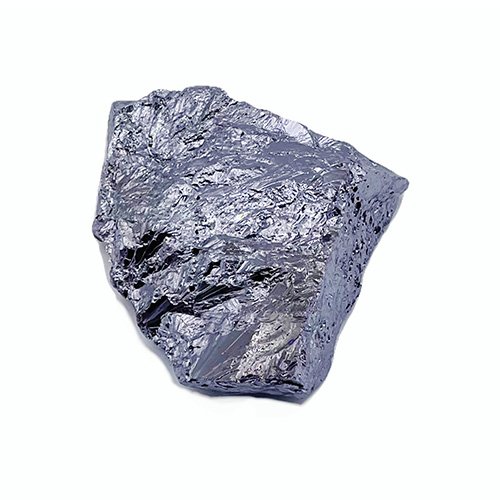
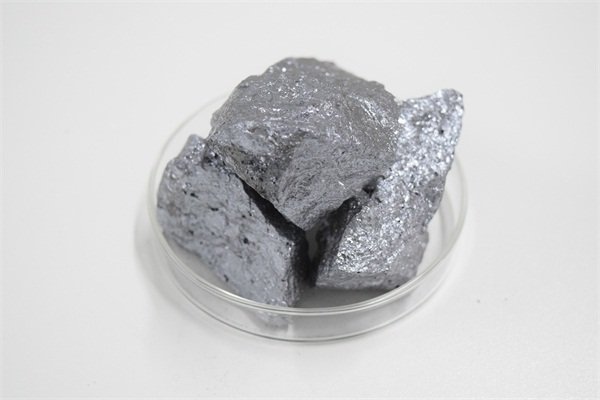
In most silicon metal (industrial silicon) procurement contracts, the focus is almost always on chemical composition (Si, Fe, Al, Ca content). Particle size is often vaguely defined with a single phrase like “natural lump” or “10-100mm”.
But have you ever experienced this?
When the truck of silicon metal arrives at your factory, a cloud of gray dust rises as it’s unloaded. When you feed the material into your furnace, part of the fine powder gets sucked away by the dust collection system, or floats on the surface of the molten metal, failing to alloy effectively.
Are these “fines” and “powder” really what you paid for?
The global silicon metal particle size market was valued at approximately $25.2 billion in 2025 and is projected to reach $115.4 billion by 2034, growing at a CAGR of 18.4%. This data reflects that downstream industries are demanding increasingly stricter particle size specifications.
However, many traditional suppliers, in order to save on crushing costs, use a “crush it once and forget it” approach. This results in an excessively high proportion of fine powder (typically <5mm). For buyers, this isn’t just “inconvenient”—it’s a growing hidden loss on your bottom line.
To quantify this loss, we surveyed multiple domestic aluminum alloy and organic silicon producers. The findings were clear: when the proportion of fines (<5mm) in silicon metal exceeds 10%, production costs begin to rise non-linearly and significantly.
A. The Pain of “Oxidation Loss” in Smelting
During aluminum alloy melting or silicon purification, extremely fine silicon powder has a large specific surface area, making it highly susceptible to oxidation and burning at high temperatures. You paid for silicon, but it turns into slag before it even enters the melt. Industry experts point out that silicon fines (powder) have high surface energy and reactivity, leading to significantly lower recovery rates than theoretical values.
B. Safety Hazards in Induction Furnaces
Very fine powder has a low bulk density. When added to boiling molten steel or aluminum, it doesn’t dissolve easily. Instead, it floats up with the gas flow and can even cause splashing of the molten metal. This not only lowers recovery rates but also increases safety risks.
C. The “Clogging” Problem for Automated Feeding
For modern factories using automated feeding systems, excessive fines lead to bridging and clogging in storage bins. This forces production stops for cleaning. The labor costs and equipment wear are hidden expenses you won’t see on your procurement invoice.
As a procurement manager, how do you avoid these traps? When setting your procurement standards, in addition to national standards (e.g., GB/T 2881) for composition, Beifang Alloy recommends focusing on these three points:
Strictly Define Particle Size Distribution:
Don’t just say “lumps.” Specify clearly in your contract: “10mm-50mm not less than 85%, <5mm fines not more than 3%.” Leading companies, such as Chalco Shanxi New Materials, specify 50-100mm with less than 10% outside the range. This strict control is the core of ensuring high smelting recovery.
Check Bulk Density:
For the same tonnage, more fines mean lower bulk density, taking up more warehouse and furnace volume. This is an easily overlooked physical metric.
Evaluate the Supplier’s Crushing Process:
The supplier’s equipment determines the particle shape. Traditional hammer crushers are cheap but produce many fines and “needle-like” flakes. Advanced crushing equipment (like roll crushers or proprietary granulation mills) can achieve over 95% on-spec product and effectively control the percentage of fines.
The silicon metal market generally has three types of suppliers. Understanding the differences will help you make a smarter decision.
| Supplier Type | Characteristics | Particle Size Control | Cost Impact |
|---|---|---|---|
| Traders / Small Workshops | Buy and sell,简陋 equipment, mostly simple crushers | Uncontrollable, high fines, mixed impurities | Low unit price, but highest total usage cost |
| Traditional Large Mills | High capacity,达标 composition, but “coarse” production | Basically可控, follow national standards, but lack customization | Medium total cost, often with hidden losses |
| Beifang Alloy | Customized service, advanced screening and shaping equipment | Precision customization, match particle size to your furnace type, guaranteed low fines | Lowest total cost, highest ROI |
As a professional ferroalloy factory, Beifang Alloy deeply understands the pain points of downstream customers.
We don’t just supply silicon metal (grades: 2202#, 3303#, 441#, 553#, etc.). We provide “high-recovery particle size solutions.”
Customized Sizing: Whether you need 10-50mm medium lumps for induction furnaces or 1-3mm granules for special alloys, we use precise screening and crushing processes to minimize the percentage of fines.
Reduce Your Total Cost: While our “price per ton” may not be the absolute lowest on the market, we guarantee the highest “effective furnace charge rate” at your plant. Less oxidation loss, more actual recovery—that’s true cost reduction and efficiency improvement.
Stop paying for powder that never makes it into your furnace.
In today’s volatile silicon metal market, the opportunity for cost reduction isn’t in “payment terms”—it’s in the “technical details.” Choosing Beifang Alloy means choosing a precise, efficient, low-loss raw material supply model.
Make every dollar count—inside the melt.
Beifang Alloy is a high-tech enterprise dedicated to the R&D, production, and sales of ferroalloys and metal materials. Our factory is equipped with a fully automated crushing and screening line and operates under an ISO quality management system. We specialize in providing customized particle size materials to global steel, foundry, and non-ferrous metal smelting companies, helping customers eliminate production waste at the source.
Contact us for samples or a customized solution:
Website: www.beifangalloy.com
Email: info@hnxyie.com