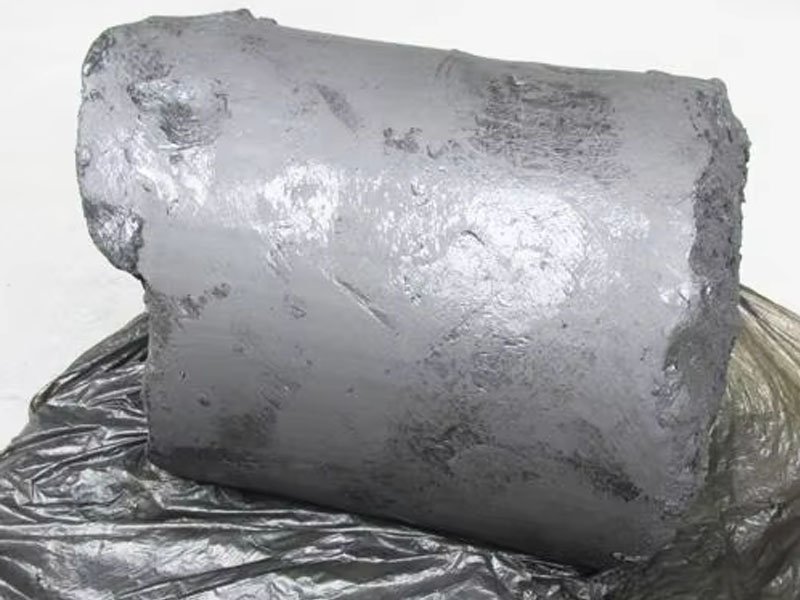
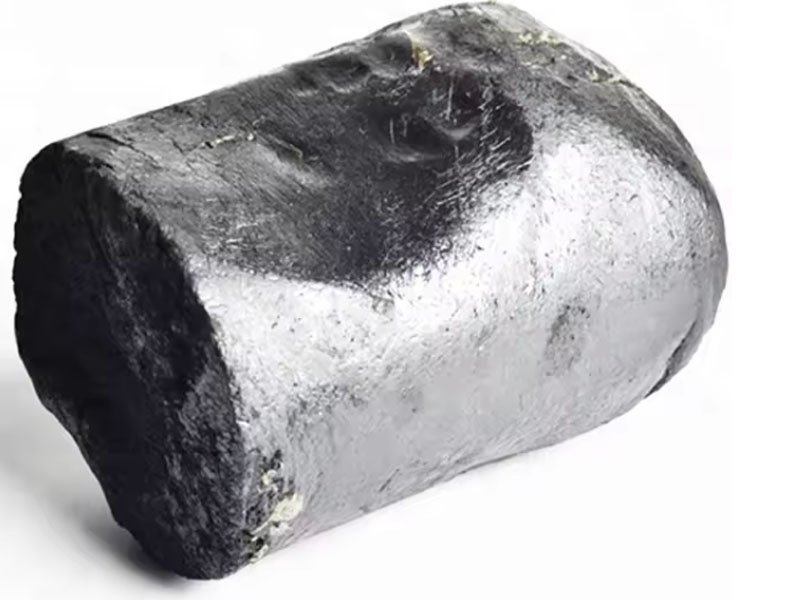
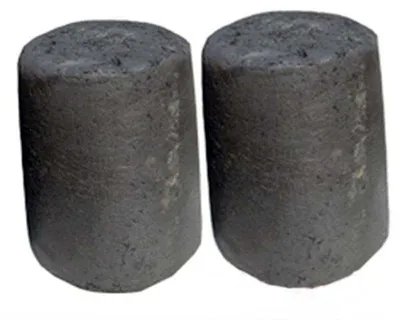
In high-temperature industries such as ferro alloy production and blast furnace ironmaking, taphole clay is a critical refractory material that ensures stable furnace operation. Yet a puzzling phenomenon persists: even as imported brands raise prices year after year and stretch delivery lead times, some procurement professionals stubbornly stick with them — while overlooking proven, cost-effective domestic suppliers. Is this still a technology gap, or something deeper? As a ferro alloy factory that works with taphole clay every day, Beifang Alloy breaks down this dilemma from four perspectives.
For most buyers, “avoiding accidents” matters far more than “saving money.”
Asymmetric risk : If poor-quality taphole clay causes a taphole breakout, wet taphole, broken taphole, or even a blowout, the production loss can easily reach hundreds of thousands (or millions) of dollars. The procurement manager bears enormous personal career risk.
Inertia masked as safety : Imported brands (e.g., Japanese or German) have decades of application data. They give buyers a ready-made defense to management: “Everyone uses them — if something goes wrong, it’s not my fault.”
Hidden costs ignored : High unit prices, slow deliveries, and poor after-sales service are often overlooked in the illusion of “safety.”
Beifang Alloy’s view : Truly safe taphole clay is not about the logo — it’s about compatibility with your specific furnace conditions. High-quality domestic taphole clay already meets core requirements: erosion resistance, easy opening, and low-emission (eco-friendly) formulations.
The domestic taphole clay industry has quietly closed the technology gap.
| Parameter | Imported Brand | High-Quality Domestic Brand (e.g., Beifang Alloy’s partners) |
|---|---|---|
| Modulus of rupture (1100℃×3h) | 8–12 MPa | 7–11 MPa |
| Linear change rate | 0~+0.5% | -0.3~+0.3% |
| Opening performance | Good (electric drill / oxygen lance) | Good (compatible with automatic taphole drills) |
| Environmental compliance | Low benzo[a]pyrene | Low benzo[a]pyrene, some asphalt-free |
| Price | Baseline + 5–15% annual increases | 30–50% lower |
| Lead time | 60–120 days | 7–30 days |
The real problem : Procurement professionals lack easy access to reliable data on domestic suppliers — no third-party evaluation platforms, no peer review systems, no public databases of failure case studies. Import brand agents, on the other hand, deliver polished presentations, benchmark case studies, and something more powerful: a long-term psychological shield against blame.
If you are a buyer who wants to cut costs without risking your career, Beifang Alloy recommends four steps:
Choose a non-critical furnace (e.g., a smaller submerged arc furnace producing silicomanganese or ferrosilicon), or test during a late campaign phase on one or two tapholes.
Tap duration per heat
Taphole clay consumption (kg/ton of hot metal or alloy)
Drill bit wear
Taphole maintenance frequency
Let data — not feelings — guide decisions.
Mature domestic taphole clay producers (including Beifang Alloy’s partners) now offer performance-based models: if clay quality causes production interruptions, partial or full refunds apply.
Invite an independent refractory lab or a third-party testing institute to issue a comparative report. This turns a personal decision into an organizational decision.
| Metric | Imported Brand A (German) | Domestic Brand B | Domestic Brand C (Beifang Alloy Preferred) |
|---|---|---|---|
| Consumption (kg/ton metal) | 0.45 | 0.50 | 0.47 |
| Opening success rate | 98% | 95% | 97% |
| Unit price (USD/ton) | ~950 | ~500 | ~580 |
| Emergency response (hours) | 48 | 12 | 8 |
| Technical support | Standard documentation | Customizable | Free recipe optimization |
Conclusion : High-quality domestic taphole clay has moved beyond “functional” to “excellent.” Many domestic leaders now match or exceed imports in erosion resistance and environmental performance — while keeping prices 30–50% lower and offering much faster service.
We are not a taphole clay manufacturer — we are long-term users. Over the past five years, we have cut our imported taphole clay share from 80% to 10% by partnering with two domestic producers and building an in-house “furnace front database.”
Taphole clay procurement cost reduced by 42%
Average taphole service life extended by 11%
Environmental penalty record: zero (low-VOC formulations)
Site visit : See for yourself at our Anyang plant — watch domestic taphole clay performing stably in real production.
Technical exchange : Share our supplier evaluation checklist and trial contract templates.
Free referrals : Recommend 3–5 domestic taphole clay suppliers that we have personally verified.
A frontline practitioner in China’s ferro alloy industry
🌐 www.beifangalloy.com
📧 info@hnxyie.com
We don’t sell taphole clay. We sell the confidence to try something better