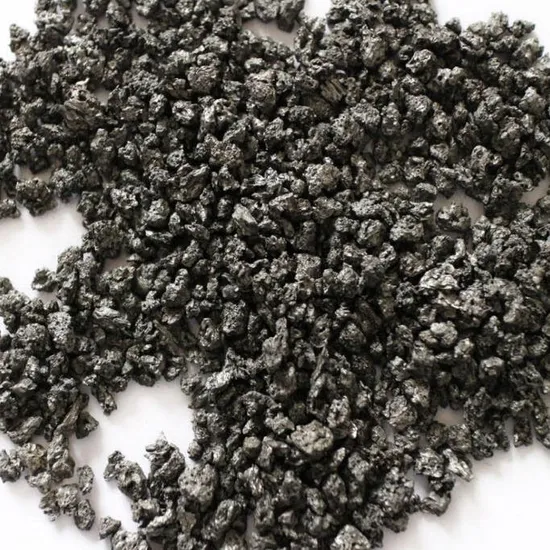
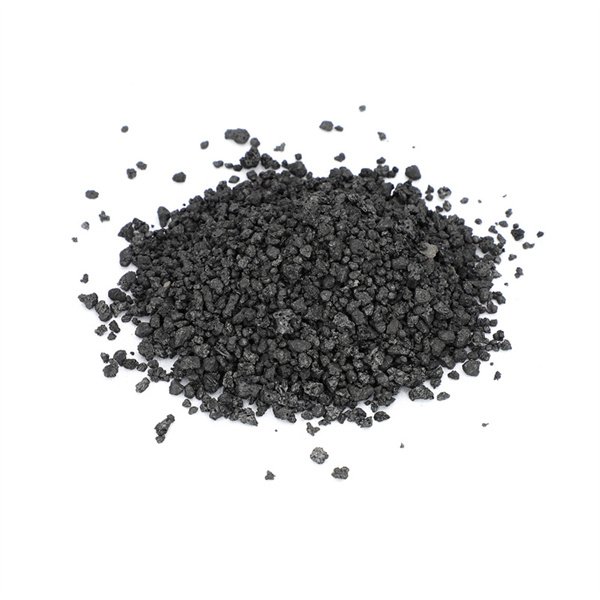
As a ferroalloy producer, you know that carbon raiser is an essential material for achieving precise carbon content in your steel and iron. In a competitive market, the initial purchase price often becomes the primary—and sometimes only—factor in procurement decisions. But at Beifang Alloy, we ask: Are you truly calculating the cost, or just the price?
Choosing a carbon raiser based solely on a low upfront “cheap” cost can be one of the most expensive decisions your plant makes. Let’s break down the real cost equation.
Your operational needs define your real cost. A carbon raiser must:
Achieve Precise Carbon Recovery: Inconsistent or lower-than-stated recovery rates force you to use more material, disrupting batch chemistry and increasing unit cost.
Minimize Impurities: High sulfur, ash, or moisture content can contaminate your melt, leading to downstream quality issues, reworks, and customer rejections.
Ensure Uniformity & Handling: Irregular sizing or poor flowability causes feeding problems, operational delays, and uneven distribution in the furnace.
Provide Supply & Logistics Reliability: Unstable supply or delayed shipments can halt production, incurring massive opportunity costs.
A “cheap” product often fails on one or more of these needs, creating hidden costs that silently erode your profit margins.
Market research reveals a stark divide. Many suppliers compete on price by:
Using raw materials with higher impurity levels.
Reducing process controls, leading to inconsistent product density and composition.
Offering minimal technical support and supply chain flexibility.
The consequences for your factory are quantifiable:
Increased Consumption: Needing 10-15% more material to hit carbon targets.
Quality Penalties: Higher sulfur leading to prolonged desulfurization time, increased energy use, and potential slag issues.
Operational Inefficiency: Feeding problems causing furnace delays and increased labor for handling.
Unplanned Downtime: Production schedules disrupted by unreliable delivery.
Move beyond $/ton. Use this checklist for your next procurement review:
Analyze the Comprehensive Specification: Demand full data on fixed carbon, sulfur, ash, volatile matter, moisture, and particle size distribution. Certificates of Analysis (CoA) are non-negotiable.
Calculate the Effective Cost: Use the formula:
Effective Cost per Unit of Carbon = (Price per Ton) / (Fixed Carbon % x Expected Recovery Rate). This is your true comparative metric.
Audit Consistency: Request historical CoAs from potential suppliers to verify batch-to-batch stability.
Evaluate the Supplier as a Partner: Do they offer technical expertise? Can they provide flexible logistics and just-in-time delivery to reduce your inventory costs? What is their reputation for reliability?
Consider the Production Impact: Factor in potential costs from slag volume changes, furnace time, and yield impacts.
| Evaluation Factor | “Low-Cost” Vendor | Strategic Partner (Like Beifang Alloy) |
|---|---|---|
| Primary Focus | Transaction price | Total Cost of Ownership (TCO) for your plant |
| Product Consistency | May vary; focused on meeting minimum spec | Rigorously controlled for high batch-to-batch uniformity |
| Technical Data & Support | Limited; reactive | Proactive; provides full CoAs and application expertise |
| Impurity Control | Often higher sulfur/ash to reduce cost | Optimized for low sulfur and ash to protect your melt quality |
| Supply Chain Reliability | Can be inconsistent | Built on reliable logistics and flexible delivery solutions |
| Real Cost Impact | Higher hidden costs in consumption, quality, and efficiency | Lower TCO through optimized yield, efficiency, and reliability |
At Beifang Alloy, we manufacture ferroalloys with the deep understanding that your most significant savings aren’t found in the lowest bid, but in the highest value. Our carbon raiser products are engineered for high fixed carbon, low impurities, and exceptional consistency—directly translating to predictable performance, optimized consumption, and smoother operations for you.
The true cost of a carbon raiser isn’t on the invoice. It’s in your furnace efficiency, your final product quality, and your bottom line.
Ready to calculate your real savings?
Contact our technical team at info@hnxyie.com for a personalized analysis of how switching to a high-value carbon raiser can reduce your total cost of production.
Visit our website: www.beifangalloy.com