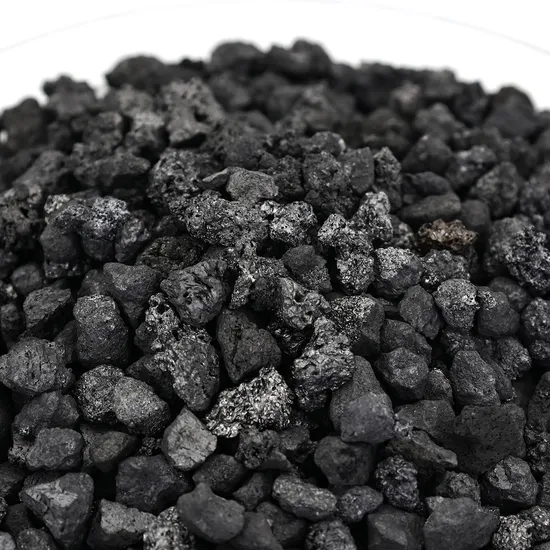
Choosing a carbon raiser isn’t just about adding carbon; it’s a strategic decision that directly impacts slag volume, composition, and fluidity. The wrong choice can lead to:
Excessive Slag Formation: Increasing furnace processing time and energy costs.
High Impurity Content (Ash, S, P): Introducing harmful elements into your melt, degrading final product quality and causing problematic, viscous slag.
Unpredictable Carbon Yield: Leading to inconsistent metallurgical results and chemistry re-corrections.
Your True Need: You’re not just buying a carbon additive. You need a predictable, clean, and efficient metallurgical tool that minimizes negative side-effects and maximizes process control.
Recent trends are forcing ferroalloy producers to re-evaluate their raw materials:
Cost Pressures: Rising energy costs make efficient, first-pass melting critical. Excess slag handling is a significant, avoidable expense.
Quality Demands: Steelmakers require cleaner, more precise ferroalloys, pushing impurity control upstream to the furnace.
Environmental & Operational Efficiency: Regulations and a focus on sustainability favor processes that generate less waste (slag) and consume less power per ton.
A high-performance carbon raiser is a key lever in addressing all three challenges. It’s a shift from viewing it as a commodity to recognizing it as a value-added input.
Move beyond price-per-ton. Use this checklist to evaluate suppliers:
Fixed Carbon Content: Aim for >98%. Higher fixed carbon means less ash, directly translating to less slag generated.
Ash Composition: Don’t just look at the percentage (aim for <1.0%). Ask for the analysis. Low-melting-point ash forms more fluid slag; high-melting-point ash can create solid, difficult-to-remove deposits.
Sulfur & Phosphorus Levels: These must be as low as possible (<0.05% each). They are “tramp elements” that contaminate both your metal and slag.
Moisture & Volatile Matter: Low levels (<1%) ensure predictable carbon addition, stable furnace conditions, and efficient energy use.
Particle Size & Consistency: Proper sizing ensures optimal dissolution rate, reduces fines loss, and promotes uniform slag behavior.
When comparing suppliers like graphitized petroleum coke, calcined petroleum coke, or specialty chars, consider these often-overlooked factors:
| Comparison Factor | The Basic Supplier | The Value-Added Partner (Like Beifang Alloy) |
|---|---|---|
| Consistency & Traceability | Provides generic specs; batches may vary. | Offers batch-specific certificates of analysis, ensuring identical performance with every delivery. |
| Technical Support | Limited to basic sales information. | Provides slag analysis consultations and can recommend carbon raiser blends based on your specific furnace slag profile. |
| Product Range & Customization | Offers one standard grade. | Provides a portfolio (e.g., ultra-low ash, low-sulfur grades) and can tailor sizing or properties for your process. |
| Metallurgical Expertise | Sells a product. | Understands the ferroalloy smelting process and partners with you to solve problems like slag viscosity or excessive volume. |
The path to reducing slag-related issues starts at procurement. By specifying a high-purity, consistent carbon raiser and partnering with a technically adept supplier, you transform a raw material cost into an investment for lower operational costs, superior alloy quality, and a smoother production process.