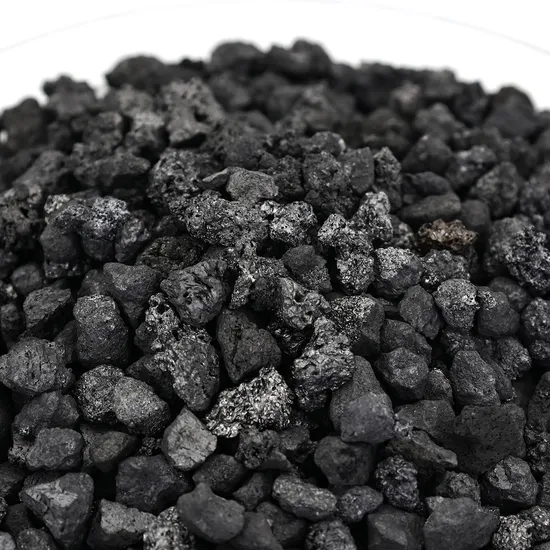
In the complex chemistry of steelmaking, every element plays a crucial role. At Beifang Alloy, we understand that the interaction between materials is what defines final product quality. Among these, carbon raisers are fundamental, but not all are created equal. Their purity is a critical, often underestimated, variable that directly governs the performance and cost-efficiency of other valuable alloying elements like silicon, manganese, and chromium.
This article explores the technical relationship between carbon raiser purity and alloy effectiveness, providing a comprehensive guide for procurement specialists and technical managers to make informed decisions that enhance product quality and operational economics.
Procurement in the ferroalloy industry has evolved from simple cost-based purchasing to a strategic function focused on total value. The choice of carbon raiser—whether petroleum coke, calcined anthracite coal, graphite, or specialty materials—impacts far more than just carbon content.
Key Needs for Modern Procurement:
Predictable Outcomes: High-purity carbon raisers ensure consistent carbon recovery rates, allowing for precise recipe formulation and reducing batch-to-binary variability in final steel grades.
Cost Optimization: Impurities in low-grade carbons (high sulfur, ash, nitrogen) can increase slag volume, corrode refractories, and necessitate corrective additions of other alloys, driving up hidden costs.
Product Quality Assurance: To meet stringent specifications for high-grade steel (e.g., for automotive or aerospace applications), controlling tramp elements from carbon additives is non-negotiable.
Process Efficiency: Pure carbon raisers improve dissolution behavior and reaction kinetics, leading to shorter treatment times and lower energy consumption in the furnace.
Extensive metallurgical research confirms that the impurities in carbon raisers don’t just vanish; they actively interfere with alloying thermodynamics and final steel properties.
The Disruptive Impact of Common Impurities:
Sulfur (S): Perhaps the most harmful tramp element. High sulfur from carbon raisers can lead to hot shortness (cracking during rolling), reduced toughness, and increased wear on refractories. It also forces the use of more manganese (as MnS former) to neutralize it, altering the intended Mn balance and adding cost.
Ash Content: Inorganic ash (SiO₂, Al₂O₃, etc.) contributes to slag buildup, which can entrap and waste expensive alloying elements like ferrovanadium or ferromolybdenum, reducing their yield and effectiveness.
Nitrogen (N): Certain carbon materials can be nitrogen carriers. Excess nitrogen, especially in steel grades where it is not desired, can cause embrittlement and aging effects, compromising the durability provided by microalloying elements like niobium and titanium.
Volatile Matter: High volatiles can cause excessive gas evolution and foaming slag, creating an unstable process environment that makes the precise addition of sensitive alloys difficult.
The core principle is that introducing a low-purity additive forces the entire alloying system to compensate, often diluting the intended effect of primary alloys and increasing overall consumption to hit target chemistries.
Selecting a carbon raiser should be a multi-criteria decision aligned with your specific production goals. Here is a practical guide:
1. Define Your Steel Grade Requirements:
Standard Carbon Steel: May tolerate moderate purity levels (e.g., fixed carbon > 90%, S < 0.5%).
Special/Alloy Steel (Engineering, Forgings): Requires higher purity (fixed carbon > 95%, S < 0.2%, low ash).
Advanced/Ultra-Low Carbon (ULC) Steel: Demands premium-grade graphite or synthetic carbon with fixed carbon > 98.5%, S < 0.1%, and minimal nitrogen pickup.
2. Analyze the Total Cost of Ownership (TCO):
Move beyond price-per-ton. Calculate costs related to:
Yield Loss of primary alloys (Si, Mn, Cr) due to slagging from ash.
Refractory Consumption accelerated by sulfur and ash.
Energy Costs from longer processing times.
Potential Rejects due to off-spec chemistry.
3. Establish a Technical Specification Sheet:
Mandate suppliers provide certified analysis for:
Fixed Carbon (primary metric)
Sulfur, Nitrogen, Hydrogen
Ash Content and Composition
Moisture and Volatile Matter
Particle Size Distribution (affects dissolution rate)
4. Pilot and Validate:
Before full-scale adoption, conduct controlled furnace trials to measure the actual yield improvement of other alloys and observe process behavior.
Choosing a supplier is choosing a partner in your quality chain. Here are key comparison factors beyond basic pricing:
| Comparison Factor | Standard Supplier | Technical Partner (e.g., Beifang Alloy) |
|---|---|---|
| Product Consistency | May have batch-to-binary variability in key impurity levels. | Implements Statistical Process Control (SPC) to guarantee narrow specification windows. |
| Technical Data & Support | Provides basic certificate of analysis (CoA). | Provides detailed CoA, metallurgical guidance, and TCO modeling for your application. |
| Traceability & Quality Systems | Limited batch tracing. | Full raw material traceability and certified quality management systems (e.g., ISO 9001). |
| R&D Capability | Sells standard products. | Offers co-development of customized carbon raiser blends to optimize specific alloying systems. |
| Value-Added Services | Transactional relationship. | Provides just-in-time delivery, inventory management, and on-site technical troubleshooting. |
A true partner like Beifang Alloy invests in understanding your furnace, your product mix, and your challenges, transforming a commodity purchase into a strategic lever for quality and efficiency.
The purity of carbon raisers is not an isolated factor; it is a multiplier for the effectiveness and economic utilization of all other alloying elements. In an era of tight margins and high quality demands, optimizing this foundational input is one of the most impactful decisions a steelmaker can make.
By treating carbon raiser selection as a strategic technical decision—guided by rigorous procurement needs, grounded in industry research, and executed with a detailed guide and careful supplier comparison—operations can achieve superior steel quality, enhanced process control, and improved overall cost-effectiveness.