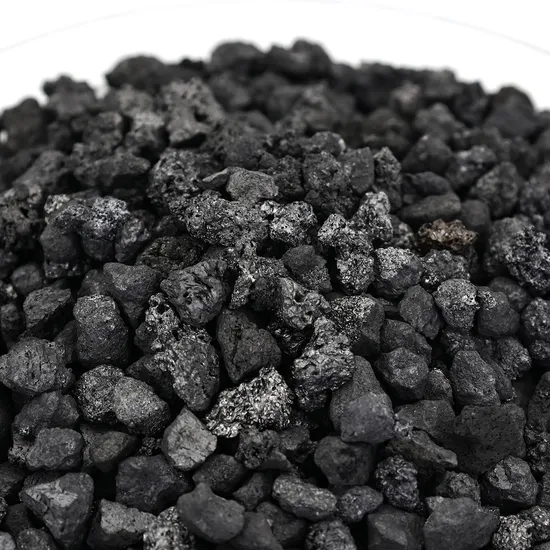
For steel manufacturers and foundries, inconsistent hardness in the final product is more than a minor inconvenience—it’s a major threat to productivity, profitability, and reputation. Variations in hardness can lead to rejected batches, failed quality inspections, and compromised performance in critical applications. While many factors influence this key property, one often-overlooked element sits at the core: the quality and consistency of your carbon additives.
As Beifang Alloy, a leading ferro alloy factory, we understand that the recarburizer or other carbon additive is not just a commodity; it’s a precision ingredient that directly controls the metallurgical chemistry of your steel. This article explores the intrinsic link between carbon additive quality and final product consistency, providing a roadmap for informed procurement and superior results.
Steel hardness is primarily determined by its carbon content. During steelmaking, carbon additives are used to raise the carbon level to the precise specification required. When the additive’s quality is inconsistent—varying in fixed carbon content, ash, sulfur, nitrogen, or moisture—the carbon yield becomes unpredictable. This leads directly to fluctuations in the final carbon content of the steel, manifesting as inconsistent hardness, machinability issues, and uneven tensile strength.
Moving beyond price-per-ton to a specification-focused procurement strategy is the first step toward consistency.
Fixed Carbon Content: The core metric. High-purity additives (e.g., 98.5%+ C) ensure predictable carbon yield and minimize the introduction of impurities.
Low & Consistent Impurity Levels: Sulfur and Nitrogen are particularly detrimental. High sulfur can cause hot brittleness, while nitrogen affects aging and strain hardening. Specifications must set strict, low limits.
Controlled Ash Content: High ash introduces non-metallic inclusions, weakening the steel structure and affecting cleanliness.
Optimal Particle Size & Distribution: Affects dissolution rate and recovery efficiency. The size must be suited to your furnace and process to prevent floating or settling.
Low Moisture: Moisture leads to hydrogen pickup, potential porosity, and safety hazards during addition.
The global market is evolving. There is a clear trend away from treating carbon additives as generic inputs and toward their recognition as high-value, performance-defining materials.
Rise of Specialized Recarburizers: Different grades (Calcined Petroleum Coke, Graphitized Petroleum Coke, Synthetic Graphite) are engineered for specific applications (e.g., ductile iron, electric arc furnace steel, high-grade alloy steel). Graphitized varieties offer superior absorption and lower nitrogen.
Emphasis on Traceability & Certification: Top-tier producers now provide batch-specific chemical analysis certificates (C/A Certs), ensuring full traceability from raw material to final product.
Sustainability & Low-Carbon Demands: Producers are increasingly evaluated on their environmental footprint, including energy consumption in production and the sourcing of raw materials.
Internal Audit: Analyze past production data. Correlate batches of steel with inconsistent properties to the specific batches of carbon additive used.
Define Stringent Specifications: Create a technical data sheet (TDS) for suppliers that details all critical parameters (Fixed C, S, N, Ash, Moisture, Size).
Prioritize Testing & Certification: Insist on receiving a detailed C/A Cert with each shipment. Implement a robust incoming quality control (IQC) protocol to verify compliance.
Evaluate Technical Support: Choose a supplier who can provide metallurgical expertise, not just sales service. They should help troubleshoot problems and optimize your usage.
Consider Total Cost, Not Just Unit Price: Calculate based on carbon yield and efficiency. A higher-purity additive may offer a lower cost-per-unit-of-effective-carbon and save costs by reducing slag volume and refining time.
| Comparison Factor | Standard/Commodity Supplier | Advanced/Technical Partner (e.g., Beifang Alloy) |
|---|---|---|
| Product Consistency | May vary between batches; generic specifications. | Batch-to-batch consistency guaranteed with detailed C/A Certs. |
| Impurity Control | Higher, less predictable S, N, and ash levels. | Ultra-low and tightly controlled impurity profiles. |
| Technical Expertise | Limited to basic sales and logistics. | Deep metallurgical support, application-specific recommendations. |
| Production Capability | May rely on blending or less controlled sourcing. | Integrated production control from raw materials to processing (sintering, graphitization). |
| Quality Assurance | Basic quality checks. | ISO-certified processes, advanced lab testing, full traceability. |
| Value Proposition | Low initial price. | Optimized steel quality, reduced reject rates, lower total cost of use. |
Inconsistent steel hardness is a solvable problem. The solution begins with re-evaluating your carbon additive as a critical precision ingredient and partnering with a supplier whose quality standards match your own.
At Beifang Alloy, we specialize in manufacturing high-purity, low-impurity carbon additives and ferro alloys designed for predictability and performance. We empower our partners to move from struggling with inconsistency to mastering their metallurgical outcomes.
Ready to take control of your final product quality?
Contact our technical team today to discuss your specific requirements or request a sample and see the Beifang Alloy difference.Beifang Alloy – Your Trusted Ferro Alloy Partner
Website: www.beifangalloy.com
Email: info@hnxyie.com