For procurement managers and technical directors in the ferroalloy, steel, and foundry industries, Fixed Carbon (FC) is the north star when specifying carbon additives. It’s a critical metric, and rightfully so. However, an exclusive focus on FC percentage and price-per-ton can be a costly oversimplification. Hidden within the product data sheet are other key specifications that, if overlooked, can silently erode your efficiency, increase your operational costs, and compromise final product quality.
At Beifang Alloy, a leading ferroalloy factory, we understand that true value isn’t just in what’s promised, but in what’s delivered consistently. This article moves beyond the basics to explore three often-overlooked specifications that should be part of every savvy procurement decision.
The primary need in procuring carbon additives (like Calcined Petroleum Coke, Graphite, or Charcoal) is to efficiently and predictably introduce carbon into the melt. While achieving the target carbon content is the goal, the path to that goal matters. Uncontrolled factors like excessive ash reacting with slag, volatile matter causing unpredictable furnace conditions, or inconsistent sizing leading to uneven dissolution all translate into:
Increased energy consumption
Longer tap-to-tap times
Variable quality in the final alloy or steel
Higher refractory wear
Increased slag volume and disposal costs
These are the real “bottom line” impacts that a narrow focus on fixed carbon alone fails to capture.
Independent metallurgical studies and practical furnace audits consistently point to factors beyond fixed carbon as significant variables in process optimization. Research indicates that:
Ash Composition: Not all ash is equal. Ash with high levels of acidic oxides (SiO₂, Al₂O₃) can significantly increase slag basicity requirements, forcing higher lime consumption and generating more slag. Ash with undesirable trace elements (e.g., high sulfur, phosphorus) can contaminate the final product.
Volatile Matter (VM) in Practice: While low VM is typically desired, its behavior is key. Uncontrolled release of volatiles can cause bubbling, splash, and pressure fluctuations in Electric Arc Furnaces (EAFs), affecting stability and energy input efficiency.
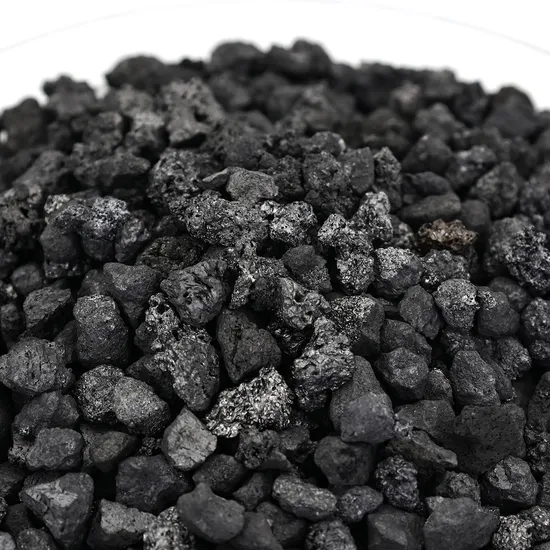
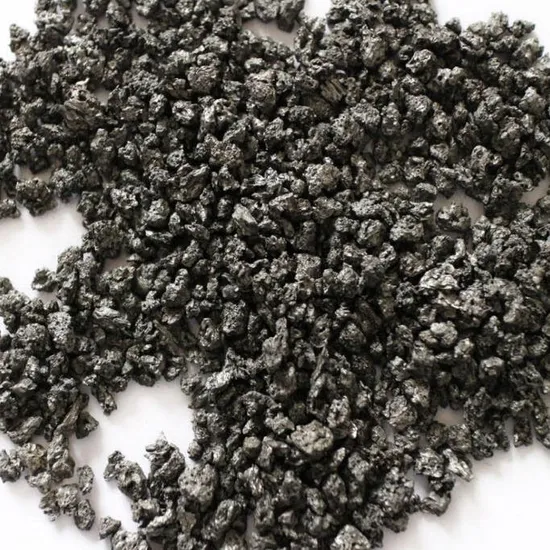
Sizing & Real-World Density: Optimal sizing ensures efficient dissolution and recovery. Fines can be lost to off-gas systems or cause packing, while overly large pieces may not fully dissolve within the process window. Bulk density affects handling and feeding consistency.
Here are the three overlooked specs to add to your checklist:
What to Look For: Request a full ash analysis, not just the ash percentage. Pay close attention to SiO₂ + Al₂O₃ content (acidic components) and Sulfur (S) & Phosphorus (P) levels.
Bottom-Line Impact: High acidic ash increases fluxing agent costs and slag volume. High S or P can lead to off-spec steel or alloys, resulting in costly downgrades or reprocessing. A supplier who provides consistent, low-impurity ash chemistry offers more predictable metallurgical outcomes.
What to Look For: Consistent VM levels (typically <1% for well-calcined CPC) are crucial. Inquire about the supplier’s calcining/quality control process. Sudden spikes in VM indicate poor process control.
Bottom-Line Impact: Inconsistent VM leads to unstable furnace conditions, affecting power graph stability in EAFs, increasing electrode consumption, and potentially causing safety hazards. Predictable, low VM ensures a smoother, more efficient melt.
What to Look For: Demand a clear PSD range (e.g., 1-5mm, 5-20mm) with minimal fines (<1mm). Ask for the Bulk Density (g/cm³). The particles should be dense and hard, not porous and fragile.
Bottom-Line Impact: Optimal PSD minimizes losses, ensures even distribution in the charge, and promotes controlled dissolution. Poor PSD with high fines leads to yield loss and dusting. Low bulk density means you’re paying for “air,” increasing handling and logistics costs per unit of effective carbon.
When evaluating carbon additive suppliers like Beifang Alloy, move the conversation beyond price and FC%. Use this comparison framework:
| Evaluation Criteria | The Typical Supplier | The Value-Added Supplier (e.g., Beifang Alloy) |
|---|---|---|
| Fixed Carbon | Quotes a standard range. | Guarantees a tight, consistent range with Certificates of Analysis for each batch. |
| Ash Specification | Provides only ash percentage. | Provides full ash composition analysis, highlighting low impurity levels and consistency. |
| Volatile Matter | States a maximum value. | Explains their calcining control process to ensure low and stable VM batch-to-batch. |
| Particle Size | Offers standard sizing. | Provides detailed PSD reports, minimizes fines, and advises on optimal sizing for your application. |
| Technical Support | Limited to order processing. | Offers metallurgical support to help optimize your blend and usage based on your specific process. |
| Consistency | May vary between shipments. | Has robust QC processes to ensure product homogeneity, protecting your process from variability. |
The Key Question to Ask: “Can you provide detailed, batch-specific documentation for ash chemistry, volatile matter, and particle size distribution, and how do you control these in your production process?”
In today’s competitive environment, optimizing every input is non-negotiable. By expanding your carbon additive specifications to include ash composition, volatile matter stability, and precise particle size distribution, you shift from simple commodity purchasing to strategic procurement.
This approach minimizes hidden costs, stabilizes your production process, and safeguards the quality of your final product. It’s about Total Cost of Ownership, not just purchase price.
At Beifang Alloy, we engineer our carbon additives with this comprehensive view. We provide transparent, detailed data and technical partnership to ensure our products deliver predictable, bottom-line results for your ferroalloy, steel, or foundry operation.
Ready to specify beyond fixed carbon?
Contact our technical sales team at info@hnxyie.com to discuss your specific needs and request product samples with full specifications. Visit our website to learn more about our quality commitment: www.beifangalloy.com.