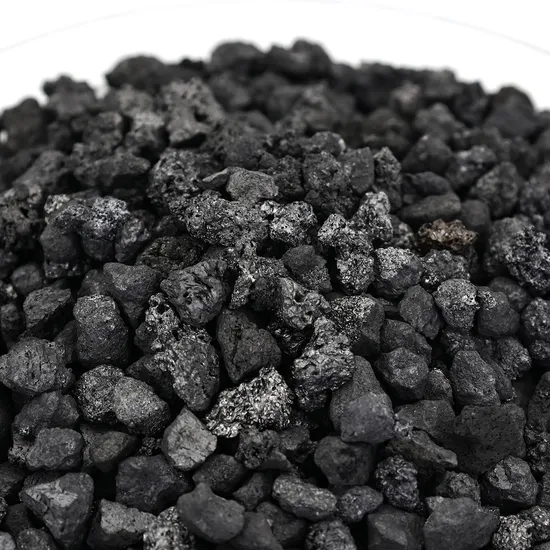
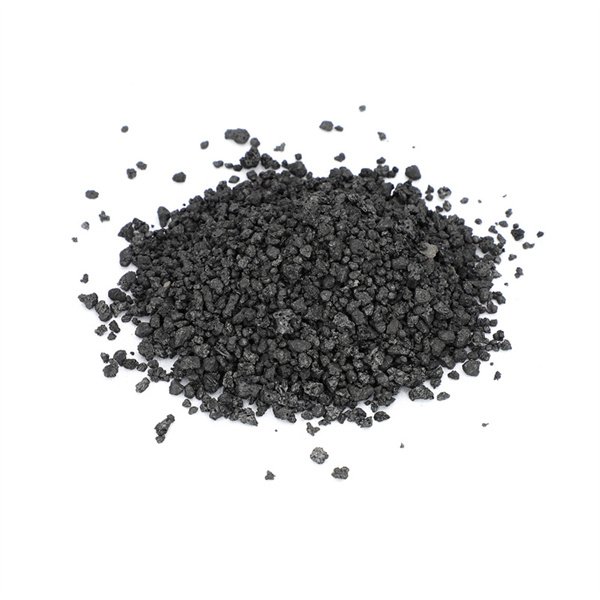
In the world of metallurgy, Carbon Additives—ranging from Graphite Petroleum Coke (GPC) to Calcined Petroleum Coke (CPC) and other carbon raisers—are mission-critical. They determine the final carbon content in steel and iron casts,直接影响ing quality and cost.
When procurement managers go looking for these materials, they face a fundamental question: Am I buying from a trader or a manufacturer?
At Beifang Alloy, a specialized ferroalloy factory with decades of integrated production experience, we believe that supplier transparency isn’t just a preference—it’s a risk management tool. This article expands on your procurement needs, industry trends, and how to compare suppliers to ensure you’re getting exactly what you pay for.
Your procurement strategy often dictates whether a trader or manufacturer is a better fit. However, understanding the inherent risks in each model is vital.
When you source directly from a factory like Beifang Alloy, you are tapping into a vertically integrated operation. We control the raw material sourcing, the crushing, the screening, and the packaging.
Consistency: Factories produce in bulk batches. This ensures that the particle size distribution (e.g., 1-5mm or 0-2mm) and fixed carbon content remain consistent from one shipment to the next .
Traceability: A manufacturer can provide Mill Test Reports (MTRs) that trace back to specific production runs, verified via spectrometric analysis .
Traders aggregate materials from various small workshops or unknown sources. While they may offer lower prices occasionally, they introduce “supply chain opacity.”
The Risk: You may receive material from three different sources in one shipment. This leads to inconsistent dissolution rates in your electric arc furnace, increasing your energy costs and slag volume .
Recent global market analysis indicates a significant shift in the ferroalloys and carbon additive landscape. The market is projected to grow significantly, but with growth comes increased scrutiny .
The 2025 tariff adjustments in major economies have forced buyers to reassess supplier portfolios . When you buy from a pure trader, tracing the Country of Origin becomes difficult. Is your carbon additive truly from a tariff-exempt jurisdiction, or is it being re-routed?
Manufacturer Insight: Factories provide clear certificates of origin. This clarity is essential for navigating the HS codes (e.g., 7202.xx for ferroalloys) and avoiding unexpected tariff costs at the port .
Steel plants are under pressure to lower their carbon footprint. If you buy from a trader, you cannot verify the energy used in production. Manufacturers using advanced electric arc furnace (EAF) networks or cleaner energy sources can offer a “green premium” by providing data on their production emissions .
To protect your operation from the volatility of the spot market and the risks of inconsistent quality, use this checklist when evaluating a potential carbon additive partner.
Don’t just look at a brochure. Ask for a live video walkthrough. A manufacturer will show you the furnaces, the crushing lines, and the lab . A trader will usually only show you a warehouse.
Platform data often reveals the business model . Look beyond price:
On-Time Delivery: Manufacturers with integrated logistics often maintain rates above 95% .
Reorder Rate: A low reorder rate (below 15%) can sometimes indicate inconsistent quality—a common issue when the source material changes constantly, as it might with traders .
A Mill Test Certificate should detail:
Fixed Carbon Content
Sulfur Content (Critical for steel quality)
Ash and Volatile Matter
Particle Size Distribution (Granulometry)
If a supplier hesitates to provide batch-specific reports, it is a red flag .
To illustrate why the business model matters, let’s compare a Trader versus a Manufacturer (Beifang Alloy) across the metrics that impact your production line.
| Evaluation Metric | Trader / Middleman | Manufacturer (Beifang Alloy & Integrated Factories) |
|---|---|---|
| Quality Control | Relies on supplier paperwork; high variability risk . | In-house lab (OES/XRF) tests every batch; full traceability . |
| Supply Stability | Subject to market fluctuations and availability from mills. | Consistent supply, control over production scheduling . |
| Customization | Limited to what is available on the spot market. | Can adjust particle size (crushing/screening) to your specs . |
| Cost Structure | Lower base price? Often hides costs in logistics or variable quality. | Transparent pricing; total landed cost optimization . |
| Risk Mitigation | Higher risk of co-mingled materials and tariff issues . | Lower risk; direct accountability, third-party inspections (SGS) available . |
A trader might offer a carbon additive at $700/ton, while a factory offers it at $850/ton. The initial reaction is to save $150. However, if the trader’s material has higher sulfur content or inconsistent sizing, it can lead to:
Longer melting times (increased electricity costs).
Rejected heat (scrapping an entire batch of steel).
Injection system blockages due to incorrect particle size .
When you factor in “cost per usable unit” rather than “cost per ton,” the manufacturer almost always wins .
In an era of supply chain volatility, transparency is your best protection. While traders play a role in the global market, they cannot offer the technical collaboration, customization, and stability that a dedicated manufacturer provides.
At Beifang Alloy, we don’t just source products; we engineer them. We invite you to compare our business model against the rest. When your metallurgy demands precision and your supply chain demands reliability, come directly to the source.For guaranteed quality carbon additives and ferroalloys, reach out to Beifang Alloy today.
Website: www.beifangalloy.com
Email: info@hnxyie.com