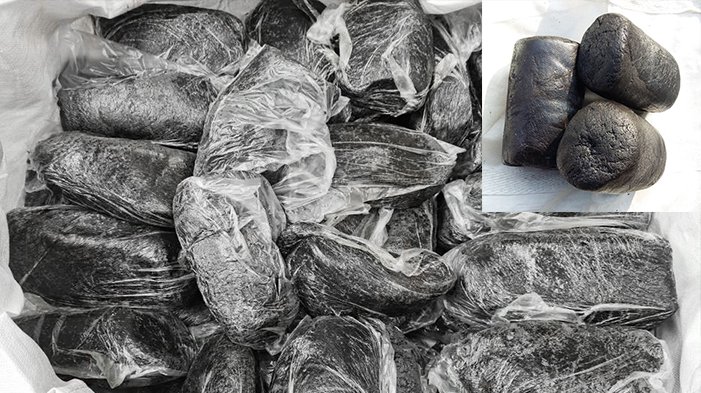
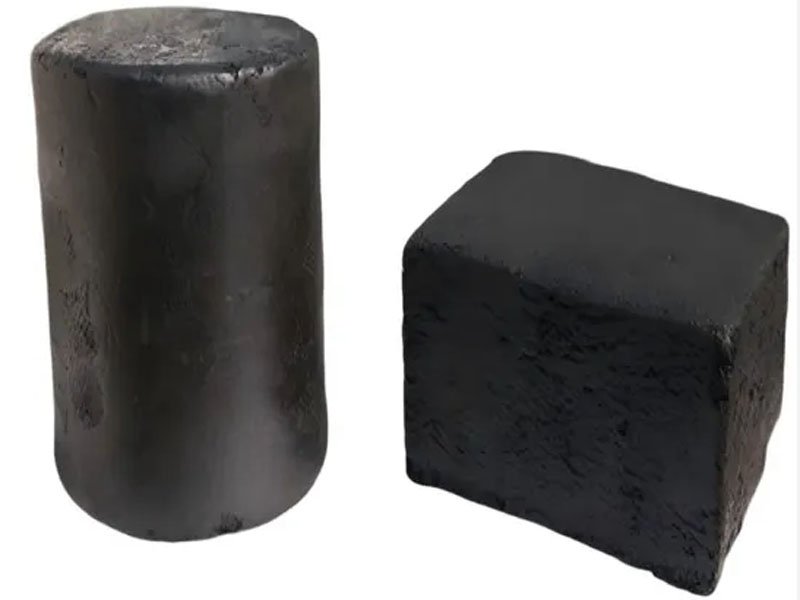
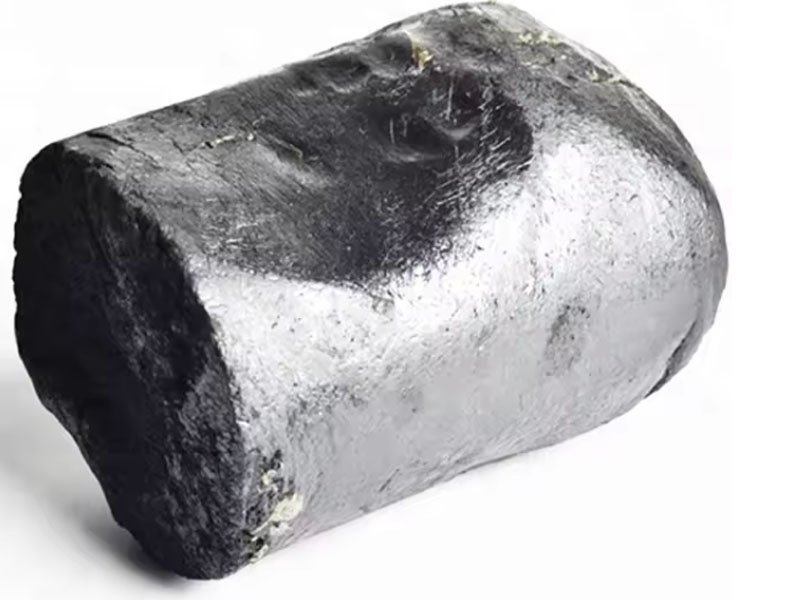
For any blast furnace operator, taphole clay (tap hole mix) is the unsung hero of the casting floor. It seals the crucible, directs the flow of hot metal, and protects the furnace hearth.
But there is a persistent engineering paradox: The easier a clay is to open, the faster it tends to erode. And the more erosion-resistant it is, the harder it is to drill open.
For years, steelmakers believed they had to choose between sacrificing furnace health (erosion) or sacrificing operational efficiency (difficult opening). At Beifang Alloy, we have solved this contradiction.
Below, we break down how we addressed this challenge across four critical dimensions: Procurement Needs, Industry Research, Procurement Guide, and Supplier Comparison.
When our clients’ procurement teams come to us, they usually describe the problem as a “daily headache.”
Scenario A (Too hard to open): Operators break drill bits. Tap-out takes 30+ minutes. Delayed tapping forces the furnace to reduce injection rates. Lost production = Lost revenue.
Scenario B (Too soft / Erodes fast): The taphole enlarges after 2-3 taps. High-speed metal flow erodes the hearth sidewall. Sudden breakouts occur. This is a safety and refractory life crisis.
The Real Procurement Need: *A material that maintains a stable taphole length and diameter for 8-10 taps (erosion resistance) but still allows a standard oxygen lance or drill bit to penetrate in under 3 minutes (easy opening).*
We learned that traditional binders (coal tar, pitch) cannot deliver both. So we changed the chemistry.
To solve the paradox, we first had to understand it at the molecular level.
| Property | Easy Opening (High Porosity/Brittleness) | Erosion Resistance (High Density/Strength) |
|---|---|---|
| Chemistry | Higher volatile content (burns out, leaves holes) | Higher carbon/silicon carbide content |
| Binder | Soft pitch (low softening point) | Hard resin/high softening point pitch |
| Result | Crumbles under drill; Widens under slag impact. | Breaks drill bits; Excellent against slag corrosion. |
Our Research Finding: The traditional “contradiction” exists only if you use single-binder systems. When you use a multi-phase binder system combined with graded aggregate, you can create a sacrificial crust.
Industry Trend (2023-2026): Global best practice is moving toward Al₂O₃-SiC-C based clays with composite binders. At Beifang Alloy, we have refined this with a unique “core-shell” aggregate distribution.
Here is how Beifang Alloy specifically solves the “contradiction” in our BF-TH Series Taphole Clay.
We do not make the clay uniformly “soft” or “hard.” We design a gradient structure.
For Easy Opening: We introduce precisely sized volatile components that create a controlled micro-crack network at the drill face (the first 100-200mm). This allows the drill to penetrate quickly without breaking bits.
For Erosion Resistance: Behind that face, the SiC and Corundum aggregates form a dense, high-thermal-conductivity layer. This layer resists slag attack and prevents the taphole from flaring.
When evaluating taphole clay, do not look only at “plasticity.” Demand these specs:
| Parameter | Traditional “Easy Open” | Beifang Alloy BF-TH (Balanced) |
|---|---|---|
| Bulk Density (g/cm³) | < 2.0 | 2.2 – 2.4 |
| Linear Change (1350°C) | +5% (Expansion) | ± 0.5% (Stable) |
| SiC + Al₂O₃ Content | < 25% | > 35% |
| Drill Time (sec/10mm) | < 15 (Too fast, erodes) | 25-30 (Optimal) |
| Taphole Life (Taps) | 4-5 | 8-10 |
Let us compare how different suppliers approach this problem versus the Beifang Alloy solution.
| Feature | Traditional Supplier A (Pitch-based) | Budget Supplier B (High Volatile) | Beifang Alloy (Composite Binder) |
|---|---|---|---|
| Erosion Control | Poor at high temperature | Very Poor (dangerous) | Excellent (SiC matrix) |
| Drill Ability | Good (but too soft) | Easy (but hole flares) | Optimized (Micro-crack zone) |
| Furnace Suitability | Small blast furnaces (<500m³) | Intermittent operation | Large/Medium BF (450m³ – 2500m³) |
| Consistency per batch | Variable (depends on tar) | Unstable | ISO 9001: Constant |
| Lead Time | 20-30 days | 15 days (risky) | 15-20 days (Trackable) |
The Beifang Difference:
We do not rely on a single binder. We use a thermosetting + thermoplastic composite system. This gives you:
Green strength (easy to gun into the taphole).
Thermal stability (no cracks during heating).
Controlled brittleness (easy to drill, but resistant to erosion).
The contradiction between “easy opening” and “erosion resistance” in taphole clay is not a law of physics—it is a limitation of old chemistry.
At Beifang Alloy, we have engineered a material that gives you both:
Drill it like butter (Lower operating costs).
Resist slag like armor (Longer campaign life).
Website: www.beifangalloy.com
Email: info@hnxyie.com
Ask for our BF-TH Taphole Clay datasheet and a free furnace consultation.