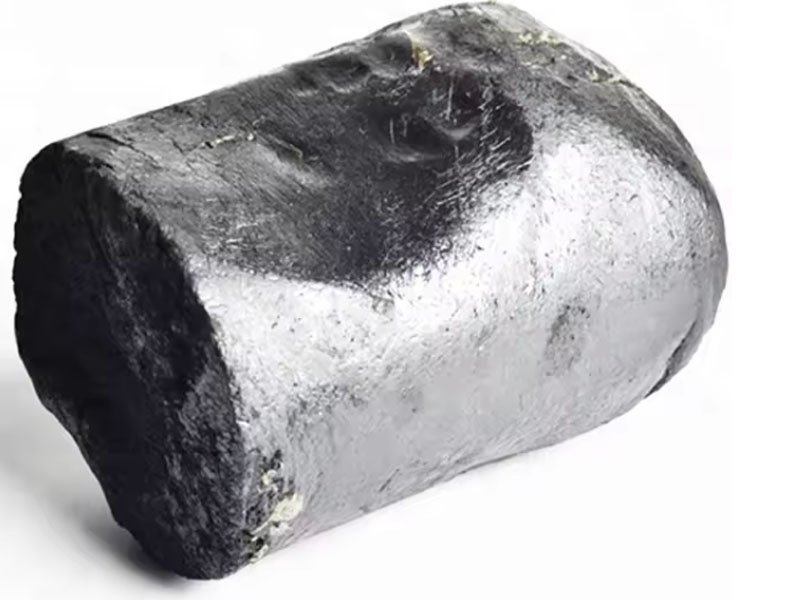
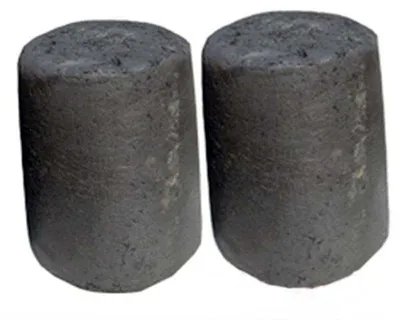
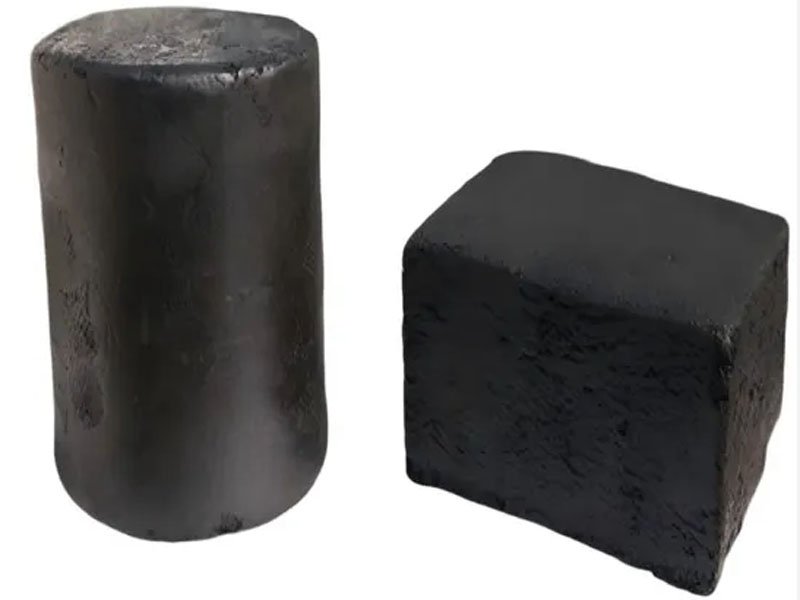
As China’s steel industry pushes toward megascale blast furnaces (volume > 5000 m³), the rules of the game have changed. At Beifang Alloy, we have witnessed a recurring paradox: a taphole clay (tap hole mix) that performed flawlessly on a 2500 m³ furnace fails catastrophically—spalling, erosion, or deep-hole breaking—on a 5000 m³ giant.
After analyzing data from our own ferro alloy smelting operations and partner steel mills, we pinpointed the culprit: The current national and industrial standards for Taphole Clay’s High-Temperature Modulus of Rupture (HTMOR) are no longer sufficient.
This article expands on why procurement teams must revisit this metric, how industry research lags behind reality, and a practical guide for buyers in 2025.
Most suppliers still provide HTMOR data tested under GB/T 3002-2017 (typically at 1400°C-1450°C under a reducing atmosphere). While this was adequate for medium furnaces, large blast furnaces demand a different performance curve.
Why large furnaces break the old model:
Higher Tapping Temperatures: Large furnaces routinely see molten iron temps 30-50°C higher than small furnaces. The clay’s sintered layer melts prematurely.
Longer Tapping Duration: Tapping takes 90-120 minutes (vs. 40 minutes in small furnaces). The “hot strength” must be sustained, not just a peak value.
Erosion Mode Change: Failure shifts from abrasion to thermal fatigue + shear stress.
The Procurement Need Statement:
*“We no longer need a single-point HTMOR value at 1450°C. We need a thermal gradient strength curve from 1200°C to 1600°C, plus a retained strength measurement after 2 hours of soaking.”*
Suppliers who cannot provide this data are essentially selling blind.
In late 2024, Beifang Alloy conducted a small-scale research project comparing 8 different taphole clay suppliers. We measured HTMOR using traditional methods vs. our modified “simulated large furnace” test.
Key findings:
| Supplier | Traditional HTMOR (MPa) @1450°C | Performance on 3200 m³ BF | Simulated HTMOR (MPa) @1550°C / 2hr soak |
|---|---|---|---|
| Supplier A | 8.5 (High) | Excellent | 6.2 (Stable) |
| Supplier B | 9.2 (Highest) | Severe spalling | 3.1 (Crashed) |
| Supplier C | 6.8 (Medium) | Medium | 4.5 (Stable) |
Observation: Supplier B’s clay contained too much high-temperature liquid phase (e.g., excessive feldspar). At 1450°C, it looked strong. At 1550°C for 2 hours, it melted like butter. Traditional HTMOR did not predict this.
Conclusion from research: The current index is misleading. For large furnaces, post-sintering residual strength is more important than peak strength.
Based on our research and operational pain points, Beifang Alloy has revised our procurement guide. We recommend you do the same.
Red flag: “Our HTMOR > 8 MPa at 1450°C.”
Ask instead: “What is the HTMOR at 1550°C after 90 minutes? Show us the decay curve.”
| New Index | Target Value for >3000 m³ BF | Test Method |
|---|---|---|
| Retained HTMOR (1550°C x 2hr) | ≥ 5.0 MPa | Customized thermal soaking test |
| Thermal expansion consistency (800-1500°C) | Match BF shell curve (±0.2%) | DIL (Dilatometer) |
| Slag penetration depth (1500°C x 3hr) | ≤ 8 mm | Static crucible test |
Ask suppliers for a trial drill log showing torque variation during taphole opening. A sudden drop in torque at depth indicates a weak hot strength zone.
Here is how we now categorize suppliers when sourcing for large blast furnaces (applicable to our ferro alloy smelting partners):
| Capability Tier | Traditional (Obsolete) | Transitional (Risky) | Next-Gen (Preferred) |
|---|---|---|---|
| Offered HTMOR spec | Single point @1450°C | Two points (1400 & 1500°C) | Curve + Soaked value @1550°C |
| Bonding system | High clay + tar/resin | Low cement + carbon | Composite: Nano-silica + stabilized pitch + SiC whiskers |
| Response to large furnace | “Our clay works for all sizes” | “We adjust SiC content a bit” | “We redesign the matrix for thermal gradient” |
| Data transparency | Standard test report only | Partial data | Full thermal-mechanical profile + pilot test video |
| Our verdict | Reject for any BF >3000 m³ | Accept only for <2500 m³ | Mandatory for >4000 m³ |
Example: In a recent tender, Supplier X (traditional) quoted the lowest price with HTMOR 9.0 MPa. Supplier Y (next-gen) quoted 15% higher but provided a full thermal gradient report. After a 6-month trial on our partner’s 4500 m³ BF, Supplier Y reduced taphole-related downtime by 40%. The ROI was clear.
Dear procurement colleagues and refractory engineers, the industry is moving faster than the standards committees. If we continue buying taphole clay using the old GB/T 3002 standard, we are intentionally accepting risk.
At Beifang Alloy, we are not waiting for the standard to change. We have already updated our internal purchasing specification to include a “Large-Furnace HTMOR Index” (soaked value @1550°C for 120 min, minimum 5.5 MPa).
We invite suppliers and end-users to share their data. If you are developing taphole clay that truly performs on megascale furnaces, send your technical datasheet and thermal gradient test results to info@hnxyie.com.
Let’s redefine the metric before the next breakout happens.