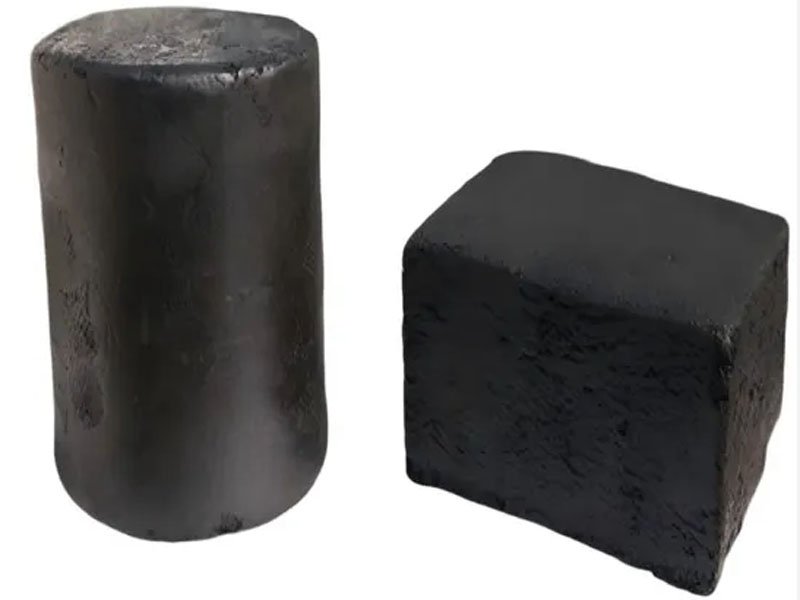
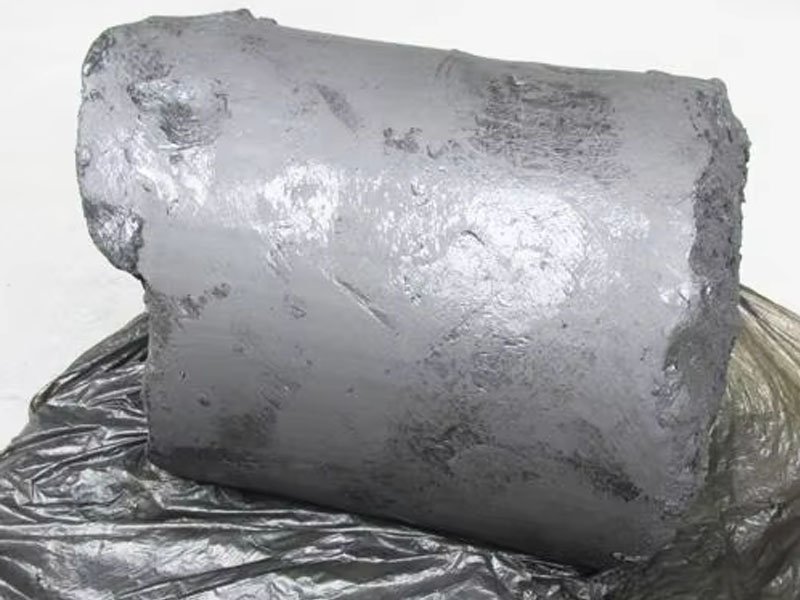
In blast furnace front management, the performance of taphole clay directly determines taphole depth stability and tapping efficiency. As a technical team responsible for procurement and furnace management, Beifang Alloy has observed a recurring pattern: the root cause of excessive refractory costs or unstable taphole conditions is rarely the “grade” of the clay itself—it is the mismatch of physical parameters, particularly the dynamic relationship between apparent porosity and sintering speed.
Many suppliers provide vague targets such as “porosity ≤ 18%.” However, the real-world sintering behavior difference between 18% and 15% porosity can be a game-changer.
For a ferroalloy plant, buying taphole clay is not just buying “mud to plug the hole”—it is buying a self-maintaining taphole system.
Too often, procurement focuses solely on Al₂O₃ or SiC content, assuming higher is better. In reality, apparent porosity controls the “breathing and baking” rhythm of the clay.
Higher porosity (>18%): Volatiles escape quickly. While “early strength” develops fast, the clay is prone to shrinkage cracks, leading to taphole flame cutting or wet clay spitting.
Lower porosity (~15%): Dense structure resists erosion well. However, if the binder system is not perfectly matched, volatiles are trapped, delaying sintering—causing “broken tapholes” or extreme difficulty in opening the hole.
Beifang Alloy View: For ferroalloy furnaces (typically smaller than steel BF, with higher top pressure fluctuations), thermal shock resistance is often more critical than slag corrosion resistance. Choosing between 18% and 15% porosity is essentially a trade-off between erosion resistance and fast sintering.
Have you actually measured this difference?
This is the single most important question to ask every supplier. Based on years of field data and lab simulations (1,350°C–1,450°C coking environment), Beifang Alloy has quantified the gap:
1. Quantified Sintering Speed Difference:
15% porosity clay: Due to its dense structure, the oxidation and escape of the binder (resin or tar) are restricted. In typical cases, its complete sintering time lags behind 18% porosity clay by 20–30 minutes.
Field performance: When opening the taphole, 15% porosity clay is often still “semi-sintered.” The core remains soft, causing uncontrolled orifice enlargement, severe slag/iron splashing, and even forced wind reduction.
2. Strength Development Inflection Point:
18% porosity clay: Achieves sufficient cold crushing strength (≥10 MPa) to resist iron flow erosion within 60–90 minutes after plugging.
15% porosity clay: Requires >120 minutes to reach the same strength level. If your tapping interval is less than 120 minutes, lower porosity clay actually increases clay consumption by 15–20% due to faster taphole enlargement and shallower taphole depth.
Based on different campaign stages and tapping schedules, Beifang Alloy recommends the following logic:
| Operating Scenario | Recommended Porosity | Reasoning |
|---|---|---|
| High-intensity, fast tapping (Interval ≤ 90 min) | 17% – 18% | Requires rapid sintering to build a mud pocket. Higher porosity allows fast volatile escape, forming a hard “shell” within 30 minutes to resist erosion and control orifice diameter. |
| Large furnace, long tapping time (>120 min), high top pressure | 13% – 15% | Prioritizes maximum erosion resistance. During long tapping, the mud pocket maintains taphole depth; lower porosity effectively slows chemical attack by slag/iron and reduces hole enlargement rate. |
| Ferroalloy furnace with sidewall temperature rise (campaign protection) | 18% with TiO₂ (Ti-containing clay) | A specialized solution: 18% porosity ensures fast sintering to quickly repair the lining, while TiO₂ reduction achieves self-repair via precipitated titanium compounds. |
Most suppliers provide perfect “typical values” on their datasheets. But as a technical service provider, Beifang Alloy urges you to check three hidden costs:
| Comparison Dimension | Ordinary Suppliers | Beifang Alloy Solution |
|---|---|---|
| Index Consistency | Lab sample (18%) vs. bulk supply (actually 20%+) — high fluctuation | Batch-to-batch fluctuation ≤ 1%, ensuring standardized taphole operation |
| Marshall Value Matching | Provides porosity but no Marshall value — results in “cannot pump” or “clay spilling” | Customizes Marshall value (0.5–1.2 MPa) based on your mud gun thrust pressure |
| Measured Sintering Speed | Vague wording like “good sintering” with no supporting data | Provides linear change rate + strength development curves at specific temperatures |
In today’s cost-reduction environment, blindly chasing “lower porosity, higher specs” is often a financial waste.
Beifang Alloy recommends: Go back to basics. Based on your actual tapping interval and furnace pressure, use the critical difference between 18% and 15% porosity to find the sweet spot—the clay that holds well, yet opens easily.
About Beifang Alloy (www.beifangalloy.com)
We provide “furnace-condition-adapted” refractory solutions specifically for ferroalloy producers. We don’t blindly push expensive raw materials. Instead, we precisely control particle size distribution and binder systems to ensure that every ton of taphole clay sinter at the same rhythm as your production schedule.