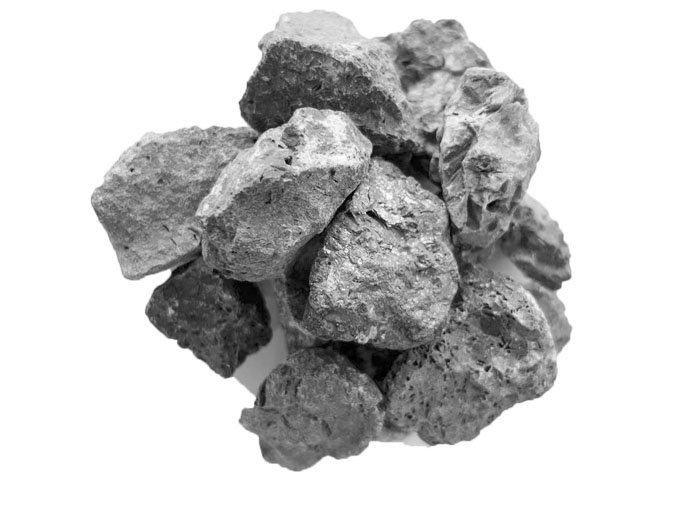
In the steelmaking process, the deoxidation stage is a critical step that determines molten steel quality and final product performance. In recent years, many steel mills using traditional Si-Al-Fe deoxidizers have frequently faced challenges such as significant fluctuations in alloy element recovery rates and unstable deoxidation effectiveness. Meanwhile, Si-Al-Ca deoxidizers—offered through a “direct-from-manufacturer” supply model—claim to significantly improve alloy utilization. But what is the reality? As a company deeply engaged in the ferroalloy sector, Beifang Alloy provides an in-depth analysis from four perspectives: procurement needs, industry research, procurement guidelines, and supplier comparison.
The most immediate observation from procurement and production departments is that when using Si-Al-Fe as a final deoxidizer, the recovery rate of alloy elements often feels like “gambling on the weather.” The root causes of this instability stem from several factors:
High Process Sensitivity: The deoxidation performance of Si-Al-Fe is significantly influenced by end-point carbon content, tapping temperature, and slag carryover. Slight fluctuations in these variables can cause substantial deviations in silicon and manganese composition in the steel, leading to highly unstable element recovery rates.
Aluminum Burn-off and Inclusion Issues: Pure aluminum or high-aluminum deoxidizers have a relatively low density (approximately 2.7 g/cm³). When added to the ladle, they tend to float on the slag surface, reacting with oxygen in the air and molten slag—resulting in burn-off losses as high as 70–90%. More critically, when acid-soluble aluminum in the molten steel exceeds a certain threshold (e.g., Als > 0.006%), large quantities of solid Al₂O₃ cluster inclusions form. This increases molten steel viscosity, impairs fluidity, and can even cause nozzle clogging in the tundish, severely disrupting continuous casting operations.
These pain points have compelled steelmakers to seek more stable and efficient deoxidation solutions.
Industry applications and research data indicate that calcium-based composite deoxidizers, represented by Si-Al-Ca, do demonstrate clear advantages in improving alloy utilization.
“Si + Ca” Synergy Improves Kinetic Conditions: The core advantage of Si-Al-Ca deoxidizers lies in the introduction of calcium. Calcium has stronger deoxidizing power than aluminum, and when silicon and aluminum coexist, the deoxidation products form low-melting-point complex compounds (such as calcium aluminosilicates). These liquid or low-melting inclusions more readily coalesce, float up, and are eliminated, reducing the harmful effects of solid Al₂O₃ on steel cleanliness. Additionally, the higher density of the alloy (reaching 3.5–4.2 g/cm³) allows it to effectively penetrate deep into the molten steel, minimizing surface oxidation burn-off.
Significant Yield Improvement and Cost Reduction: Industry practices have repeatedly validated the value of calcium-based deoxidizers.
Xinyang Steel demonstrated that replacing Si-Al-Ba with calcium-based deoxidizers increased the recovery rates of ferromanganese and ferrosilicon by 5.11% and 2.72% respectively, while also moderately improving the yield strength and tensile strength of the finished steel.
Zhongtian Steel’s “Si-Al-Ca replacing calcium carbide” project achieved remarkable results. Since Si-Al-Ca is safer to store and use than calcium carbide and offers superior deoxidation performance, full substitution across three plants—through improved alloy yields and reduced Si-Mn alloy consumption—resulted in an estimated annual cost savings of RMB 16.22 million in deoxidizers and alloys.
Additional trial data shows that compared to Si-Al-Fe, calcium-based composite deoxidizers can increase the average recovery rates of silicon and manganese by 1.78% and 0.68% respectively, while reducing deoxidation cost per ton of steel by RMB 1.75.
Critical Technical Factors: To fully leverage the deoxidation advantages of Si-Al-Ca, composition and particle size control are paramount. Calcium has extremely low solubility in liquid iron (only 0.032% at 1600°C) and very high vapor pressure, making it prone to vaporization loss. Therefore, Si-Al-Ca is typically manufactured in small particles (<15 mm) in industrial practice to accelerate dissolution and minimize calcium evaporation waste.
Faced with numerous “direct-from-manufacturer” claims in the market, procurement professionals should evaluate potential suppliers based on the following key indicators and criteria:
Core Performance Parameters:
Chemical Composition Stability: High-quality products should maintain deviations in active components (Si, Ca, Al) within a controllable range (e.g., ≤0.3%). Impurities (P, S) and total oxide inclusions (SiO₂, Al₂O₃) should be kept as low as possible.
Particle Size Uniformity: Select the appropriate and consistent particle size distribution based on your addition method (e.g., cored wire, injection, or direct addition). Uniform particle size ensures rapid, synchronized melting in the molten steel, improving reaction consistency.
Supplier Capability Assessment:
Production and Testing Capabilities: A reliable direct-supply manufacturer should hold ISO 9001 quality system certification and be equipped with core testing instruments such as direct-reading spectrometers and laser particle size analyzers, with the ability to provide third-party test reports.
Customization Services: Different furnace conditions and steel grades require different deoxidizer formulations. Whether the supplier supports composition fine-tuning and particle size segmentation customization is an important measure of their technical service capability.
Location and Logistics Advantages: Manufacturers located in metallurgical industry clusters (e.g., Anyang, Henan) typically benefit from proximity to raw material sources and rapid shipping, reducing procurement costs and inventory pressure.
As a professional ferroalloy producer, Beifang Alloy (www.beifangalloy.com) offers significant comprehensive advantages in Si-Al-Ca and other composite deoxidizers. Below is a comparison of major supplier types in the industry for your reference:
| Supplier Type | Core Advantages | Representative Examples | Applicable Scenarios |
|---|---|---|---|
| Large-scale Ferrosilicon Enterprises | Strong economies of scale, excellent cost control, stable supply of standardized bulk products. | Erdos Metallurgical Group | Long-process steelmaking for plain carbon steels, primarily requiring standardized, high-volume supply. |
| High-end Specialty Alloy Enterprises | Strong R&D capabilities, high value-added products, deep expertise in refining for premium steel grades. | CITIC Jinzhou Metal | Bearing steel, spring steel, automotive steel, and other specialty steels with extremely high cleanliness requirements. |
| Professional Composite Deoxidizer Manufacturers | Flexible production capabilities, agile service, ability to provide customized solutions tailored to specific furnace conditions and cost requirements. | Beifang Alloy, Henan Xinchuang Metallurgy, Anyang Zhucheng | Adaptable to diverse needs ranging from small-to-medium steel mills to large groups, particularly suited for customers aiming to improve yields while optimizing overall costs. |
Beifang Alloy’s core strengths include:
End-to-End Quality Control: From raw material smelting to finished product screening, we implement a stringent quality management system to ensure consistent composition and particle size for every batch of Si-Al-Ca.
In-Depth Technical Support: We offer not just products, but process recommendations. Our technical team can assist you in optimizing deoxidizer formulations and addition methods based on steel grades and furnace types, maximizing alloy utilization.
Direct-Supply Model with Efficient Responsiveness: Leveraging Beifang Alloy’s industrial base, we offer factory-direct pricing and efficient logistics services to reduce your procurement costs and inventory pressure.
In summary, the instability of Si-Al-Fe deoxidation yield is rooted in the inherent limitations of its deoxidation products and kinetic conditions. Si-Al-Ca deoxidizers, through multi-element synergy, do effectively enhance alloy yield, improve molten steel quality, and deliver significant economic benefits. Choosing a direct-supply manufacturer with technical expertise, stable quality, and flexible service is the key to translating these technical advantages into tangible profits.
Beifang Alloy is committed to being your most trusted partner in deoxidizer solutions.
Contact Us:
Website: www.beifangalloy.com
Email: info@hnxyie.com
Let’s work together to solve the instability challenges in deoxidation, improve alloy utilization, and create greater value.