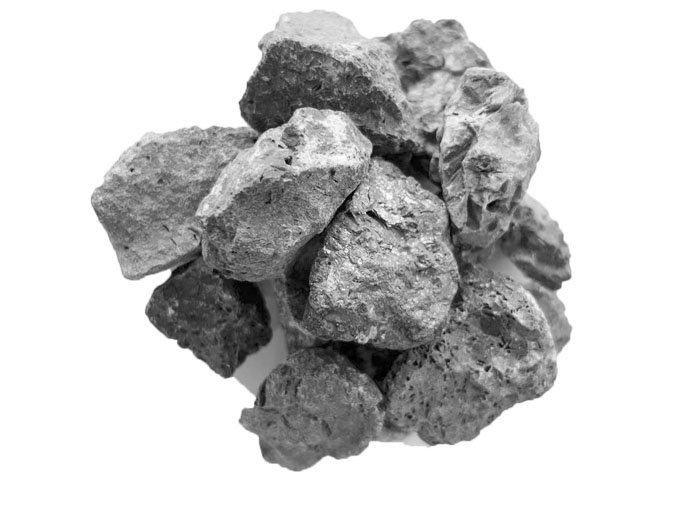
In steelmaking, the choice of deoxidizer directly impacts molten steel quality, production costs, and process stability. With so many options available—calcium-silicon-aluminum (Ca–Si–Al), calcium-barium-silicon-aluminum (Ca–Ba–Si–Al), and silicon-aluminum-iron (Si–Al–Fe)—procurement professionals often struggle between “paying more” and “choosing right.” This article walks you through procurement needs, industry research, a practical selection guide, and supplier comparison criteria to help you make informed decisions.
Different steel grades have vastly different requirements for deoxidizers. The first step is to clearly understand your own process characteristics:
| Steel Category | Recommended Deoxidizer Type | Rationale |
|---|---|---|
| Plain carbon steel, low-alloy steel | Si–Al–Fe | Cost-effective, stable deoxidation performance for routine requirements |
| Clean steel, specialty steel, pipeline steel | Ca–Ba–Si–Al | Deep deoxidation + inclusion modification for high purity demands |
| Continuous casting processes | Ca–Si–Al or Ca–Ba–Si–Al | Enhances molten steel fluidity and prevents nozzle clogging |
Critical procurement tip: Avoid a “one-size-fits-all” purchasing strategy. First confirm your steel grade’s sensitivity to sulfur/phosphorus impurities and inclusion level requirements, then match the deoxidizer composition accordingly. This prevents either over-specification (wasted cost) or under-specification (quality risk).
Si–Al–Fe was developed as an upgrade to pure aluminum deoxidizers. Pure aluminum has a low specific gravity (2.79 g/cm³), making it difficult to penetrate deep into molten steel, resulting in low utilization. Si–Al–Fe, with a higher specific gravity (~4.3 g/cm³), offers superior penetration and significantly improved aluminum utilization efficiency.
Best for: Routine bulk steelmaking where deoxidation requirements are standard and cost control is priority.
Caution: Deoxidation products are primarily Al₂O₃, which may increase inclusions if not properly managed.
The addition of calcium to the silicon-aluminum base brings multiple benefits. Calcium has a strong affinity for both oxygen and sulfur, enhancing not only deoxidation but also desulfurization and inclusion morphology modification. This improves molten steel cleanliness and fluidity.
Best for: Steel grades requiring good cleanliness and fluidity, especially for continuous casting applications.
Adding barium to the Ca–Si–Al system creates a quaternary composite deoxidizer. Barium’s key advantage: it effectively reduces the vapor pressure of calcium at steelmaking temperatures, minimizing calcium vaporization loss and significantly improving calcium utilization efficiency. The complex oxides formed are easier to float out from the molten steel, resulting in more thorough deoxidation and cleaner steel.
Best for: High-quality specialty steels and applications with stringent inclusion control requirements.
Choosing the right deoxidizer is only half the battle—selecting a reliable supplier ensures long-term production stability. Evaluate potential suppliers across these three dimensions:
| Evaluation Dimension | Weight | Key Verification Metrics |
|---|---|---|
| Quality Control Stability | 40% | Batch-to-batch composition deviation (demand ≤ ±1%), impurity levels (S, P) compliance, particle size uniformity |
| Delivery Reliability | 30% | Average inventory turnover days, emergency order response time (e.g., ≤ 24hrs), long-term contract performance record |
| Technical Support | 30% | Process adaptation recommendations, batch traceability support, on-site technical guidance availability |
Critical warning: Beware of low-quality products adulterated with silica powder or recovered scrap materials. These may look similar visually but can reduce deoxidation efficiency by over 20% and risk adding oxygen back into the steel. We recommend verifying batch-to-batch composition deviation through third-party spectrometer testing—this is the core indicator of process stability.
As the steel industry advances toward green and low-carbon transformation, the deoxidizer sector is shifting from pure price competition to quality traceability and application-specific selection logic. Steelmakers are placing increasing emphasis on:
Composition stability – tight control of effective element fluctuations
Impurity management – consistent low levels of S, P and other contaminants
Batch-to-batch consistency – verifiable through laboratory analysis
When evaluating suppliers, prioritize those with:
In-house submerged arc furnaces and full-chain smelting capabilities – eliminating the risk of adulteration with tailings or recycled materials
Multi-stage quality inspection and spectrometer-based analysis – ensuring every batch meets specifications
Custom formula adjustment capabilities – flexible composition ranges tailored to different steel grades
Anyang Beifang Alloy Co., Ltd. (www.beifangalloy.com) is a professional ferroalloy enterprise integrating production, processing, and sales. Located in Anyang, Henan—a hub of China’s ferroalloy industry—the company leverages its strategic location for raw material sourcing while operating submerged arc furnaces and medium-frequency induction furnaces. This enables a complete production chain from smelting, crushing, and screening to final packaging.
Our Core Strengths:
| Advantage | Description |
|---|---|
| Direct Factory, Quality Assured | Full-chain production control from raw material to finished product, with multi-stage quality inspections—no adulteration, guaranteed consistency |
| Full Product Portfolio | Complete range including Ca–Si–Al, Ca–Ba–Si–Al, and Si–Al–Fe deoxidizers; custom compositions and particle sizes available per customer requirements |
| Batch Consistency Guarantee | Spectrometer-based inspection and slag simulation testing ensure effective element fluctuations within national standard tolerances; verified deoxidation efficiency consistently above 90% |
| On-Time Delivery & Service | Ample stock inventory; emergency orders responded within 24 hours; process adaptation recommendations and batch traceability support provided |
| Your Priority | Recommended Choice | Why |
|---|---|---|
| Lowest cost, standard steel | Si–Al–Fe | Best cost-performance ratio |
| Better fluidity + moderate cleanliness | Ca–Si–Al | Calcium improves flow and modifies inclusions |
| Highest purity, specialty steel | Ca–Ba–Si–Al | Barium boosts calcium efficiency for deep purification |
| Most stable supply & technical support | Beifang Alloy | Full-chain production + batch consistency + responsive service |
There is no single “best” deoxidizer—only the one that best matches your specific needs.
Three steps to avoid costly mistakes:
Clarify your steel grade requirements – purity level, inclusion tolerance, process type
Match the deoxidizer type – Si–Al–Fe for cost, Ca–Si–Al for balance, Ca–Ba–Si–Al for premium
Vet suppliers rigorously – prioritize composition stability, batch traceability, and technical support over price alone
📧 Email: info@hnxyie.com
🌐 Website: www.beifangalloy.com
Visit our website or email us for the latest batch test reports, customized solutions, or to discuss your specific deoxidation challenges.