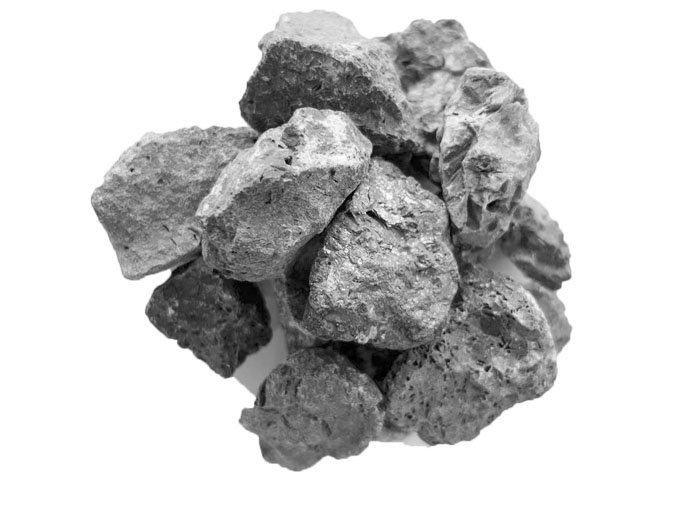
In steelmaking, the quality of deoxidizer directly determines the purity of molten steel and the final performance of steel products. As one of the most widely used composite deoxidizers, Silicon-Aluminum-Calcium deoxidizer has become an indispensable auxiliary material in converter, electric furnace, and refining processes, thanks to aluminum’s strong deoxidation capability, silicon’s viscosity-reducing effect, and calcium’s modification treatment of inclusions. According to industry statistics, the application share of Si-Al-Ca series deoxidizers in the deoxidation stage has exceeded 42%.
But here’s the key question: For the same Silicon-Aluminum-Calcium deoxidizer, how big is the quality gap between different manufacturers? And how can you identify the good from the bad when purchasing?
This article will systematically analyze from four dimensions — Procurement Needs, Industry Research, Supplier Comparison, and Procurement Guide — to help you avoid the traps of inferior products.
Many steel plant procurement professionals face this confusion: even when buying the same specification of Si-Al-Ca deoxidizer, one batch delivers excellent deoxidation results, while the next batch causes issues like poor molten steel fluidity, increased inclusions, or even nozzle clogging. The root cause lies in product quality batch-to-batch stability.
The core value of high-quality Si-Al-Ca deoxidizer is reflected in three aspects:
Precise Chemical Composition: The ratio of silicon, aluminum, and calcium directly affects the melting point and floating speed of deoxidation products. Industry best-practice standards require Si+Al+Ca total ≥ 65%, with individual component fluctuations ≤ 1.5%.
Particle Size Uniformity: Overly fine particles cause smoke loss; overly coarse particles lead to incomplete reactions. Quality products require a sieving yield ≥ 95% for 10-50mm or 1-3mm particle sizes.
Impurity Control Level: Excessive harmful elements S and P degrade steel performance. Reputable manufacturers can control S content below 0.04%.
Procurement Pain Point: Many small workshops in the market cut costs by using inferior raw materials or simplifying production processes, resulting in large composition deviations and high impurity levels. They may appear cheaper per ton, but poor deoxidation efficiency and high alloy loss actually push up the overall cost per ton of steel.
According to industry technical standards, high-quality Si-Al-Ca deoxidizer should meet the following key parameters:
| Parameter Dimension | Key Technical Indicator | Quality Standard |
|---|---|---|
| Chemical Composition | Si Content | 30-45% |
| Ca Content | 8-15% | |
| Al Content | 5-12% | |
| Si+Al+Ca Total | ≥ 65% | |
| Particle Size Control | 1-5mm Proportion | ≥ 90% |
| Moisture Content | H₂O | ≤ 0.5% |
| Impurities | S, P | ≤ 0.05% |
Why is the ratio so important? The “synergistic deoxidation” principle of Si-Al-Ca works as follows: aluminum acts as a strong deoxidizer, silicon reduces molten steel viscosity to promote inclusion flotation, and calcium modifies Al₂O₃ inclusions to form low-melting-point calcium aluminate, preventing nozzle clogging. All three elements are indispensable — an imbalanced ratio severely compromises effectiveness.
Research data shows that using high-quality Si-Al-Ca deoxidizer can reduce total oxygen content in steel to below 15ppm and improve inclusion ratings by 1-2 grades. Academic studies also confirm that composite deoxidizers not only achieve higher deoxidation efficiency than single-element deoxidizers but also result in lower levels of oxide inclusions and silicate inclusions in finished plates.
By benchmarking numerous across the industry, the differences among suppliers at various levels are significant:
Quality Manufacturers: Equipped with standardized submerged arc furnaces, medium-frequency furnaces, and other smelting equipment, with full-process in-house production capability — from raw material crushing, mixing, and homogenization to particle size screening — all under strict control.
Small Workshops: Simple equipment, mostly purchasing raw materials for basic crushing and mixing, lacking smelting processes and homogenization assurance.
Quality Manufacturers: ISO9001 certified, with composition testing performed on every batch before shipment, third-party test reports (e.g., SGS) available upon request, and batch traceability maintained.
Small Workshops: Lack testing facilities, composition is “estimated” rather than measured, and cannot provide reliable factory reports.
Quality Manufacturers: Can adjust Si/Al/Ca ratios and particle size specifications according to specific steel grades and refining processes, offering customized solutions.
Small Workshops: Limited product specifications, unable to meet differentiated requirements.
Quality Manufacturers: Stable raw material sources and sufficient production capacity ensure on-time delivery and long-term partnership reliability.
Small Workshops: Highly susceptible to raw material price fluctuations, often facing supply shortages or “bait-and-switch” quality substitution.
Anyang, as one of China’s most important ferroalloy production bases, is home to numerous deoxidizer manufacturers, but their capabilities vary widely. Reputable producers like Beifang Alloy, leveraging Anyang’s local metallurgical industry cluster advantages, possess inherent competitiveness in raw material sourcing, smelting technology, and quality control systems — making them a worthy partner to evaluate.
Action Steps:
Request factory quality test reports for every batch, with special attention to Si, Al, Ca, S, and P indicators.
Spot-check third-party test reports (e.g., SGS, CCIC) to validate data authenticity.
Compare composition data across 3-5 consecutive batches from the same supplier — the smaller the fluctuation, the more stable the quality.
Action Steps:
Conduct on-site visits or virtual factory tours to confirm whether the supplier has in-house smelting capabilities, rather than just simple crushing and blending.
Verify whether the company holds ISO9001 Quality Management System certification and understand their testing equipment and procedures.
Inquire about raw material sources and screening equipment to ensure particle size control is reliable.
Action Steps:
Don’t just look at “price per ton” — calculate the comprehensive deoxidation cost per ton of steel. Premium deoxidizer may have a slightly higher unit price, but higher efficiency and stable recovery rates often result in lower overall costs.
Ask suppliers for successful case studies from peer companies, especially those with similar process conditions to yours.
Conduct trial batches on a small scale to verify deoxidation performance and improvement in steel cleanliness.
The quality gap in Si-Al-Ca deoxidizer is not a trivial “close enough” difference — it directly impacts steel product qualification rates and production stability. When sourcing, we recommend following the “Check Reports → Inspect Processes → Calculate Total Cost” three-step approach, and choose established manufacturers like Beifang Alloy that possess stable production capacity, robust quality control systems, and a solid industry reputation — to fundamentally safeguard your steelmaking quality and economic returns.
、Beifang Alloy (Northern Ferroalloy)
Professional Ferroalloy Manufacturer | Si-Al-Ca Deoxidizer Direct Source
📞 Contact: info@hnxyie.com
🌐 Website: www.beifangalloy.com