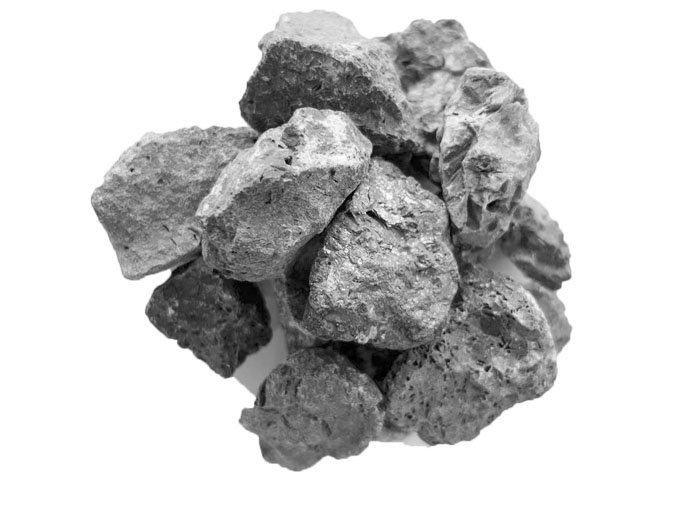
In steelmaking, rhythm is efficiency, and speed is competitiveness. Every minute shaved off the tapping-to-tapping cycle translates into tangible capacity growth and cost savings. The deoxidation stage is often the critical “valve” that determines the pace of your entire operation.
Traditional single-element deoxidizers (such as pure aluminum or ferrosilicon) either produce inclusions that are difficult to float, or suffer from unstable alloy recovery rates. This often leads to prolonged refining times and clogged continuous casting nozzles—forcing your production line to hit the brakes when it should be accelerating. Silicon-Aluminum-Calcium (Si-Al-Ca) composite deoxidizer was developed precisely to break through this bottleneck.
Beifang Alloy, as a professional ferroalloy manufacturer with deep expertise in metallurgical auxiliaries, explains how Si-Al-Ca deoxidizer can elevate your steelmaking rhythm—from procurement strategy to shop-floor application.
1. Procurement Needs: What Are You Really Solving?
When sourcing deoxidizers, you’re not just buying “materials”—you’re buying stable, predictable production. Inconsistent deoxidizer quality can trigger a cascade of problems:
-
Unstable deoxidation results: Fluctuating oxygen levels from heat to heat require repeated adjustments, extending refining time.
-
Frequent nozzle clogging: High-melting-point Al₂O₃ inclusions from traditional aluminum deoxidation block continuous casting nozzles, causing costly interruptions—this is the #1 enemy of smooth rhythm.
-
Low alloy recovery: Active elements burn off excessively, reducing actual utilization and silently increasing your cost per ton.
What you truly need is a composite deoxidizer that offers fast deoxidation, minimal inclusions, and high recovery rates—one that integrates seamlessly into your existing process, rather than forcing you to adapt to it.
2. Industry Insights: Why Does Si-Al-Ca Deliver Faster Results?
The core advantages of Silicon-Aluminum-Calcium deoxidizer lie in its “synergistic effect” and its ability to modify inclusion morphology.
-
Multi-element synergy for deep deoxidation: Silicon (Si), Aluminum (Al), and Calcium (Ca) form a cascading deoxidation network. Aluminum is a strong deoxidizer, silicon enhances aluminum recovery, and calcium provides additional deep purification. Studies show that Si-Al-Ca composite deoxidation significantly outperforms traditional “Si-Al-Fe + Si-Ca” combinations in terms of oxygen removal efficiency.
-
Inclusion modification to eliminate nozzle clogging: This is where Si-Al-Ca truly accelerates your rhythm. Calcium modifies high-melting-point, chain-like Al₂O₃ inclusions into low-melting-point, spherical calcium aluminates. These spherical inclusions are larger, float more readily, and are quickly separated from the molten steel—fundamentally solving nozzle clogging and enabling uninterrupted continuous casting.
-
Rapid slag formation to shorten refining time: With a low melting point, Si-Al-Ca dissolves quickly upon addition, forming a reducing slag system that rapidly absorbs impurities and improves steel fluidity. This effectively reduces Ladle Furnace (LF) refining time.
In short: with Si-Al-Ca deoxidizer, you get more complete deoxidation, cleaner steel, and smoother casting—and your entire rhythm accelerates accordingly.
3. Procurement Guide: How to Choose the Right Product?
To select a Si-Al-Ca deoxidizer that truly boosts your rhythm, focus on these key evaluation criteria:
-
Precise chemistry: Pay close attention to the active contents and ratios of Si, Al, and Ca. Different steel grades require different deoxidation intensities (e.g., plain carbon vs. specialty steels). Accuracy and batch-to-batch consistency are the most critical indicators.
-
Proper sizing: Particle size directly affects melting speed and reaction uniformity. Oversized particles react slowly; undersized particles suffer excessive oxidation. Choose the right size fraction (e.g., 0–3mm, 5–10mm) to match your feeding system (hopper, pneumatic injection, etc.).
-
Strict impurity control: Harmful elements such as sulfur (S) and phosphorus (P) must be kept at extremely low levels to avoid secondary contamination of your steel.
4. Supplier Comparison: What Sets Beifang Alloy Apart?
Many suppliers offer Si-Al-Ca deoxidizers—but why choose Beifang Alloy? We deliver not just a product, but the assurance of a stable, faster rhythm.
| Evaluation Criteria | Typical Supplier | Beifang Alloy |
|---|---|---|
| Production Model | Often trading or toll-processing; quality varies | Integrated manufacturer—full control from smelting to finishing |
| Quality Control | Inconsistent chemistry between lots | Advanced testing equipment (XRF, etc.); >99.5% batch qualification rate |
| Technical Support | Product-only; limited application guidance | Customized formulations tailored to your specific steel grades |
| Delivery Reliability | Unstable lead times disrupt your scheduling | Robust capacity; lead times shortened by >20% |
As a company deeply rooted in the ferroalloy sector, Beifang Alloy leverages the advantages of the Anyang industrial cluster. We source raw materials rigorously and refine every production step to ensure that each batch of Si-Al-Ca deoxidizer delivers uniform chemistry and stable performance. We understand that what you’re purchasing is far more than a deoxidizer—it’s the “stabilizer” of your entire steelmaking rhythm.
Faster, cleaner, smoother heats—Beifang Alloy partners with you to elevate your steelmaking rhythm.
Beifang Alloy
Committed to quality ferroalloy production, driving efficiency for steelmakers worldwide.
Website: www.beifangalloy.com
Email: info@hnxyie.com