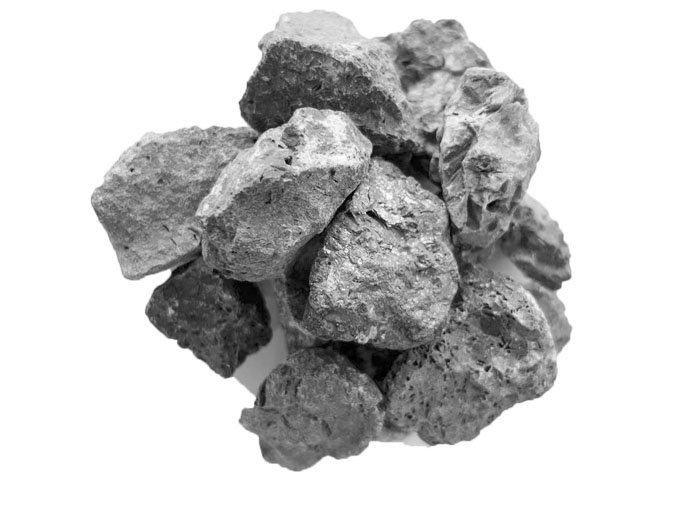
In the world of steelmaking, silicon-aluminum-calcium deoxidizer may not be the star of the show, but it plays a critical role as a “blood purifier.” It determines the purity of molten steel, the toughness of finished steel products, and their machinability. A qualified silicon-aluminum-calcium deoxidizer must pass through a rigorous series of inspections—akin to a full medical checkup—from raw material intake to final delivery.
At Beifang Alloy (www.beifangalloy.com), we have the ferroalloy industry for years and deeply understand the trust embedded in every batch of product we deliver. Today, we invite you to follow this “health check report” as we walk you through the entire quality inspection process for silicon-aluminum-calcium deoxidizer, while also providing a practical procurement guide from an industry insider’s perspective.
Purchasing silicon-aluminum-calcium deoxidizer isn’t simply about comparing prices. The first step is to clearly define your “checkup indicators.” Different steel grades and different smelting processes demand vastly different chemical compositions and physical specifications.
A typical industry procurement standard can be referenced from tenders like those of Fujian Sansteel: Si ≥ 37.0%, Ca ≥ 12.0%, Al ≥ 6.0%, H₂O ≤ 0.8%, in compliance with the latest GB/T 3795 standards. Additionally, particle size (e.g., 5–50mm at ≥90%) and packaging (e.g., ton bags with inner 10kg small bags) are also critical procurement metrics.
From the buyer’s perspective, three key questions must be asked upfront:
What type of steel are you producing? Carbon steel, special steel, or stainless steel? This determines whether you need a high-silicon, high-calcium, or high-aluminum formulation.
What furnace type are you using? Converter, electric arc furnace, or ladle refining furnace? Different furnaces have different requirements for melting point and reaction speed.
What effect are you aiming for? Simple deoxidation, or do you need inclusion modification and improved molten steel fluidity? This affects whether elements like barium (Ba) need to be added.
Understanding industry standards is key to judging whether a manufacturer is conducting a “serious checkup.” The core evaluation dimensions for silicon-aluminum-calcium deoxidizer include:
Chemical Composition (Hard Indicators): Tolerance for major elements (Si, Al, Ca) must be ≤ 0.3%, and harmful impurities (S, P) ≤ 0.02%. Top-tier factories employ full-process homogenization production, using intelligent batching systems to keep batch-to-batch composition fluctuations within extremely narrow tolerances.
Physical Properties (Stability): This includes particle size distribution, compressive strength (≥ 850N/pellet for briquettes), and moisture content (H₂O ≤ 0.5%). High powdering rates can cause clogging and spattering—a major pain point in the industry.
Deoxidation Efficiency (Real-World Performance): This is the core metric. High-quality products achieve deep deoxidation (deoxidation rate ≥ 65%) and promote inclusion flotation by forming low-melting-point calcium aluminates (12CaO·7Al₂O₃), effectively preventing nozzle clogging.
Choosing a capable, system-driven manufacturer is like selecting a reliable “checkup facility.” Currently, China’s silicon-aluminum-calcium deoxidizer industry is highly concentrated in the Anyang, Henan region, leveraging rich local resources and industrial cluster advantages.
When comparing suppliers, evaluate them across the following dimensions:
| Comparison Dimension | Criteria for an Excellent Supplier | Red Flags to Watch For |
|---|---|---|
| Quality Control System | Equipped with CMA/CNAS-accredited laboratories, performing full-chain testing from raw materials to semi-finished and finished products | Unable to provide third-party test reports; significant batch-to-batch composition fluctuations |
| Production Technology | Utilizes advanced processes like high-pressure dry briquetting and passivation coating to address powdering and deliquescence issues | Small-workshop production with outdated equipment; products suffer from “uneven firing” or “segregation” |
| Customization Capability | Can reverse-engineer formulations based on customer’s steel grade and furnace conditions, offering tailor-made products | Only offers standard specifications; unable to meet specific customer requirements |
| Delivery Capability | Leverages industrial clusters with short raw material procurement radii, shortening delivery cycles by over 20% | Frequent delivery delays due to raw material supply issues |
For example, companies like Beifang in the Anyang area have pioneered the “full-process homogenization” concept, creating a closed-loop manufacturing system from ore selection to custom particle sizing. Meanwhile, companies like Beifang have built their competitive edge through strategic location and full-industry-chain advantages, enabling cost control and rapid delivery.
A qualified silicon-aluminum-calcium deoxidizer must clear the following hurdles before leaving the factory:
Hurdle 1: Raw Material Inspection. Incoming materials such as silica, bauxite, and lime are rigorously analyzed for composition to control quality at the source.
Hurdle 2: Smelting Process Control. During submerged arc furnace smelting, parameters like temperature and time are monitored in real time to ensure uniform alloy composition.
Hurdle 3: Finished Product Chemical Analysis. Spectroscopic analysis and chemical titration methods are used to precisely measure Si, Al, Ca, P, S, and other elements, ensuring compliance with standards.
Hurdle 4: Physical Performance Testing. Crushed and screened products undergo particle size distribution testing; briquettes undergo compressive strength testing; and moisture-sensitive products undergo anti-deliquescence testing (e.g., ≤0.5% weight gain after 72 hours of natural exposure).
Hurdle 5: Process Adaptability Verification. Reputable manufacturers simulate customers’ on-site conditions to conduct active oxygen release curve testing, ensuring the product rapidly and stably releases deoxidizing activity across the 800–1600°C temperature range.
Hurdle 6: Packaging and Warehousing. Moisture-proof ton bags are used, clearly labeled with product name, batch number, and other details to ensure safe arrival at the customer’s site.
Behind a silicon-aluminum-calcium deoxidizer’s “health check report” lies the manufacturer’s process expertise, quality control discipline, and sense of responsibility.
As the steel industry moves toward greater precision, quality, and sustainability, choosing a deoxidizer should not be based solely on price—but on the comprehensiveness and rigor of the “checkup” behind it. At Beifang Alloy (www.beifangalloy.com), we believe that every batch delivered to our customers should be a “health certificate” that withstands scrutiny. We strictly control every checkpoint—from raw materials to finished products—and are committed to providing global steelmakers with stable, reliable, and cost-effective deoxidation solutions.
If you’re looking for a ferroalloy partner that treats product quality like a mission-critical health check, we invite you to reach out:
📧 info@hnxyie.com