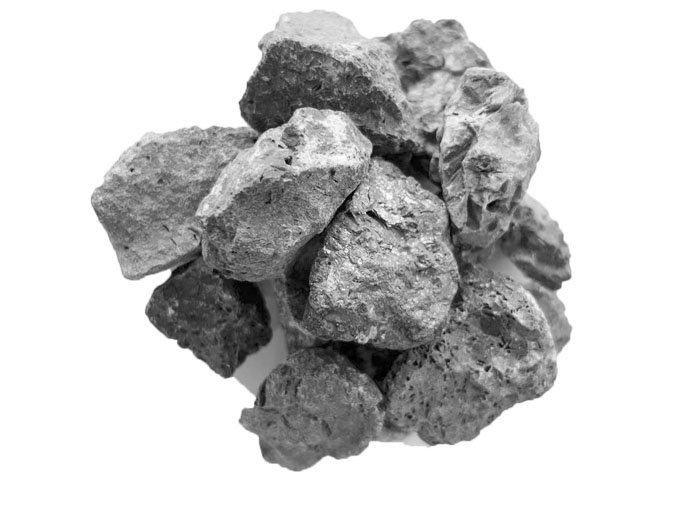
In the precision-driven process of steelmaking, the deoxidation stage is the critical gateway that determines molten steel purity and, ultimately, finished product quality. As a professional ferroalloy manufacturer, BeiFang Alloy has built a significant technological moat in the stability of its Silicon-Aluminum-Calcium (Si-Al-Ca) composite deoxidizer—backed by deep industry insight and continuous R&D innovation. This article breaks down our stability advantage from four key angles: procurement pain points, industry research, a practical buying guide, and direct supplier comparison.
1. Understanding Procurement Pain Points: Why Stability Matters Most
For steel mill procurement managers and technical directors, deoxidizer selection has long moved beyond “lowest price per ton.” The real focus today is on total cost of ownership and smooth production flow. Industry surveys consistently show that instability is the number one operational headache:
| Core Pain Point | Impact on Steelmaking Operations | Root Cause |
|---|---|---|
| High batch-to-batch composition variation | Operators must constantly adjust addition rates, leading to unstable deoxidation results, inconsistent mechanical properties, and higher scrap rates. | Unstable raw material sources; lack of fine batching and homogenization capabilities. |
| Poor physical durability | Briquettes crumble during transport or in storage bins, causing clogged feeders, splashing, and disruptions in secondary refining; calcium readily hydrates in humid air, degrading performance. | Outdated briquetting technology; absence of surface passivation or moisture-resistant coating. |
| Ineffective inclusion control | Deoxidation products (e.g., Al₂O₃) fail to form low-melting-point liquid phases and float out properly, leading to nozzle clogging, casting interruptions, and lower ultrasonic inspection pass rates. | Imprecise Si-Al-Ca ratio; failure to achieve the optimal aluminate liquid-phase composition. |
BeiFang Alloy’s response: We operate our own raw-material processing workshop with strict incoming inspection, securing consistent ore sources from the start. Our high-pressure dry briquetting and proprietary surface coating process deliver physical strength and moisture resistance far above average market levels.
2. Industry Research: The Technical Fundamentals of Stable Composite Deoxidizers
The key advantage of Si-Al-Ca composite deoxidizers lies in the synergistic coupling effect of silicon, aluminum, and calcium, enabling deep purification of molten steel. However, achieving stable performance requires overcoming two major technical hurdles:
Challenge 1 – Homogenization:
Industry best practice demands that key element deviations (e.g., Al ±0.5%) remain extremely tight between batches. Many small workshops, relying on primitive mixing equipment, produce severe “composition segregation”—different bags from the same shipment can have wildly different Si/Ca ratios, causing uncontrolled silicon pickup and carbon fluctuations.
Challenge 2 – Calcium Vapor Escape:
Calcium has a low boiling point and tends to vaporize rapidly in molten steel. Without proper alloy design to slow this escape, the effective calcium recovery rate is poor, and its critical role in modifying inclusions is lost.
BeiFang Alloy’s technical breakthroughs:
-
Full-process homogenization: We use precision automatic batching systems and intelligent mixing technology to ensure every batch meets the same tight chemical specifications, eliminating the industry’s notorious “same grade, different performance” problem.
-
Optimized melting temperature gradient: By carefully balancing the Si-Ca-Al ratio, we tailor the alloy’s melting behavior in liquid steel, delaying calcium vaporization and significantly improving both calcium yield and inclusion modification efficiency.
3. A Buyer’s Guide: How to Evaluate “True” Stability
When evaluating suppliers or preparing tender documents, we recommend looking beyond price and focusing on the following quantifiable indicators that reflect real stability:
① Composition Control Precision
Request third-party test reports for multiple consecutive batches and examine the standard deviation for key elements (especially Al, Ca, and Si). Tighter deviation ranges prove stronger quality management systems.
② Mechanical Strength & Anti-Powdering Performance
Refer to high-end industry benchmarks: briquette compressive strength should reach ≥850 N/briquette; after 72-hour ambient exposure (simulating warehouse storage), weight gain due to moisture absorption should be ≤0.5% to verify anti-hydration capability.
③ Particle Size Match
Check the passing rate for the 5–50 mm size range. For major steel mills, the undersize fraction (fines) is typically required to be ≤5%. Excess fines increase oxidation loss and cause feeding blockages.
4. Supplier Comparison: Why BeiFang Alloy Stands Out
When compared side-by-side with other supplier types in the market, BeiFang Alloy’s stability advantage comes from a vertically integrated, quality-first approach:
| Comparison Dimension | BeiFang Alloy | Ordinary Small Processing Plants | Trading Intermediaries |
|---|---|---|---|
| Raw Material Control | In-house processing workshop with multi-stage beneficiation; impurity levels meet the most stringent mill standards. | Depend on purchased ore fines; quality is externally controlled and highly variable. | No fixed sourcing; chase cheap materials with untraceable consistency. |
| Production Equipment | Large-scale high-pressure dry-briquetting production lines with automated dosing and inline inspection. | Simple, low-cost presses; briquettes lack density and strength. | Outsource all production—zero quality assurance. |
| Quality Assurance | Full-batch inspection using optical emission spectrometers; every lot meets GB and major mill specs. | Minimal or no lab equipment; rely on visual/experience-based estimates. | Cannot supply detailed, verifiable mill test certificates. |
| Technical Expertise | Founded in 2001—over 20 years of metallurgical powder and alloy production experience. | Often new entrants with limited process know-how. | No understanding of production technology; unable to resolve application issues. |
In the metallurgical auxiliary materials sector, stability is the true measure of a supplier’s technical capability and service reliability. BeiFang Alloy has systematically addressed the industry’s most stubborn pain points—composition fluctuation, powdering/hydration, and low calcium recovery—through rigorous raw-material sourcing, advanced high-pressure forming and surface passivation technologies, and a tightly controlled homogenization quality system.
We do not simply deliver “qualified” products. We deliver stable in composition, uniform in sizing, and reliable in performance—batch after batch. Choosing BeiFang Alloy means choosing smooth production runs and consistent steel quality.