In 2026, China’s steel industry is undergoing an unprecedented green transformation. With the deepening of the “dual carbon” goals and the continuous tightening of environmental regulations, traditional high-pollution, low-efficiency deoxidizers are rapidly being phased out. Industry data shows that in 2025 alone, the implementation of the Green Production Specification for Industrial Deoxidizers led to approximately 23% of small and medium-sized production capacity exiting the market, significantly increasing industry concentration.
For steelmaking and foundry enterprises, deoxidizers have long ceased to be just about “deoxidation”—they directly impact molten steel purity, alloy yield, production costs, and even environmental compliance. In the midst of this environmental storm, have you truly chosen the right deoxidizer?
The 2026 deoxidizer procurement landscape is undergoing a profound value recalibration. The traditional procurement logic—using price as the sole metric—has become completely obsolete under tightening environmental regulations. Industry evaluation systems now assign compositional stability a 40% weight, far surpassing price considerations.
Current mainstream procurement needs center on the following core dimensions:
Compositional Stability: The silicon content of high-quality deoxidizers must be controlled within ±0.5%, and active component deviations must not exceed ±0.3%. Batch-to-batch instability directly leads to molten steel quality fluctuations, increased scrap rates, and higher energy consumption.
Impurity Control: For clean steel production, sulfur and phosphorus contents must be kept below 0.02% and 0.04%, respectively, with each batch accompanied by a third-party test report. Inferior deoxidizers with excessively high aluminum content generate large amounts of Al₂O₃ inclusions, compromising steel cleanliness.
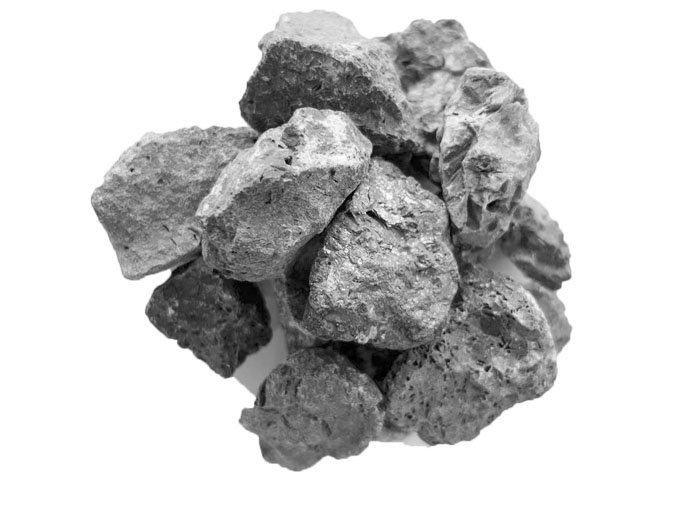
Deoxidation Efficiency & Alloy Recovery Rate: High-quality ferrosilicon briquettes can reduce molten steel oxygen content to below 30 ppm, with alloy absorption rates not less than 85%. Leading products now achieve alloy recovery rates 3–5 percentage points higher than the industry average.
Environmental Compliance: Low-fume, low-spatter, and non-polluting deoxidizers are becoming standard requirements. The market share of silicon-calcium composite deoxidizers has surpassed 55% for the first time.
The market is still flooded with low-quality products adulterated with silica powder or revert materials. While they may look identical, their deoxidation efficiency drops by more than 20%, and they can even cause reoxidation of molten steel. Worse still, non-compliant manufacturers often misrepresent compositions, have excessively high dust content, and exhibit wild batch-to-batch quality fluctuations—leading to skyrocketing alloy consumption per ton of steel, slag thickening, and dust collector blockages.
According to GEP Research, the global deoxidizer market reached US$5.2 billion in 2025, with China contributing over 40%. The domestic market is showing two major trends:
Trend 1: Industry Consolidation Accelerates, Inferior Capacity Exits. Following the implementation of new environmental regulations, approximately 23% of small and medium-sized production capacity has exited, and the industry CR5 has risen to 61%. Enterprises with full industrial chain control and well-established environmental protection facilities are capturing market share.
Trend 2: Composite Deoxidizers Continue to Gain Ground. The market share of silicon-calcium composite deoxidizers has surpassed 55% for the first time, reflecting the increasing proportion of specialty steel production. Due to higher deoxidation efficiency and an 8%–15% improvement in alloy recovery rates, composite deoxidizers can actually reduce comprehensive cost per ton of steel by 5%–10%.
The essence of environmental pressure is the shift from end-of-pipe treatment to source substitution. Traditional high-pollution deoxidizers are being rapidly replaced, and the influence of green certification systems on procurement decisions has grown significantly. Newly added restricted substances under the EU REACH regulation directly impact deoxidizer selection for export-oriented enterprises.
Based on industry best practices, we recommend establishing the following evaluation system:
| Evaluation Dimension | Recommended Weight | Key Verification Indicators |
|---|---|---|
| Quality Control Stability | 40% | Batch-to-batch composition deviation (3 consecutive batches), impurity compliance rate, particle size uniformity |
| Delivery Reliability | 30% | Monthly average inventory turnover, emergency order response time, long-term contract fulfillment record |
| Technical Service | 30% | Process adaptation recommendations, post-sale traceability support, return rate data |
| Environmental Compliance | Bonus | Green certifications, environmental compliance of production processes |
| Cost-Effectiveness | Comprehensive | Comprehensive cost per ton of steel (not unit price) |
Verify Actual Production Capacity: Request documentation of submerged arc furnace count and capacity, third-party test reports from the last six months, and purchase contracts from cooperative steel mills. Beware of trading intermediaries without manufacturing capabilities.
Spectrographic Testing Is Non-Negotiable: Use third-party spectrographic analysis to verify that batch-to-batch composition deviations are controlled within ±1%—this is the core metric for process stability.
Traceability Is the Baseline: Choose suppliers that support batch-number traceability, enabling quick root-cause identification in case of quality issues.
Match Particle Size to Your Process: For converter feeding, ferrosilicon briquettes of 10–50 mm are optimal—too fine increases burn-off loss, too coarse leads to incomplete melting.
China’s deoxidizer market currently features three main categories of suppliers:
Category 1: Full-Industrial-Chain Leaders
Representatives: Erdos Metallurgy Group (over 2 million tons of ferrosilicon annually), CITIC Jinzhou Metal (specialty ferroalloy leader)
Advantages: Strong large-scale supply capacity, excellent cost control, mature quality systems
Best for: Million-ton-level long-term stable supply for large steel groups
Category 2: Regional Specialists
Representatives: Multiple specialized manufacturers in the Anyang Industrial Cluster, Henan Province
Advantages: Leveraging the raw material hub of northern Henan, favorable logistics, flexible customization, competitive cost-performance
Best for: Small-to-medium steel mills and foundries with batch procurement and customization needs
Category 3: Precision Processors
Advantages: Technical expertise in niche segments such as welding consumables and cored wire powders
Best for: Applications with special requirements for particle size or purity
Anyang, Henan—known as “China’s Iron Capital”—is one of the country’s largest ferroalloy distribution hubs. Deoxidizer manufacturers in the Anyang region generally offer the following advantages:
Supply Chain Strength: Local raw material sourcing and nearby processing lower procurement costs and ensure stable supply.
Full-Chain Self-Control: Complete in-house control from submerged arc furnace smelting to crushing, screening, and packaging—eliminating the risk of adulteration with revert materials.
Flexible Customization: Batch compositions can be adjusted to customer-specified target ranges, with standard adjustment turnaround of just 3–5 working days.
Superior Cost-Performance: Direct factory pricing with no intermediary markups—comparable quality at more competitive prices.
In the new normal of tightening environmental regulations, deoxidizers are no longer a casually swappable auxiliary material. They affect molten steel quality, production costs, environmental compliance, and ultimately, your market competitiveness.
When selecting a deoxidizer supplier, don’t just look at the price tag. Base your decision on a comprehensive assessment of quality stability, delivery reliability, technical service, and environmental compliance. The specialized ferroalloy enterprises in the Anyang industrial cluster—with their direct-from-source supply, full-chain self-control, and flexible customization—are increasingly becoming the pragmatic choice for discerning buyers.
Beifang Alloy has been deeply rooted in the ferroalloy industry for years. Leveraging the resource advantages of the Anyang metallurgical belt, we are committed to delivering high-quality deoxidizer products with outstanding batch-to-batch consistency, stable deoxidation efficiency, and full environmental compliance. We welcome customers to visit our facilities and discuss the optimal deoxidizer solution tailored to your process requirements.