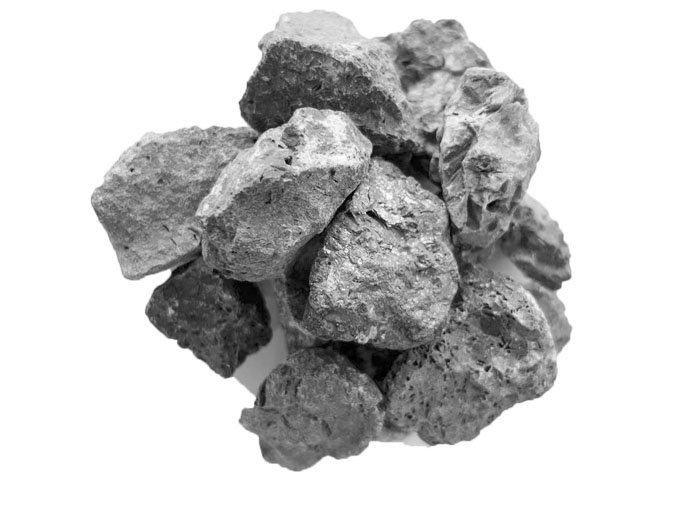
In the steelmaking process, deoxidation is one of the core procedures in the refining stage. The morphological control of deoxidation products directly affects molten steel cleanliness, continuous casting performance, and final steel quality. Silicon-Aluminum-Calcium (Si-Al-Ca) composite deoxidizers have gained increasing attention in the industry due to the unique synergistic mechanism of their three elements.
Beifang Alloy, as a professional ferroalloy manufacturer, has long been dedicated to the R&D and production of Si-Al-Ca series products. This article provides a systematic interpretation of the morphology and process advantages of Si-Al-Ca deoxidation products from four dimensions: procurement needs, industry research, procurement guide, and supplier comparison.
For steel enterprises, the core objective of purchasing deoxidizers is not merely “oxygen reduction” but “inclusion control.” Traditional single-element deoxidation methods often have notable shortcomings:
Aluminum deoxidation (single Al) : Strong deoxidation capability, but the product is solid Al₂O₃ with a high melting point (approx. 2050°C). These inclusions appear in clustered or chain-like forms, easily accumulating at the nozzle during continuous casting, causing clogging. If retained in the steel, they lead to rolling cracks and surface defects.
Silicon deoxidation (single Si) : The product is silicate, which can float up relatively easily, but the deoxidation depth is limited and insufficient for high-quality steel grades.
Therefore, the procurement needs of modern steel enterprises have evolved from “buying deoxidizers” to “buying inclusion management solutions.” They need a product that can transform inclusion morphology from “harmful solid” to “easily removable liquid.” This is precisely the core value of Si-Al-Ca.
According to metallurgical research, the deoxidation process of Si-Al-Ca is not a simple superposition of elements but a staged morphological evolution.
When aluminum is used for deoxidation, the product is solid Al₂O₃ clustered inclusions. Calcium (Ca) in Si-Al-Ca is the key modifying element. Calcium is a strong deoxidizer with a relatively low boiling point (1484°C). Upon entering the molten steel, it rapidly vaporizes and reacts with Al₂O₃ during its ascent.
According to the CaO-Al₂O₃ binary phase diagram, calcium can modify high-melting solid Al₂O₃ (m.p. 2050°C) into low-melting liquid calcium aluminates (e.g., 12CaO·7Al₂O₃, with a melting point of approximately 1400°C).
This morphological change brings significant process benefits:
Liquid inclusions are easier to float: At steelmaking temperatures, liquid calcium aluminate inclusions are more likely to coalesce, grow, and rapidly float to the slag layer, significantly improving molten steel cleanliness.
Improved continuous casting fluidity: Eliminates nozzle clogging in the tundish caused by solid Al₂O₃, ensuring smooth continuous casting operations.
Two-stage reaction mechanism: Some studies indicate that when using Si-Al-Ca alloy for deoxidation, aluminum-rich solid oxides form initially, followed by calcium gradually reducing these oxides, ultimately forming a well-adhering liquid calcium aluminate surface coating. This process ensures thorough reaction completion.
When procuring Si-Al-Ca, the following technical specifications and product forms should be considered:
Calcium (Ca) Content: High calcium content is the foundation for achieving inclusion modification. In the industry, premium high-calcium Si-Al-Ca products typically have a Ca content between 15% and 30%. Beifang Alloy’s products strictly adhere to this standard to ensure the calcium treatment effect meets expectations.
Al/Ca Ratio: A reasonable Al/Ca ratio (typically controlled at 1-2:1) is key to balancing deoxidation depth and modification effectiveness.
Si-Al-Ca is typically manufactured in spherical or briquette form. This shape facilitates rapid melting in the molten steel, ensuring uniform dispersion and higher element recovery rates. Inferior products may result in unstable reactions due to high pulverization rates or compositional segregation.
For customers producing low-silicon steels (such as deep-drawing steel and automotive panel steel), silicon-free or low-silicon Al-Ca-Fe alloys should be selected to avoid affecting steel grade composition control due to silicon introduced by the deoxidizer.
| Comparison Dimension | Ordinary Suppliers | Beifang Alloy |
|---|---|---|
| Technical R&D | Provide only standard products with significant composition fluctuations | Rely on a professional team to strictly control the Al/Ca ratio and calcium content, ensuring stable deoxidation product modification effects |
| Quality Control | Focus on basic physical and chemical indicators | Full-process monitoring from raw material screening to finished product briquetting, preventing pulverization and segregation |
| Industry Insight | Simple transactional relationship | Deep understanding of the different inclusion morphology requirements for various steel grades (e.g., aluminum-killed steel, silicon-reduced steel), providing tailored solutions |
| Service Response | Standardized processes with limited customization capabilities | Offer supply chain collaboration and technical support, with website (www.beifangalloy.com) and email (info@hnxyie.com) available around the clock |
Beifang Alloy is deeply rooted in the ferroalloy sector, committed to providing steel enterprises with high-purity, compositionally stable Si-Al-Ca deoxidation products. We firmly believe that the key to deoxidation lies in the “modification” of inclusions rather than merely their “removal.” Choosing Beifang Alloy means embracing an advanced steelmaking philosophy based on inclusion morphology control.
Si-Al-Ca deoxidizers transform steelmaking challenges into process advantages through calcium-based morphological modification of Al₂O₃. In today’s steel industry, where the pursuit of high quality and low defects is paramount, understanding and leveraging the morphological evolution of deoxidation products is a critical step in shifting procurement decisions from “cost-driven” to “technology-driven.” Welcome to contact Beifang Alloy for more technical details and product samples.