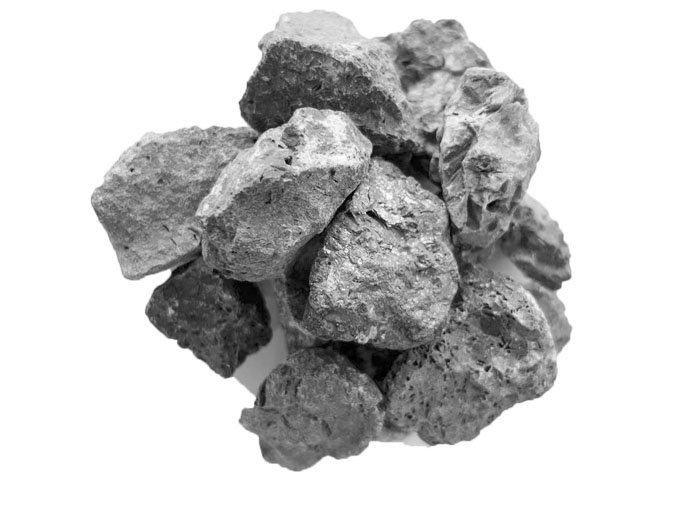
In steelmaking, oxygen scavenger (deoxidizer) selection directly impacts molten steel quality, production costs, and continuous casting performance. The wrong choice can lead to low alloy recovery, composition fluctuations, nozzle clogging, and even production shutdowns. This guide addresses procurement needs, industry research, procurement best practices, and supplier evaluation to help steel mills and buyers make informed decisions.
1. Procurement Needs: Know Your Challenges First
Different steel grades have vastly different requirements for oxygen scavengers. Blindly applying a one-size-fits-all solution often backfires. Before purchasing, clarify three core questions:
1. How sensitive is your steel grade to inclusions?
For steel grades sensitive to Al₂O₃-type inclusions where aluminum deoxidation is unsuitable, Si-Ca-Ba composite scavengers should replace pure aluminum. Forcing aluminum deoxidation on these grades generates high-melting-point Al₂O₃ inclusions that are difficult to remove, ultimately compromising toughness and processability.
2. Is there an LF refining step?
Taking SPHC steel as an example: when processed without LF refining (direct casting route), calcium treatment is unavailable—ordinary aluminum deoxidation frequently causes nozzle clogging. In this case, an Al-Mn-Ca composite scavenger (Al 45–55%, Mn 30–40%, Ca 4–12%) is required to convert high-melting-point Al₂O₃ into low-melting-point inclusions such as 12CaO·7Al₂O₃ and 3CaO·Al₂O₃, solving the nozzle clogging issue. With this approach, uninterrupted casting is achieved, and cost per ton can be reduced by RMB 50–60.
3. What are the final product specifications for C, Si, P, and S?
When producing low-carbon, low-silicon, low-phosphorus, or low-sulfur steels, a low-C, low-Si Al-Mn-Mg-Ca-Fe composite alloy (C ≤ 0.2%, Si ≤ 1.0%, P ≤ 0.02%, S ≤ 0.02%) must be used as the final deoxidizer. Carbon and silicon introduced by ordinary scavengers can directly push the final product out of specification.
2. Industry Research: Fundamental Principles of Scavenger Selection
2.1 Deoxidation Strength Ranking and Combination Principles
The deoxidation strength of common elements, from strongest to weakest, is: Al > Si > Mn. Aluminum’s strong affinity for oxygen and complete miscibility with iron make it indispensable as a final deoxidizer.
However, aluminum is not a universal solution. Pure aluminum deoxidation generates Al₂O₃ with a high melting point (~2050°C), which remains solid and dispersed, impairing melt fluidity. Thus, higher-grade steels favor composite deoxidizers that use calcium, barium, magnesium, and other elements to modify inclusion morphology—making them low-melting and easier to float out.
2.2 The Trade-off Between Addition Amount and Recovery Rate
The core calculation for oxygen scavenger addition is the recovery rate—the proportion of added elements effectively absorbed by the molten steel. Key variables affecting recovery include:
-
End-point carbon content: Lower end-point carbon means higher oxygen activity in the steel, greater oxidation loss of deoxidizing elements, and lower recovery. One study provides a reference: for SPHC steel with end-point carbon ≥ 0.04%, Al-Mn-Ca scavenger addition is 1.6–2.2 kg per ton; when end-point carbon < 0.04%, it must increase to 2.7–3.1 kg/ton.
-
Tapping slag carryover: Earlier slag carryover and higher (FeO) in the slag reduce deoxidizer recovery.
-
Addition sequence: Theoretically, adding weaker deoxidizers before stronger ones aids inclusion flotation. In practice, however, mills often add strong scavengers like Si-Al-Ba first, followed by alloy materials, to save costs.
2.3 Oxygen Scavenger Matching for Typical Steel Grades
Based on industry practice, recommended configurations are as follows:
| Steel Grade Type | Recommended Oxygen Scavenger | Key Consideration |
|---|---|---|
| Plain carbon steel (end C ≥ 0.07%) | Si-Mn + ferromanganese, with aluminum/ferroaluminum as needed | Low end-point oxygen; aluminum may be minimized or omitted |
| Low-carbon steel (end C 0.04–0.06%) | Si-Mn + ferromanganese + ferroaluminum/Al-Mn-Ca | Stronger deoxidation required; aluminum dosage increases |
| SPHC direct-casting grades | Al-Mn-Ca composite scavenger | Prevents nozzle clogging without LF refining |
| Aluminum-killed steel | Ti-containing ferroaluminum (Al 40–60%, Ti 0.1–10%) | Titanium fixes carbon to prevent Al₄C₃ hydrolysis and powdering |
| Low-C, low-Si special steels | Al-Mn-Mg-Ca-Fe composite alloy | Avoids C, Si, P, S exceeding limits |
3. Procurement Guide: Five Steps to Avoid Pitfalls
Step 1: Reverse-engineer scavenger composition limits from steel specifications. Pay special attention to carbon, silicon, phosphorus, and sulfur—impurities introduced by the scavenger can directly push your final product out of spec.
Step 2: Determine calcium treatment strategy based on refining route. Direct-casting processes without LF refining must use calcium-containing composite scavengers (e.g., Al-Mn-Ca), rather than relying solely on LF calcium wire feeding. Calcium recovery from Al-Mn-Ca can reach 30–40%, far higher than the 10–20% from wire feeding.
Step 3: Evaluate total cost per ton, not just unit price. A cheaper scavenger with lower recovery may actually cost more per ton of steel. Calculate comprehensive cost based on end-point oxygen levels and slag conditions.
Step 4: Assess physical stability of the scavenger. Ferroaluminum alloys can develop Al₄C₃ enrichment at grain boundaries, which hydrolyzes in humid environments—releasing hydrocarbon gases and causing the alloy to crack and powder. Micro-titanium-containing ferroaluminum effectively resolves this issue; be sure to ask about anti-powdering performance when purchasing.
Step 5: Always conduct small-batch trial validation before bulk orders. Focus on: deoxidation effectiveness, alloy recovery, melt fluidity, continuous casting nozzle performance, and final inclusion ratings.
4. Supplier Comparison: Choosing the Right Partner Matters More Than Price
Oxygen scavengers are process-critical auxiliaries—a supplier’s technical service capability is just as important as product quality. Key evaluation dimensions are summarized below:
| Evaluation Dimension | Traits of a Quality Supplier | Red Flags |
|---|---|---|
| Composition consistency | Batch-to-batch fluctuations of primary elements ≤ ±3%; impurity elements tightly controlled | Wide composition swings; no batch test reports provided |
| Technical matching capability | Can customize scavenger composition based on steel grade and refining process | Only offers standard products; unwilling to make adjustments |
| Supply reliability | Stable raw material sources and sufficient capacity; consistently ranks among top bidders in large mill tenders | Insufficient capacity; frequent delivery delays |
| Pricing reasonableness | Quotes align with industry tender levels (e.g., recent high-aluminum deoxidizer bids around RMB 1300–1320/ton) | Quotes significantly below industry averages—may indicate quality compromise |
| After-sales support | Provides on-site guidance from metallurgical engineers; assists in troubleshooting process issues | Sells products only; no technical support offered |
Based on recent industry tenders, companies such as Beifang, have been active and successful bidders in large steel mill deoxidizer procurement—these can serve as reference benchmarks when screening suppliers.
Final Thoughts
There is no one-size-fits-all solution for oxygen scavenger selection. The key is to identify your steel grade’s sensitivity to inclusions and impurity elements, match it with a rational composite deoxidation strategy, and validate the optimal composition and addition practice through small-batch trials. As a specialized ferroalloy producer, Beifang Alloy leverages deep expertise in deoxidizer thermodynamics and process matching to deliver customized solutions for different steel grades. For technical consultation or sample testing, please contact us at: info@hnxyie.com, or visit our website: www.beifangalloy.com.