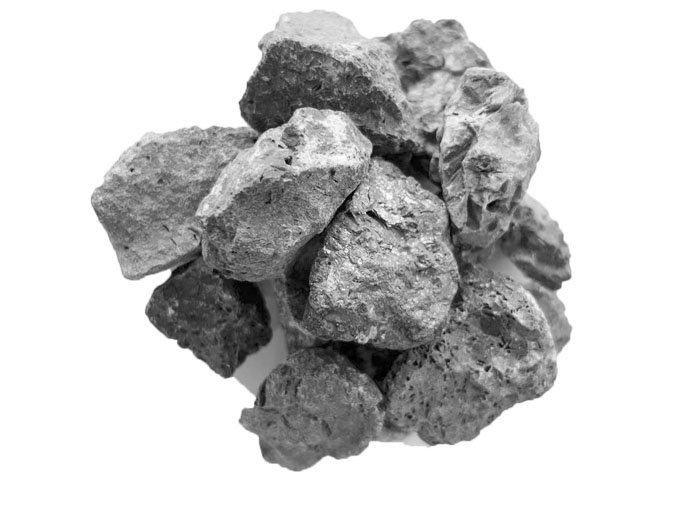
In steelmaking, silicon-aluminum-calcium (Si-Al-Ca) alloy is widely used as a composite deoxidizer. Many procurement professionals encounter a puzzling question: why does the same batch of Si-Al-Ca alloy perform so differently when used in different steel mills? Some report high deoxidation efficiency and good molten steel fluidity, while others complain about excessive inclusions and unstable recovery rates.
The root cause of this phenomenon is not that the material itself is defective, but rather that the performance of Si-Al-Ca alloy is the result of a coupling between “material properties, process matching, and operational proficiency.” The same alloy naturally performs differently under different furnace types, steel grades, and operating habits.
Many steel mills focus primarily on whether the chemical composition and particle size specifications of Si-Al-Ca alloy are “qualified,” but overlook a critical question: Are these specifications suitable for your own process characteristics?
Looking at actual procurement announcements, different steel mills have significantly different composition requirements for Si-Al-Ca alloy:
Some mills require Si ≥ 35%, Al ≥ 7%, Ca ≥ 16%, with particle size 10-80mm
Others require Si ≥ 37%, Al ≥ 8%, Ca ≥ 15%, with particle size 10-60mm
Still others require Si ≥ 40%, Al ≥ 4%, Ca ≥ 8%, with particle size 5-60mm
These differences reflect distinct smelting objectives and process conditions. It is essential to clarify your own requirements before procurement: Are you pursuing deep deoxidation, or do you prioritize inclusion morphology control? Is the alloy used in a converter or an electric arc furnace? These factors directly determine the optimal composition ratio of Si-Al-Ca alloy for your application.
Why does composition ratio matter so much? To answer this, we must first understand the deoxidation mechanism of Si-Al-Ca alloy.
Si-Al-Ca alloy achieves deoxidation through the synergistic action of silicon, aluminum, and calcium. However, the differing characteristics of these three elements mean that different ratios produce substantially different results:
Aluminum is a strong deoxidizer, but when used alone, it tends to form high-melting-point Al₂O₃ inclusions. These inclusions do not easily float up, and in severe cases, they can impair molten steel fluidity or even cause clogging of continuous casting nozzles.
Calcium’s role is “modification” — transforming high-melting-point Al₂O₃ into low-melting-point calcium aluminate composite inclusions that are easily removed by flotation. Calcium also participates in desulfurization reactions.
Silicon handles deep deoxidation while forming composite inclusions with other elements.
From a thermodynamic perspective, the deoxidation capability follows the order: Ca > Ba > Mg > Al > Si > Mn. However, calcium has high vapor pressure and low solubility at steelmaking temperatures, making it difficult to function alone — it must be alloyed with silicon and aluminum to be effectively utilized.
This means: High-aluminum formulations react quickly and achieve fast deoxidation but may generate more large-particle inclusions. High-calcium formulations are more favorable for inclusion morphology control but are more expensive, and calcium recovery is highly sensitive to operating conditions. Different steel grades have different inclusion requirements, naturally calling for different composition ratios.
Based on the above analysis, procurement of Si-Al-Ca alloy should not stop at checking whether specifications are “qualified.” Instead, a process-fit evaluation system should be established. Beifang Alloy recommends considering the following dimensions:
1. Composition Suitability
Select the appropriate Si/Al/Ca ratio according to the target steel grade. For steel grades with stringent inclusion requirements (such as automotive sheet and pipeline steel), higher calcium content is advisable to ensure full inclusion modification. For steel grades where deoxidation depth is the primary concern, aluminum content may be increased appropriately.
2. Physical Form Matching
The particle size design of Si-Al-Ca alloy (typically 0-50mm or 10-80mm) directly affects the contact area for reaction and the recovery rate. Lump materials are suitable for deep addition in converters, while spherical forms are convenient for continuous wire-feeding processes. Improper selection can lead to excessive burn-off or insufficient reaction.
3. Impurity Control
Impurity elements such as sulfur and phosphorus must be strictly controlled (typically below 0.05%), otherwise they can cause steel embrittlement. This factor is often overlooked but directly impacts the final product quality.
4. Supplier Consistency Evaluation
Different suppliers have different raw material sources, production processes, and testing equipment. When procuring, attention should be paid to whether the supplier has a stable production capacity and quality control system, rather than simply comparing unit prices.
Taking the Anyang ferroalloy industrial cluster as an example, the area hosts numerous Si-Al-Ca alloy producers, but their product positioning and quality control levels vary considerably.
Some manufacturers can accept “custom production according to user requirements,” offering flexible composition ratios and particle size specifications, and are equipped with relatively complete production and testing facilities. However, these manufacturers are typically small to medium-sized with limited production capacity, making them suitable for small-to-medium batch customized procurement.
Large-scale steel mills, when issuing public tenders, typically require suppliers to have independent legal entity status, relevant qualifications and permits, and necessary production and testing equipment. This means that large-scale procurement places greater demands on the supplier’s stable batch supply capability and quality consistency.
When selecting a supplier, the following factors should be comprehensively considered:
| Factor | Key Considerations |
|---|---|
| Quality Stability | Are composition fluctuations between batches controllable? |
| Customization Capability | Can the ratio be adjusted according to process requirements? |
| Supply Assurance | Does production capacity and delivery cycle match your needs? |
| Technical Support | Can the supplier assist in resolving process issues during use? |
The reason the same batch of Si-Al-Ca alloy performs differently in different steel mills is fundamentally that the material is only one influencing factor — process compatibility and operating conditions are equally important.
As a professional ferroalloy supplier, Beifang Alloy is committed not only to product quality but also to helping customers understand the relationship between material characteristics and process requirements, providing matched solutions. When procuring Si-Al-Ca alloy, start by understanding your own process first.